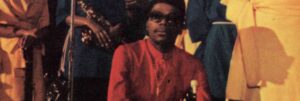
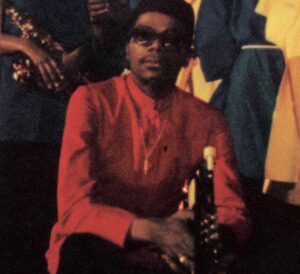
“Black Rhythm is free, its soul defies confinement. Black Rhythm is a feeling running through your brain in search of an outlet in your body. Black Rhythm is what sustains you when you reach what you think is your wits end…Black Rhythm is hip, angry, appeased, appalled, afraid, courageous. Black Rhythm is happening. Everywhere.” So runs WLIB-FM DJ Ed Williams’ liner notes to Eddie Gale’s monumental 1969 album for Blue Note “Black Rhythm Happening”.
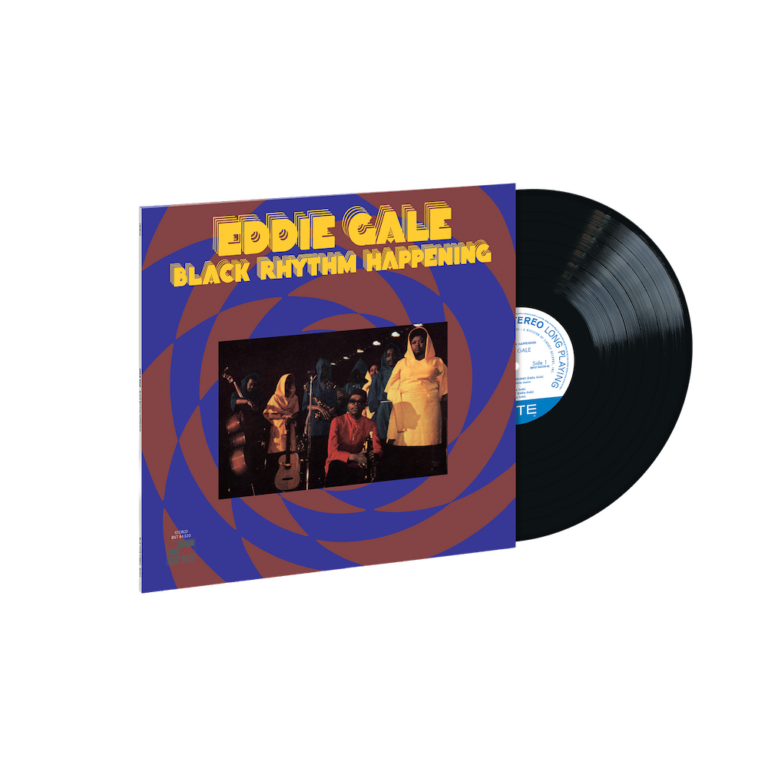
Eddie Gale Black Rhythm Happening (Blue Note Classic Vinyl Series) 1LP
Eddie Gale’s Roots, and Rise
Born in 1941, Eddie Gale (who passed away in July 2020) was raised in Brooklyn where his grounding in the church would have a profound influence on his two albums for Blue Note. “The first thing that really impressed me was vocals. Hearing people sing in the church, as well as my mom walking around the house humming music, were my first impressions of music,” Gale told Jazz Times in 2007.
After studying trumpet with Kenny Dorham he launched into the New York scene as a sideman to everyone from Jackie McLean to John Coltrane. Equally as important was his tenure with The Sun Ra Arkestra throughout the sixties including on Sun Ra & His Solar Arkestra’s “Secrets Of The Sun” album for El Saturn in 1965. “I learned a lot from Sun Ra about how important the imagination is in our development,” Gale told Jazz Times.
The same year Gale made his Blue Note debut, appearing on Cecil Taylor’s “Unit Structures”, alongside alto saxophonist Jimmy Lyons (who Gale would call on four years later for “Black Rhythm Happening”). It was shortly after his second outing as a Blue Note sideman on Larry Young’s “Of Love and Peace” from 1967 that Blue Note co-founder Francis Wolff suggested Gale record his own albums as bandleader.
“I wanted to mix my love of vocals with my love of jazz,” Gale told Jazz Times. “At that point, I didn’t know of anyone who was playing with two drummers and two bassists. It just made sense to have this action going on from my love of African music and my time back in the marching band in Brooklyn. But playing with Larry Young on “Of Love and Peace” also influenced it a lot. Larry’s organ playing really took me back to my roots in the church.”
“Eddie Gale’s Ghetto Music” (Blue Note, 1968)
The trumpeter had unleashed his Blue Note debut as a leader, the groundbreaking “Eddie Gale’s Ghetto Music”in the tumultuous year of 1968 with anti war and civil rights protests across the US, bookended by the assassination of Martin Luther King Jr. and the raising of gloved fists in a black power salute by John Carlos and Tommie Smith at the Mexico Olympics.
Recorded with two bass players (Judah Samuel and James “Tokio” Reid) and two drummers (Thomas Holman and Richard Hackett) alongside tenor saxophonist and flautist Russell Lyle, “Ghetto Music” was most revolutionary in its use of an 11 piece avant garde soul choir, the Noble Gale Singers led by the leader’s sister Joann Gale Stevens. Two of the album’s most powerful tracks “The Rain” and “A Understanding” were used to great effect by Shaka King in the brilliant soundtrack to his 2021 film ‘Judas and the Black Messiah’.
The Follow Up – Black Rhythm Happening (Blue Note, 1969)
Eddie Gale Black Rhythm Happening (Blue Note Classic Vinyl Series) 1LP
Retaining the gospel power of the choir under the direction of Fulumni Prince, the line up for Eddie Gale’s 1969 follow up got a boost with the addition of drummer Elvin Jones, alto saxophonist Jimmy Lyons, soprano saxophonist/flautist Roland Alexander and African percussionist John Robinson. Continuing where one of Blue Note’s most radical and socially conscious albums had left off, “Black Rhythm Happening” reverberates today through a new generation of jazz musicians.
Gale’s Influence – Makaya McCraven
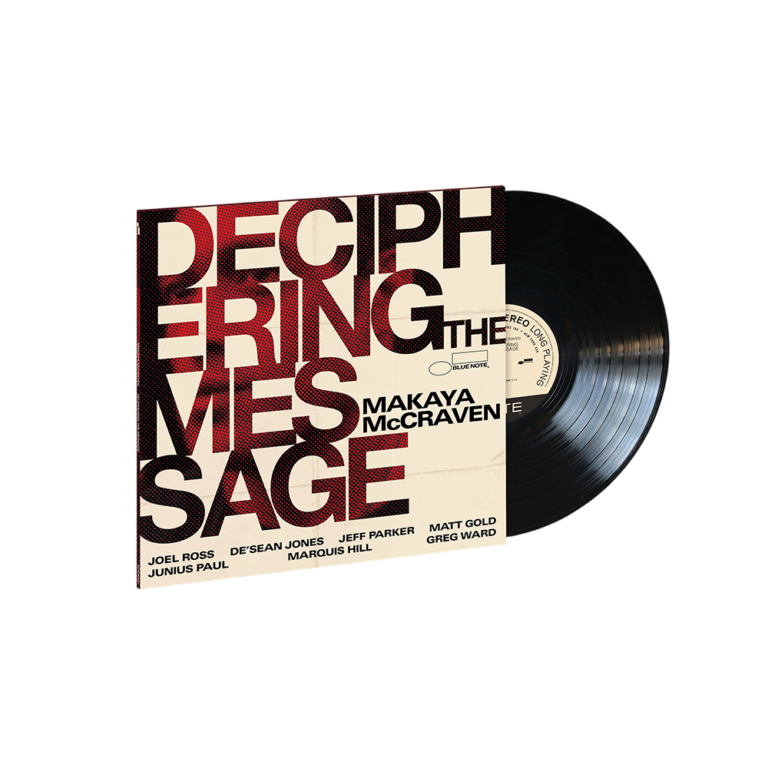
When Chicago drummer and beat maker Makaya McCraven was gathering ideas for his 2021 Blue Note remix album “Deciphering The Message”, one of his more obscure choices came in the form of Eddie Gale’s “Black Rhythm Happening”. He’d been introduced to Gale by label mate Damon Locks. “Scottie from International Anthem suggested to Makaya that I do the album art for his “Universal Beings” record. At the time I was deep in the throws of admiration for “Black Rhythm Happening” and “Ghetto Music”, so of course I played both of them for him. I was so glad I could pass on something so dynamic,” Locks recalls.
Gale’s Influence – Damon Locks Black Monument Ensemble
Debuting with “Where Future Unfolds” in 2019, Damon Locks Black Monument Ensemble took their cue from Gale and other spiritually and politically charged large group jazz choirs. “These two records alongside Voices of East Harlem “Right On Be Free”, Freedom Singers “We Shall Overcome”, Max Roach His Chorus And Orchestra “It’s Time” and Archie Shepp’s “Attica Blues” paved a way where I could envision the possibility of Black Monument Ensemble,” he says. “Song of Will” (from “Black Rhythm Happening”), became an anthem to me. I then marked these two albums as touchstones for a project I was building which came to life as Black Monument Ensemble at the Hyde Park Art Center in Chicago in 2017.”
Black Rhythm Happening – Track by Track
Making as powerful an introduction to “Black Rhythm Happening” as “The Rain” had on “Ghetto Music”, the title track sets a chant over a driving R&B groove and cascading free jazz horns that were reworked into a funk driven bomb by Makaya McCraven on “Deciphering The Message”.
As wild and progressive as Gale and The Noble Gale singers ever got, track 2: “The Gleeker” still sounds like the future today. Arriving like a healing balm after that sonic assault, the anthem (later reworked by Damon Locks, and Jazzanova) “Song of Will” opens with two minutes of starkly beautiful harmonies before a storm of brass and percussion.
The sublime and haunting “Ghetto Love Night” sets mournful horns next to the spine tingling vocals of the choir and a somewhat unsettling rhythm section that gets right under your skin. Turbulent drum rolls and carnivalesque horns break the peace on “Mexico Thing”, closing side one in furious style.
On the flip, the album’s only instrumental track “Ghetto Summertime” ups the intensity while keeping the deep mood through the serious musicianship of Gale and his band, most notably the interplay of the two bassists and the guitar of Joann Gale Stevens that also features on the Eastern flavoured “It Must Be You”.
But it’s on the closing track that Eddie Gale and his collective reach their spiritual peak. Dedicated to the youngest of his six children, “Look At Teyonda” soars and ebbs over 10 ecstatic minutes where African rhythms meet folk melodies, broken only by a spoken word segment about zodiac signs.
It’s a remarkable ending to a remarkable album that sits uniquely with its predecessor in the Blue Note catalogue. “These records are as relevant today as they were when they came out,” says Damon Locks. “They are honest and steadfast in their ideology. This is why they are so inspiring to me.”
Eddie Gale Black Rhythm Happening (Blue Note Classic Vinyl Series) 1LP
READ ON…
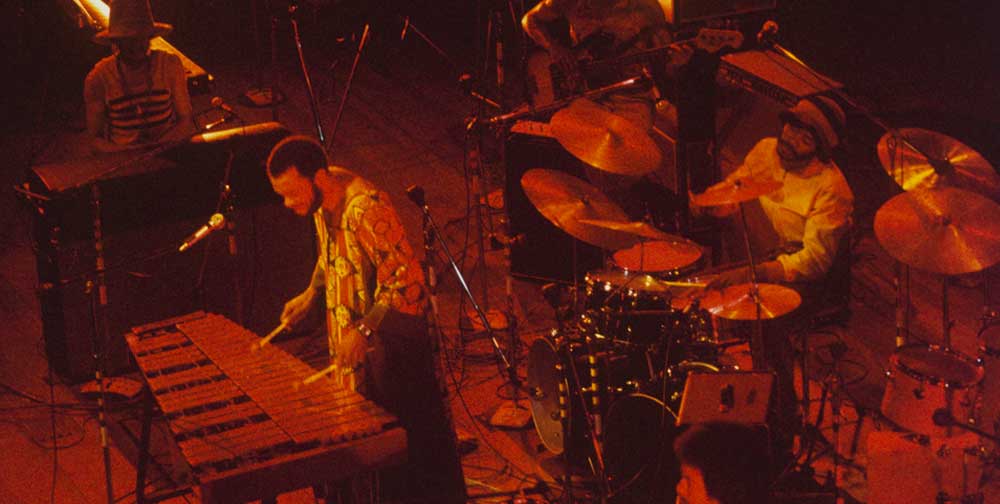
Roy Ayers Ubiquity – “He’s Coming”
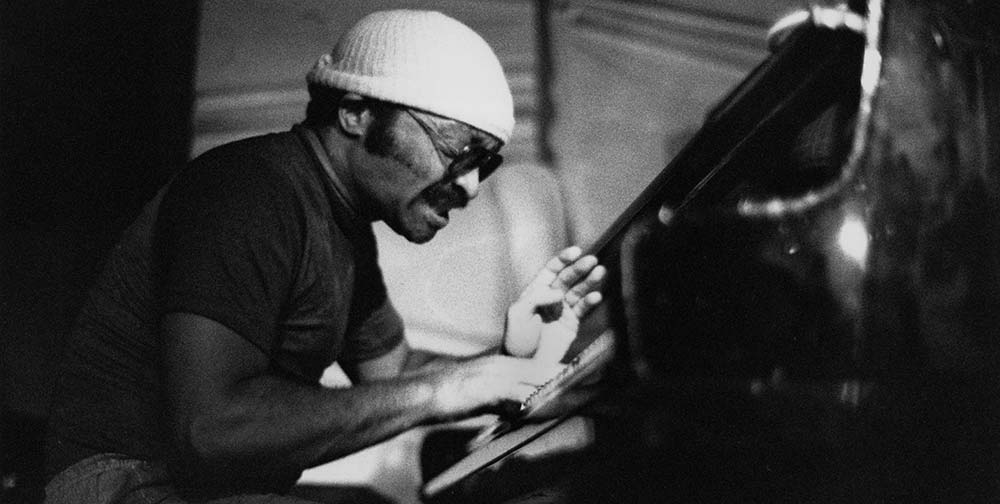
Cecil Taylor’s – Unit Structures
Andy Thomas is a London based writer who has contributed regularly to Straight No Chaser, Wax Poetics, We Jazz, Red Bull Music Academy, and Bandcamp Daily. He has also written liner notes for Strut, Soul Jazz and Brownswood Recordings.