
John Coltrane was just forty years old when he died of liver cancer in 1967, but over the previous decade he had already changed the shape of jazz saxophone forever – his seismic developments on the instrument profoundly influencing generations of musicians to follow.
His sheer technical mastery as a saxophonist combined with his purity of vision, and spiritual intensity has served as guiding light for all subsequent generations of jazz musicians.
There are movements of music that might arguably not exist without Coltrane and his towering artistry. In particular, the nebulous genre often termed “spiritual jazz” has its roots in Coltrane’s music (1964’s epochal “A Love Supreme” in particular), while free improvisation movements around the world owe a huge debt to Coltrane’s large ensemble improvisational concepts on “Ascension” and the multi-directional rhythms, harmonic freedom and sheer intensity of his final quintet with saxophonist Pharoah Sanders, pianist Alice Coltrane, bassist Jimmy Garrison and drummer Rashied Ali.
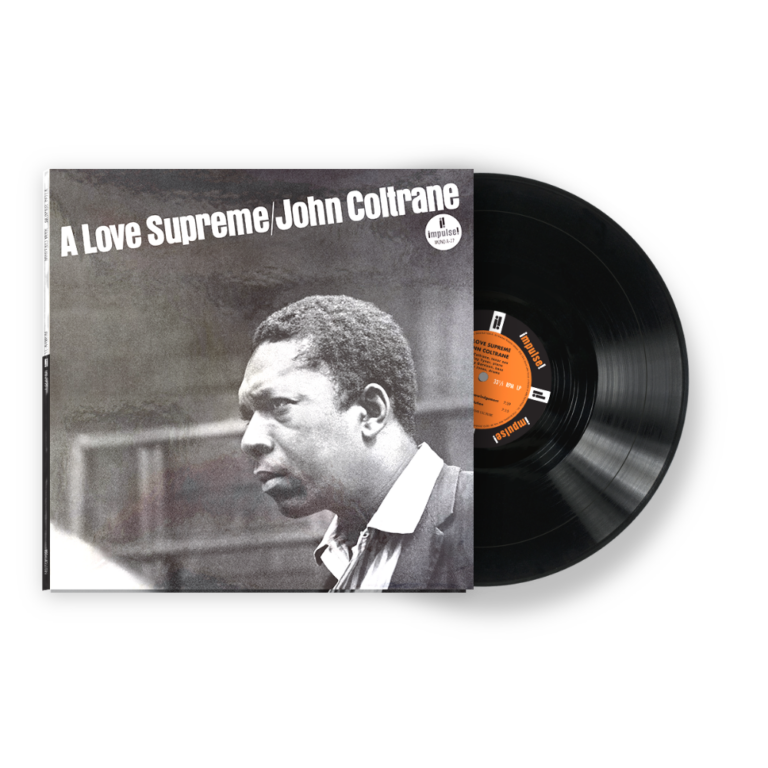
John Coltrane A Love Supreme (Monophonic Edition) 1LP
The Most Important Records in Jazz?
Ask any jazz fan “what are the most important jazz albums ever recorded?” and there are two albums that will be mentioned more often than any others – Miles Davis’s “Kind of Blue” (1959) and John Coltrane’s “A Love Supreme” (1964). Coltrane was a crucial contributor to the former, and the latter was his masterpiece. At the end of the 1960s, jazz came to a crossroads – possibly even an existential crisis. For many of the generation of artists who carried the music forwards into the 1970s, they did so largely carrying the torch for either the directions in music opened up in the latter half of the 1960s by Miles Davis, or by John Coltrane.
Disciples of Miles Davis carried forwards the paths opened up by Davis’s albums “In A Silent Way” (1969), “Bitches Brew” (1970) and “A Tribute to Jack Johnson” (1971). Electrification and the intersection with the musical languages of rock and funk led to the huge commercial success of bands such as Wayne Shorter & Joe Zawinal’s Weather Report, Herbie Hancock’s Headhunters, Chick Corea’s Return to Forever, John McLaughlin’s Mahavishnu Orchestra and Tony Williams’ Lifetime – all musicians who had been integral to Davis’s music in the 1960s.
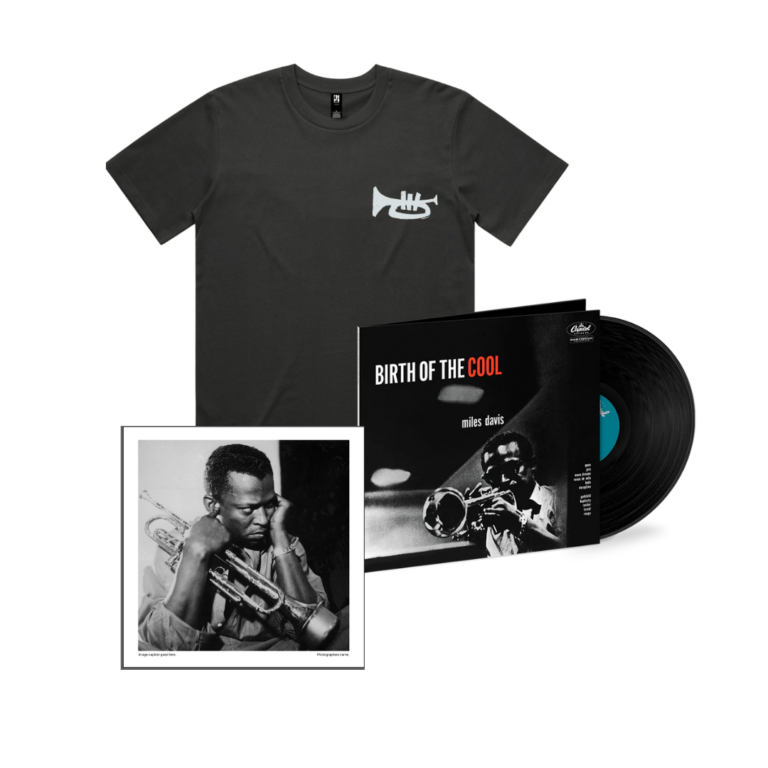
Birth Of The Cool 1LP + Trumpet T-Shirt + Miles Davis 12" x 12" Print
Available to purchase from our US store.At the same time as this electrified, rock and funk-influenced route was charted by artists associated with Davis, contrasting – and largely more acoustic – paths were being pursued by musicians closely associated with Coltrane, continuing the legacy of the great saxophonist in the years following his death, taking forward the spirit and power of his music and continuing to evolve the directions in music that Coltrane had been charting before his untimely death in 1967.
Those carrying the brightest torches in those first early years after Coltrane’s death were his close bandmates from his two key bands of the 1960s. The first of these were the remaining members of the Classic Quartet.
Each were pioneers of their instruments – in particular, McCoy Tyner pioneered a piano approach that prioritised left-hand comping chords built out of the interval of fourths rather than the traditional thirds, while Elvin Jones on drums epitomised a flowing triplet (beats divided into groups of 3) movement between all four limbs that gave the music an unstoppable forward drive.
In 1965, for the last two years of Coltrane’s life, this group evolved into Coltrane’s final quintet. Just Garrison remained from the classic quartet lineup. Tyner was replaced on piano by Coltrane’s wife, Alice Coltrane; Jones on drums was replaced by the more abstract, “multi-directional” Rashied Ali; and a second, highly individual, saxophone voice was added in tandem with Coltrane – a young Pharoah Sanders. The music became more abstract, more dense, more intense. To some, this new direction was impenetrable. To others it was the deepest, highest form of music.
Elvin Jones (Drums)
Elvin Jones signed with Blue Note in 1968, the year after John Coltrane’s death and recorded a series of outstanding albums for the label over a 5-year period to 1973. Blue Note’s founder, Alfred Lion, had retired the previous year, which somewhat signaled the close of the label’s most artistically acclaimed and commercially successful chapter. Also, having previously been independent, the label was now in a state of flux in ownership by larger companies.
The label’s most famous releases were in the years prior to 1968 and, although there are some outstanding albums recorded into the 1970s by artists such as Jones, Bobby Hutcherson and Horace Silver, these have remained much lesser known, and with patchier availability (some only being released in Japan), than those recorded prior to 1968. Jones’s recordings for the label have therefore arguably not received their due, and all are outstanding. “Puttin’ It Together” was Jones’s debut for Blue Note and the first of two albums he recorded with a trio line-up that was effectively the Coltrane quartet minus Tyner and with saxophonist Joe Farrell in Coltrane’s place.
This is driving, searching, progressive acoustic jazz of the very highest calibre. The piano-less ensemble places more focus on the rhythm-section interaction of Garrison and Jones, and allows more space in the sonic image to take in the singing tone of Jones’s toms and his endless flow around the kit. “Poly-Currents” expands this instrumentation with the addition of two further saxophonists (tenorist George Coleman and baritonist Pepper Adams), and congas.
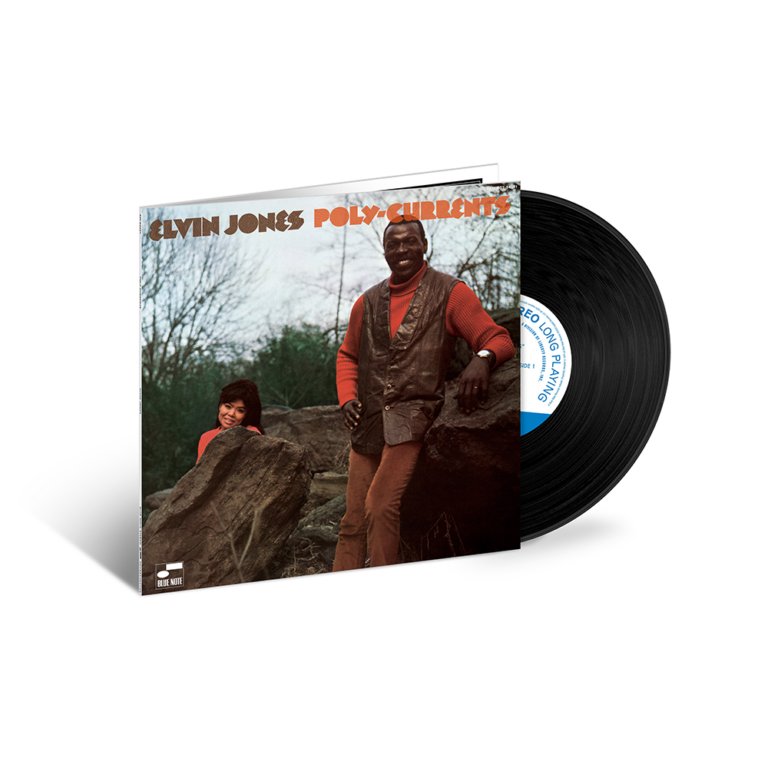
Elvin Jones Poly-Currents LP (Blue Note Tone Poet Series)
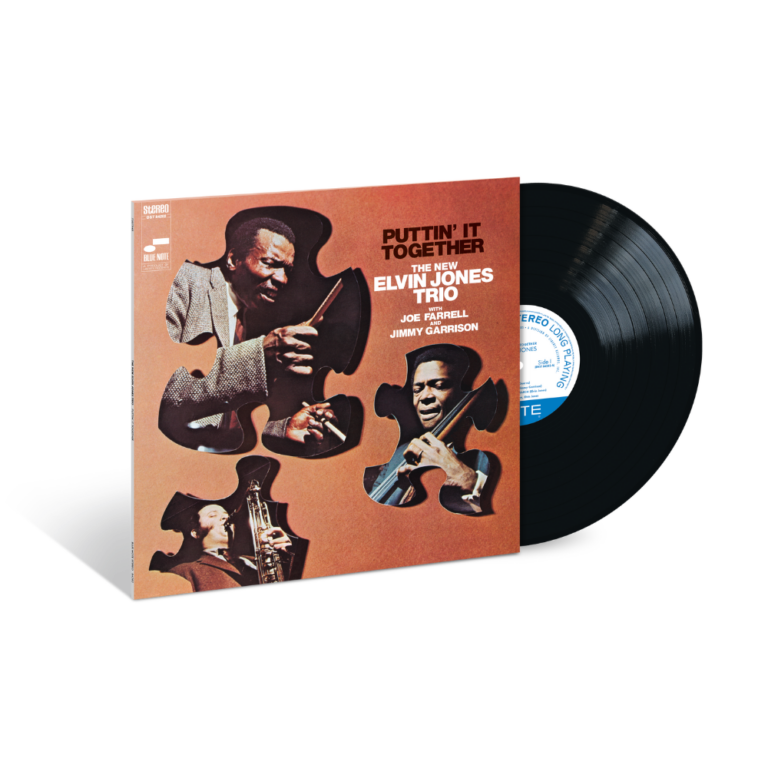
Elvin Jones Puttin' It Together 1LP (Blue Note Classic Vinyl Series)
Later on in his time with Blue Note, Jones cemented the piano-less formation into a working quartet fronted by two virtuosic young Coltrane disciples, Dave Liebman and Steve Grossman. The two-volume “Live at the Lighthouse” with this line-up is currently out of print, but absolutely outstanding.
McCoy Tyner (Piano)
Like Jones, Tyner also began recording for Blue Note around the time of John Coltrane’s death. His debut for the label, “The Real McCoy” was one of the last albums for the label produced by founder Alfred Lion, and widely regarded as one of the label’s classics. Like with Jones though, it was with some of his later – and lesser known – recordings in the post-Alfred Lion Blue Note era where it really felt like he was building on the path forged by Coltrane and taking this music forwards.
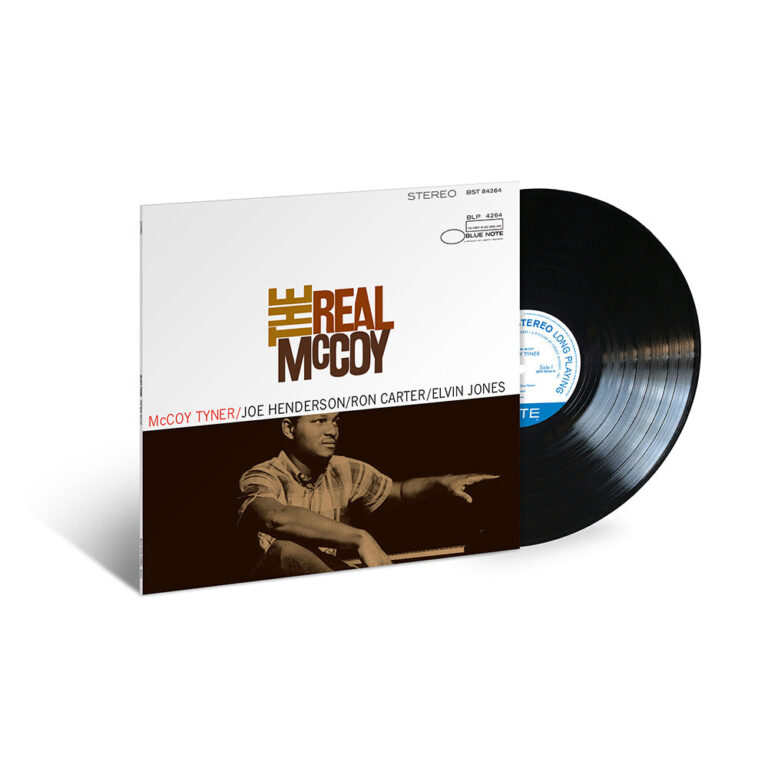
McCoy Tyner The Real McCoy LP (Blue Note Classic Vinyl Edition)
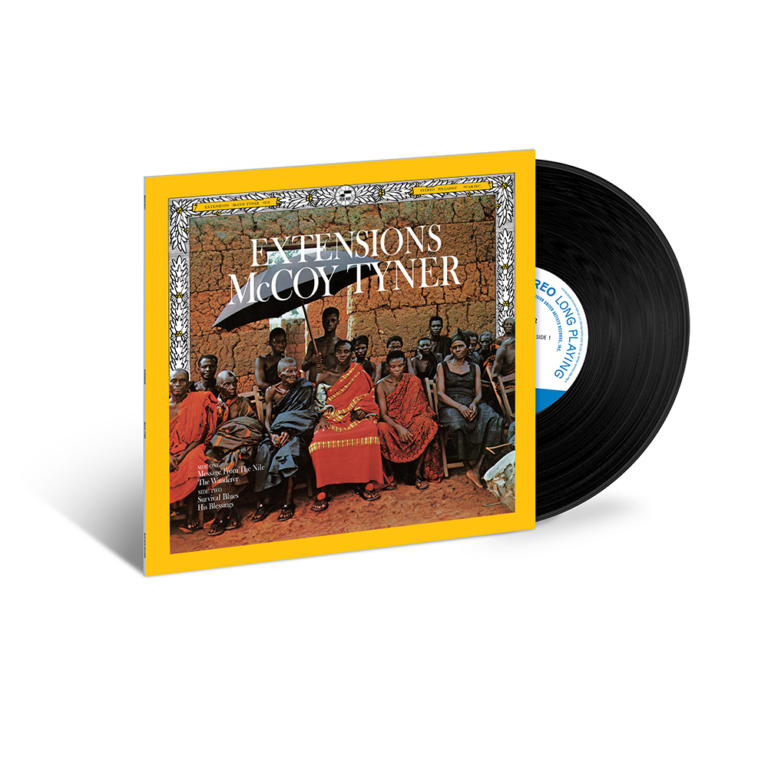
“Extensions” was recorded in 1970 but not released until 1973 – a time when high quality acoustic jazz was being overshadowed by the commercial success of electrified fusion. It was recorded with an ensemble entirely made up of musicians associated with either John Coltrane or Miles Davis: Tyner and Jones from the classic Coltrane quartet, along with Alice Coltrane on harp; joined by Wayne Shorter and Ron Carter from the great 1960s Miles Davis Quintet; and finally Gary Bartz on alto saxophone, very shortly before he himself took the saxophone chair in Miles Davis’s band.
The long opening track, “Message from the Nile” is a clear illustration of how Tyner was taking the spirit and essence of Coltrane’s music – with its rhythms, modal structure and grounding bass-riff giving flavours of “A Love Supreme” – but taking this somewhere new.
“Asante”, recorded later the same year – Tyner’s final recording for Blue Note – builds on the same concepts even further and feels even more like it is extending the directions of Coltrane’s music. Again, the opening track, “Malika” has its spiritual roots in “A Love Supreme” – this time augmented with percussion and wordless vocals.
The saxophone frontman is this time altoist Andrew White – a fascinating musician who studied John Coltrane’s music in great academic depth (publishing hundreds of transcriptions and writing extensively on Coltrane), but who also appeared in such diverse contexts as being an electric bassist for Weather Report and Stevie Wonder, and performing as an oboist. Here, on alto saxophone, he is on blistering Coltrane-inspired form. The rhythm section is one of those truly great rhythm pairings in jazz (and the foundation of Herbie Hancock’s Mwandishi band),Buster Williams and Billy Hart.
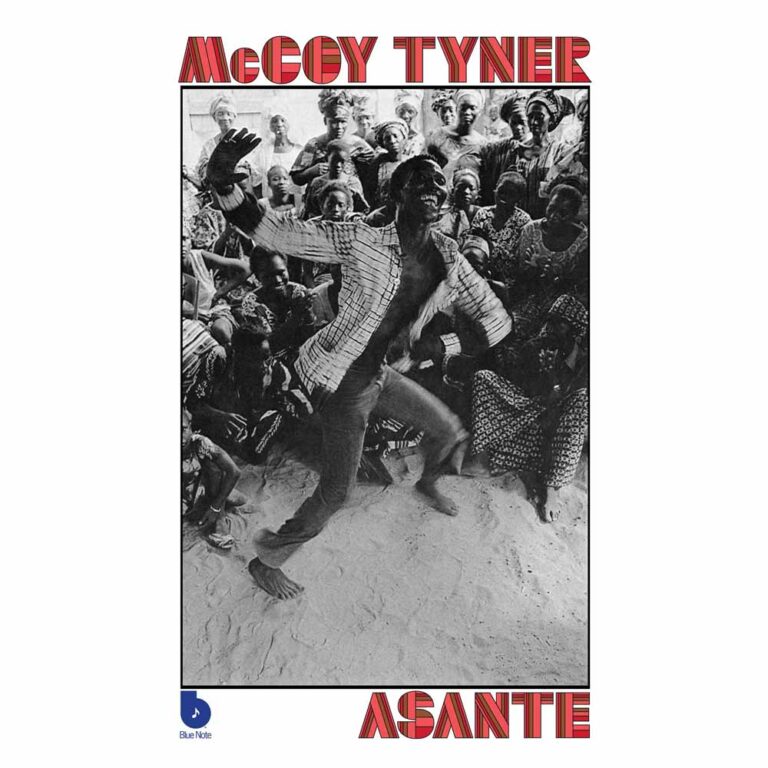
MCCOY TYNER Asante
Available to purchase from our US store.Alice Coltrane (Piano and Harp)
One of the great figures of what is often termed “Spiritual Jazz”, Alice Coltrane did hugely significant work in continuing and expanding upon the path of her late husband’s musical legacy, but to see her as in the shadow of her great husband would be to misunderstand the significance and individuality of someone who stood as a truly great figure of music in the twentieth century on her own merit.
Alice Coltrane began recording for Impulse! – the label of John Coltrane’s most significant run of recordings in the 1960s – in 1968, the year after his death. Her first recording, “A Monastic Trio”, is a continuation of the direction of the Coltrane Quintet, featuring all the remaining members of that group (but with drummer Ben Riley substituting for Rashied Ali on some tracks). Over a further six albums for the label through to 1973, Coltrane established her own, thoroughly unique, voice as composer and performer, often in more expansive settings incorporating strings and percussionists.
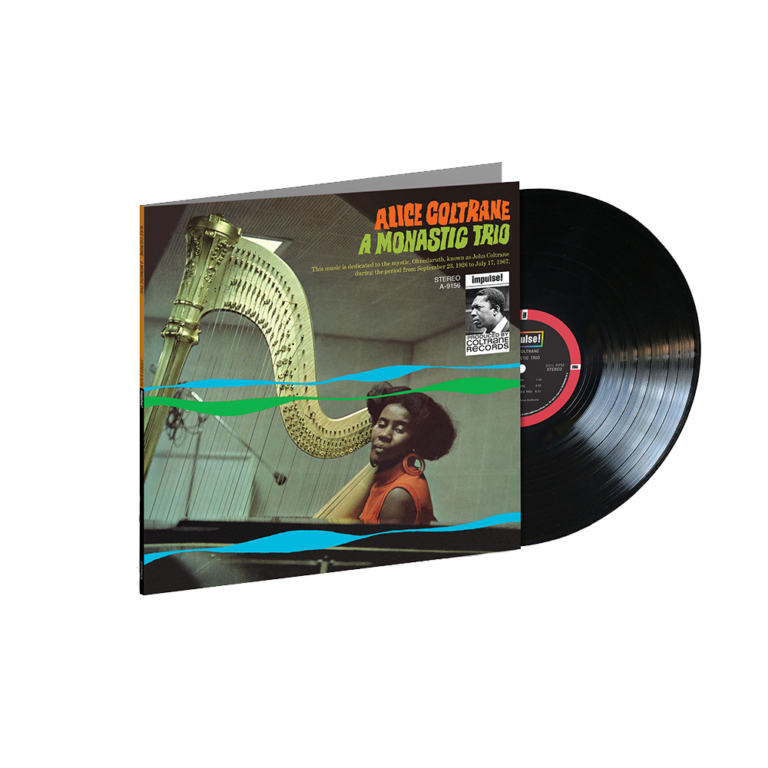
Alice Coltrane A Monastic Trio LP (Verve By Request Series)
These albums expand on the spiritual direction of John Coltrane’s music and take this path to new places. Her music took on strong influences from the East, with her travels to India and spiritual guidance from her guru Swami Satchidananda informing her music. These albums epitomise that term “Spiritual Jazz”. “Journey In Satchidananda” is one of the most acclaimed albums from this era, while “The Carnegie Hall Concert” is a highly valuable, recently unearthed addition to this unique period of music – a particularly strong example of how Alice Coltrane’s music could be simultaneously meditative and intense (at its extremes, the 28-minute “Africa” is positively ferocious!). The lineage of “A Love Supreme” is there, particularly in the opening performance of “Journey In Satchidananda” – the hypnotic grounding in a repeating bass riff over an extended duration, the spiritual quality of the music – but Alice Coltrane has extended this direction to new, previously uncharted territory.
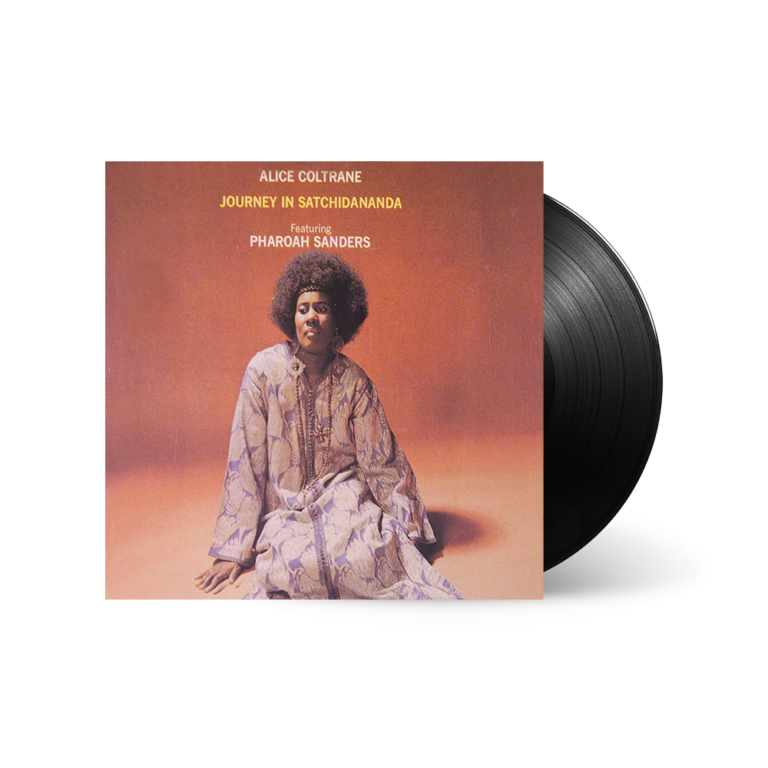
Pharoah Sanders (Saxophone)
In his book The House That Trane Built, Ashley Kahn describes how Coltrane introduced a number of younger saxophonists to Impulse! Not all of these ended up with record contracts at Impulse, but the key ones who did – Pharoah Sanders, Archie Shepp and Marion Brown – recorded some remarkable albums for the label. Pharoah Sanders was the fellow saxophonist most significantly associated with Coltrane – first appearing on “Ascension” (along with Shepp and Brown) and then most significantly as his frontline partner in the final Quintet from 1965 to 1967.
Sanders’s releases for Impulse began in the year of Coltrane’s death and cover an extremely fruitful eleven releases between then and 1974. Like Alice Coltrane, Sanders is one of the artists whose music is most often applied the term closely aligned with “Spiritual Jazz”. There is a raw intensity and depth of feeling to Sanders’s music that is like no one else. His tone and approach to the tenor saxophone is utterly unique – which made him the perfect foil to Coltrane in the quintet, and arguable influenced Coltrane’s own playing. He created sounds from the instrument that no-one else had before him.
Sanders’s recordings for Impulse are rooted in the spiritual, modal musical language of “A Love Supreme” and, like Alice Coltrane’s, take this path to new places. His music draws in elements from African, Latin and other traditions, with expansive use of multiple drummers and percussionists, and sometimes two double bassists, grounding the music in a deep sense of groove. There is a sheer spiritual intensity to Sanders’s music, sometimes stretching over hugely expansive performances. “Black Unity” is a single 37-minute performance, and one of the strongest of the albums.
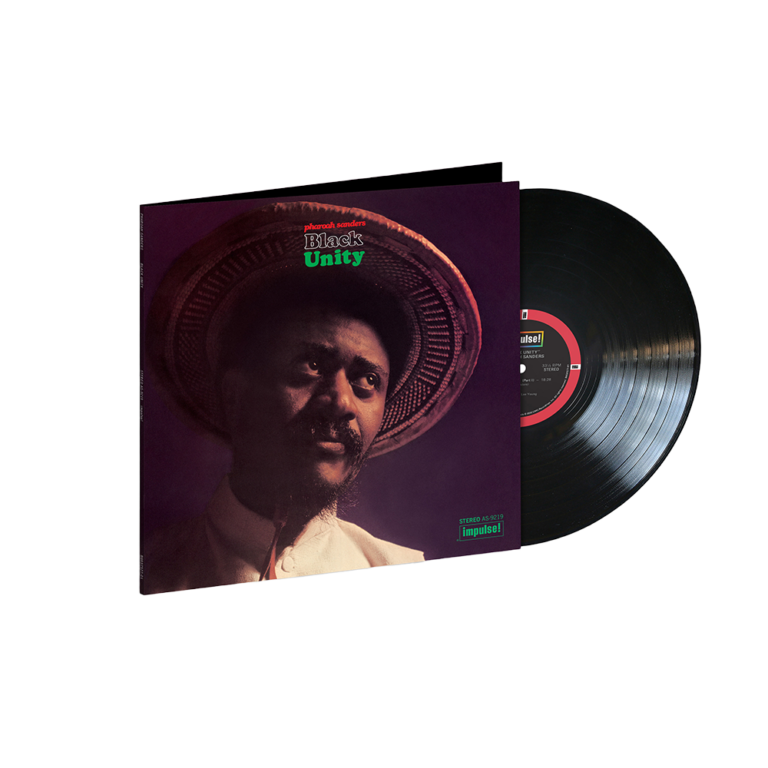
Pharoah Sanders Black Unity LP (Verve By Request Series)
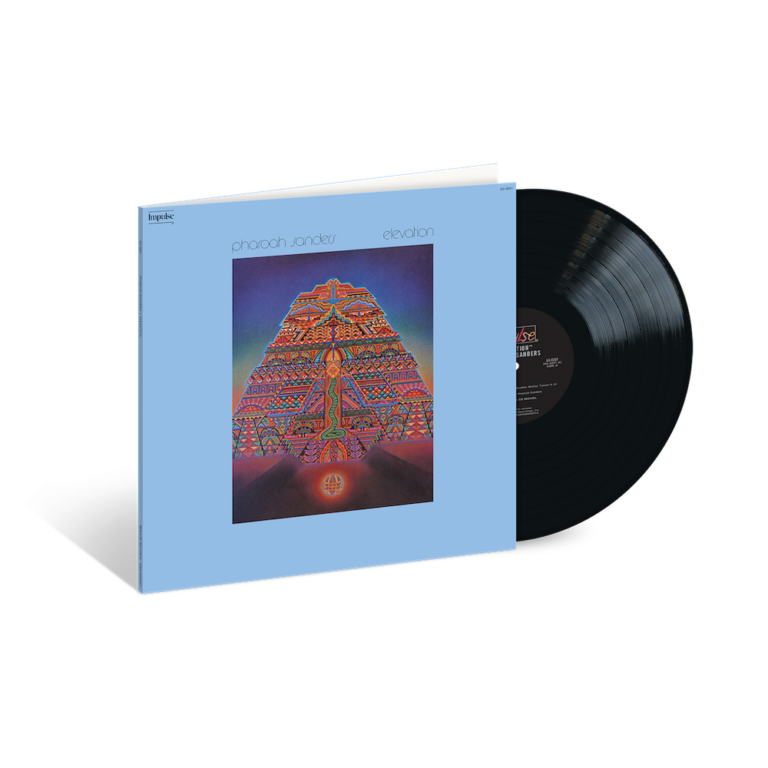
This is deep music, rooted in the Black experience in America in the wake of the Civil Rights movement. “Love In Us All” and “Elevation” are the two final albums that Sanders recorded for Impulse, and some of the best. “Thembi” is a little lighter in tone and perhaps a gateway point for the uninitiated. Collectively these albums represent something extremely deep musically.
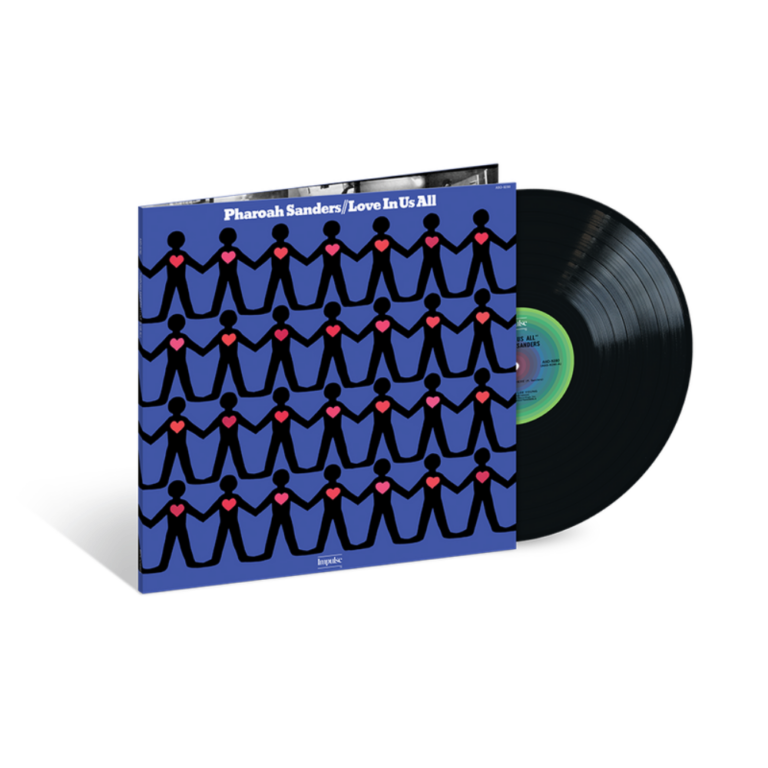
Pharoah Sanders Love In Us All (Verve By Request) 1LP
READ ON…
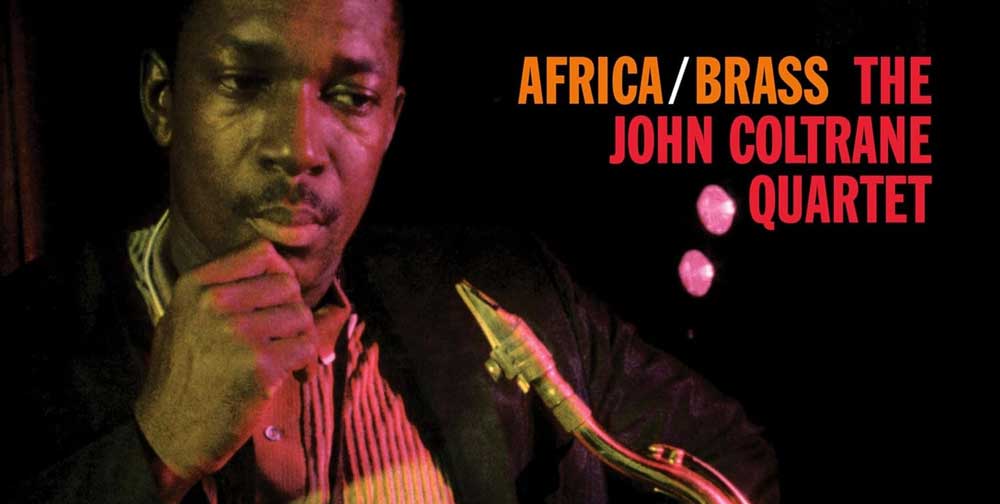
John Coltrane – Africa/Brass
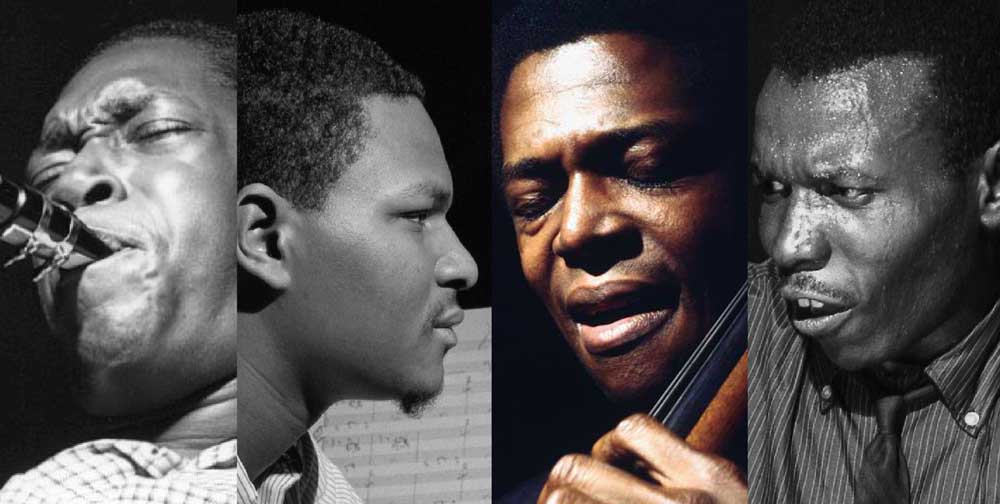
The John Coltrane Quartet: The Iconic Incarnation
Jon Opstad is a London-based composer working across film & television, contemporary dance, concert music and album projects. His scores include the Netflix hits Bodies and Black Mirror, and Elisabeth Moss thriller The Veil, co-composed with Max Richter. An avid record collector, he has a particular affinity for the music of ECM.