As 1957 became 1958 and jazz began its second relatively brief and exciting flirtation with the mainstream, Miles Davis was enjoying a new level of popularity, a trailblazing star on trumpet. He had just edged out Dizzy Gillespie, Maynard Ferguson and Chet Baker in the Down Beat Readers Poll and also been profiled in Time magazine.
His music was advancing in leaps and bounds too: inspired by his continuing love for French culture, Miles recorded the luminescent soundtrack to Louis Malle’s film “Ascenseur pour l’échafaud” on 4 December 1957. Two weeks later, John Coltrane rejoined Miles’s sextet, having being fired six months previously (in the meantime Coltrane had spent valuable time playing with Thelonious Monk, including their legendary Five Spot Café residency).
The new year then brought ever-more Miles masterpieces as his new sextet, including Cannonball Adderley on alto sax, developed apace; most of “Milestones” was recorded on 4 February 1958. Three days later, Coltrane recorded “Soultrane”.
In March, Miles played on Cannonball’s legendary “Somethin’ Else” album. Then the great pianist Bill Evans joined Miles’s band after a recommendation from saxophonist/arranger George Russell. The new sextet spent May and June 1958 performing at Café Bohemia in New York and then enjoyed a week-long engagement at the Spotlite Lounge in Washington D.C.
Then Miles crossed paths with young Parisian composer, arranger and pianist Michel Legrand, fresh from his hugely successful album named “I Love Paris” for which he had just received a flat performance fee, with no royalties attached.
Attempting to mollify the young Legrand, his record company asked who he’d like to work with on his follow-up album. Legrand reportedly replied: “I want to make a jazz album with Miles Davis, John Coltrane, Ben Webster, Bill Evans, Hank Jones and Phil Woods.”
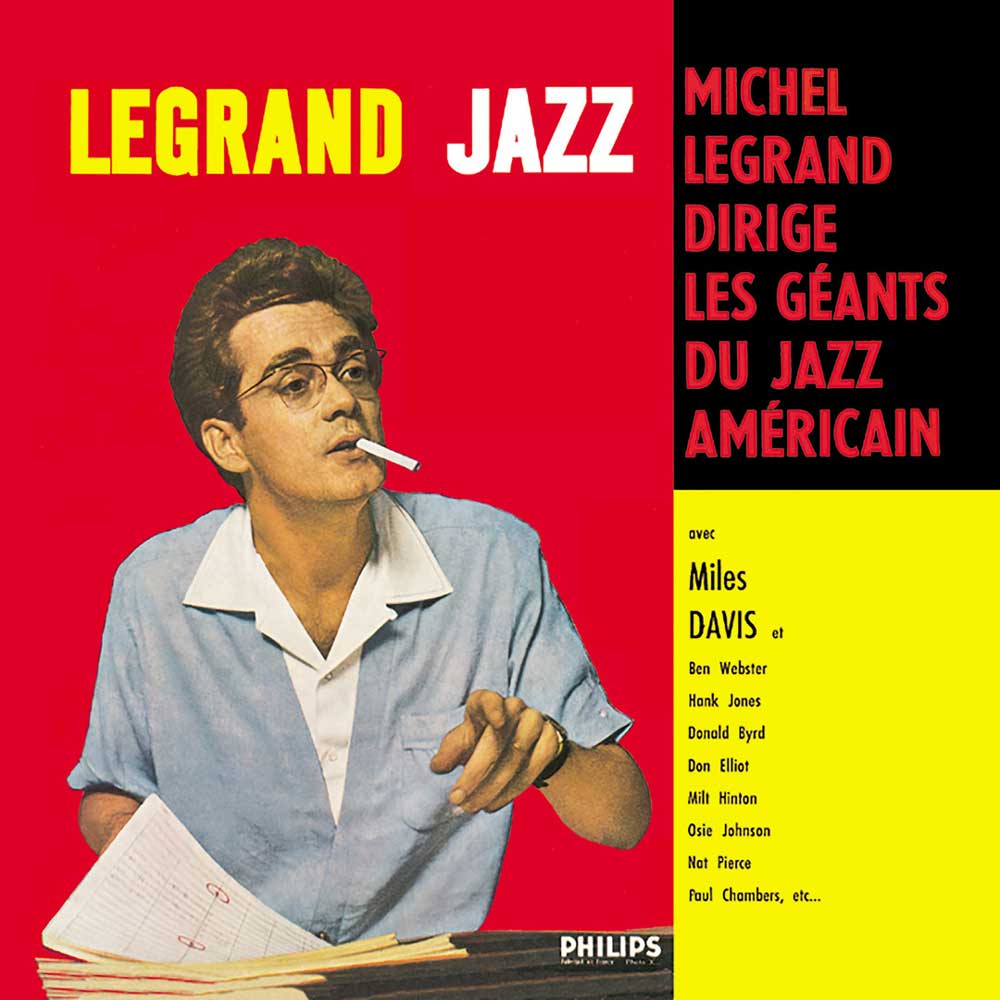
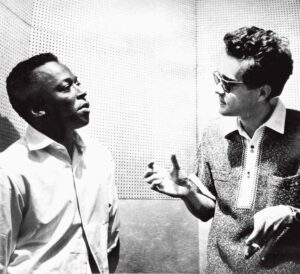
The result was “Legrand Jazz”, recorded when Legrand was just 24 (he reports that he was so nervous during the sessions that he was “sweating”). Miles recorded his parts for the album in New York City on 25 June 1958. Legrand claims he was convinced Miles would leave the studio after hearing his arrangements of the Fats Waller piece “Jitterbug Waltz”. But to the young Legrand’s delight, Miles opened his trumpet case, did a take and said, “Michel, are you happy with my playing?”
Miles’s playing is indeed delightful on the piece, as it is on “Wild Man Blues”, Monk’s “Round Midnight” and John Lewis’s “Django”. Coltrane and Evans also play beautifully on “Jitterbug Waltz”.
The second session for “Legrand Jazz”, without Miles, took place on 27 June, and continued the pairing of uplifting, intricate arrangements with electrifying solos. “Nuages” is reminiscent of Gil Evans’ sound world, with its close-interval horns and woodwinds and engaging, if brief features from Jones and Webster.
“Blues And Sentimental” is a vehicle for Webster’s gorgeous tenor, while a hot take on Gillespie’s “A Night In Tunisia” foregrounds some delicious bass clarinet from future Miles producer Teo Macero.
Meanwhile “Stompin’ At The Savoy” showcases two other brilliant trumpet players performing at their best: Art Farmer and Donald Byrd.
Upon its release in late 1958, “Legrand Jazz” received a five-star review in Down Beat magazine: “The writing is imaginative, tinged with the languid air of Gil Evans at his most soulful, and yet with something more.” It was the last time he would appear as a “sideman”, if we don’t count his work on Marcus Miller’s “Siesta” soundtrack. And though all indications are that Miles enjoyed working on the project, he only mentions “Legrand Jazz” once in his autobiography.
Soon after recording the album, Miles, Coltrane, Chambers and Evans headed off to the Newport Jazz Festival, playing a famous set on Thursday 3 July 1958, and then Miles returned to New York to record “Porgy And Bess” with Gil Evans. It was the start of a remarkable run of form, with “Kind Of Blue” just around the corner. But “Legrand Jazz” easily holds its own and fits perfectly into this classic Miles era.
READ ON…
Miles Davis at 100: The Life and Legacy of a Jazz Pioneer
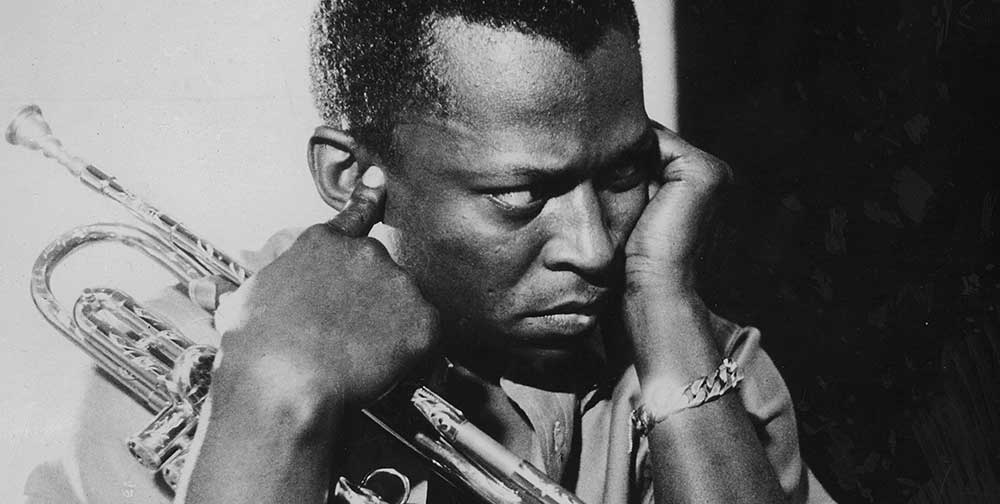
Miles Davis’ Best Albums: His Six-Decade Career in 8 Essential Albums
Matt Phillips is a London-based writer and musician whose work has appeared in Jazzwise, Classic Pop, Record Collector and The Oldie. He’s the author of “John McLaughlin: From Miles & Mahavishnu to the 4th Dimension” and “Level 42: Every Album, Every Song”.
Header image: Miles Davis and Michel Legrand, 1958.