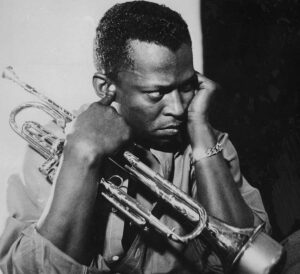
With a trajectory spanning from be-bop to hip-hop, Miles Davis is perhaps the quintessential 20th century artist, constantly forging ahead, never looking back, always in pursuit of the next sound, the next innovation. To look at some of the key albums from throughout his six-decade career is to chart the evolution of not just one extraordinary musician but popular music itself.
Birth of the Cool
Miles was just 18 years old when, in 1945, he replaced Dizzy Gillespie as trumpeter in Charlie Parker’s quintet, plunging him straight into the heart of be-bop. Even then, his laconic delivery brought a laid-back counterpoint to the hurtling virtuosity that characterised the be-bop sound. It was an idea he took to the next level with his first major conceptual breakthrough. For sessions recorded in 1949 and 1950, he assembled a nine-piece band including Gerry Mulligan, Lee Konitz and others and ripped up the be-bop rulebook, focusing on lush arrangements and relaxed tempos. Released as “Birth of the Cool”, this new direction was a key moment in the development of the style that became known as cool jazz.
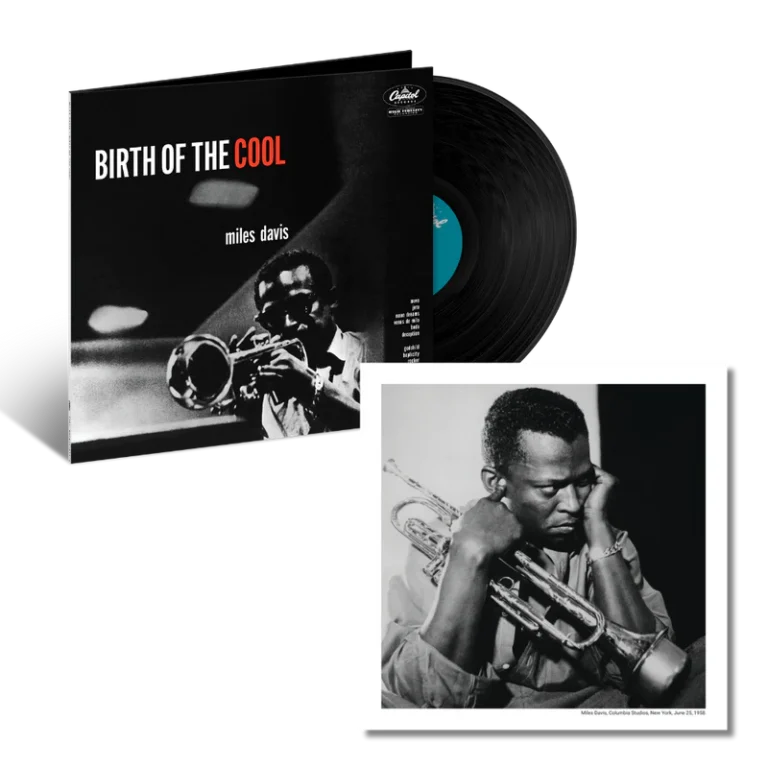
Miles Davis / Birth Of The Cool (Blue Note Tone Poet Series) 1LP
Available to purchase from our US store.Cookin’ with the Miles Davis Quintet
Moving into the 1950s, Miles began to move away from cool jazz, paring back the luxuriant arrangements and honing a more direct, punchier attack with a healthy dose of the blues. Here we see the genesis of hard bop, and his 1954 album “Walkin’” is often cited as the very first example of the genre. But four albums, all recorded at just two sessions in 1956, best exemplify this new style, cut by the band now known as his First Great Quintet – tenor saxophonist John Coltrane, pianist Red Garland, bassist Paul Chambers and drummer Philly Joe Jones. “Cookin’…”, the first to be released, in 1957, is a flawless masterclass in small-group acoustic jazz – lean, muscular, and performed with near telepathic communication.
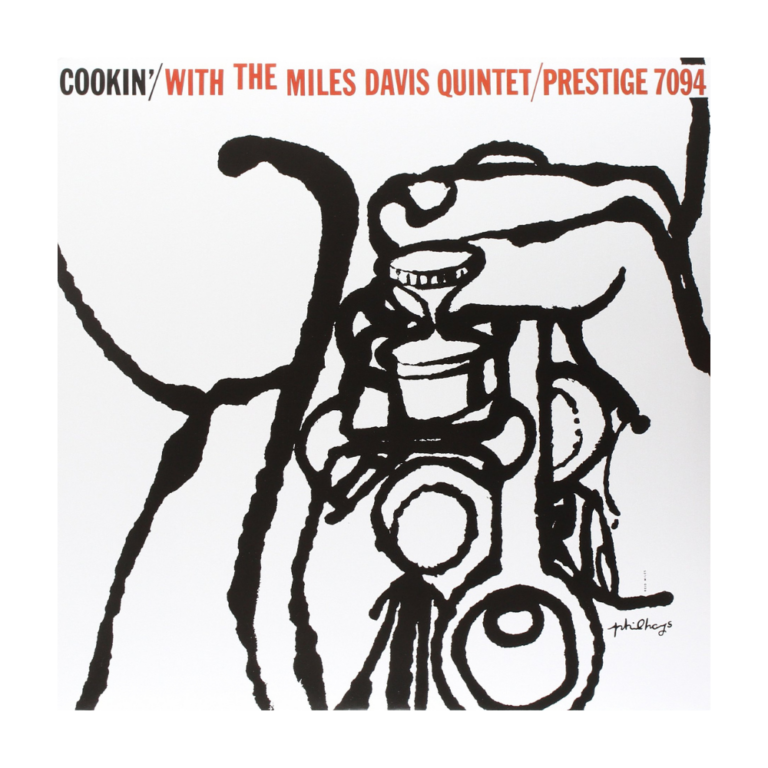
Miles Davis, John Coltrane Cookin' With The Miles Davis Quintet 1LP
Kind of Blue
Miles was among the first wave of adventurous artists to experiment with modal jazz after being inspired by composer George Russell’s groundbreaking theories. The title track of 1958’s “Milestones” was an early example, but the following year Miles recorded the definitive modal statement – “Kind of Blue” – an album based entirely on modality. Recorded by a killer band with the twin saxophones of John Coltrane and Cannonball Adderley, and piano duties shared by Bill Evans and Wynton Kelly, its unhurried, wide-open spaces provided a generous canvas for the band to explore the simple scales Miles provided. Effortlessly cool and gorgeously melodic, it remains an all-time classic and one of the greatest works of art ever created.
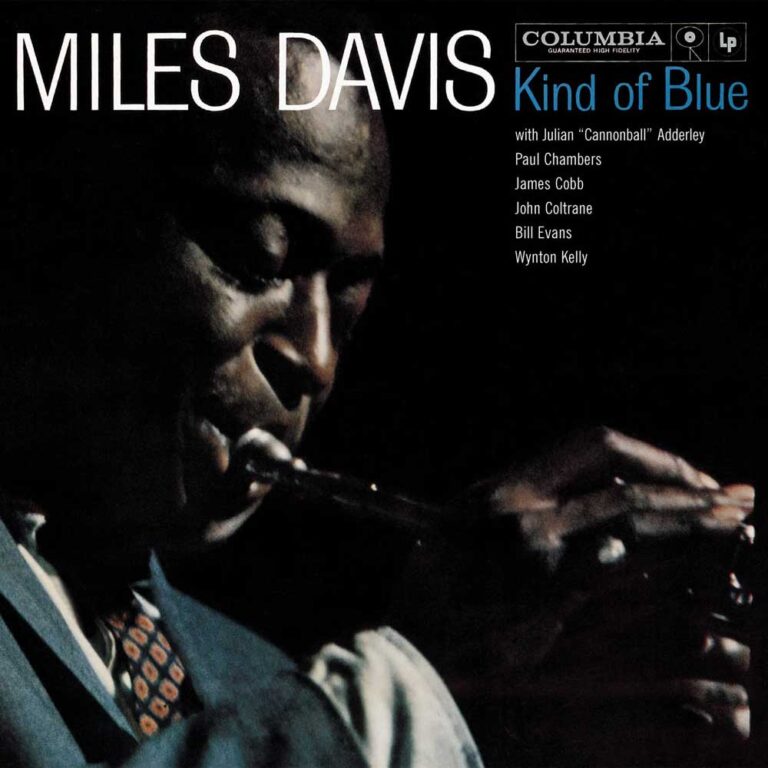
MILES DAVIS Kind of Blue
Available to purchase from our US store.Live at the Plugged Nickel
In the early 60s, Miles tried out various different line-ups until, in 1964, consolidating the band now recognised as his Second Great Quintet. It drew on the prodigious talents of creative geniuses all a generation younger than Miles: tenor saxophonist Wayne Shorter, pianist Herbie Hancock, bassist Ron Carter and teenaged drum prodigy Tony Williams. Together, they forged a sound Miles called “time, no changes”, which borrowed some of the harmonic freedoms of Ornette Coleman’s free jazz while retaining a driving sense of swing. Between 1964 and 1968, the quintet recorded a string of timeless studio albums, but the explosive live set recorded at Chicago’s Plugged Nickel club in 1965 is the pinnacle, daringly reconstructing post-bop jazz with a high-wire group dynamic.
In a Silent Way
Miles’s increasing use of electric instruments in the late 60s marked a seismic shift in jazz. He’d already incorporated electric bass and electric piano on his two 1968 albums “Miles in the Sky” and “Filles de Kilimanjaro” but it was 1969’s “In a Silent Way” that signalled the decisive shift into his ‘electric period.’ Considered by many to be the very first fusion album, it was a bold move away from acoustic jazz with Herbie Hancock, Joe Zawinul and Chick Corea all playing electric piano and John McLaughlin on electric guitar, and the group sound drawing on hints of funk and rock. With its dreamy, hypnotic mood, it can also be seen as a prophetic early precursor of today’s ambient jazz scene.
Bitches Brew
Recorded in the days immediately following the Woodstock festival in 1969, “Bitches Brew” was where Miles fully immersed himself in the mysterious energies of psychedelic rock. Using expanded line ups of between 10 and 13 musicians playing horns, multiple percussion and electric pianos, bass and guitar, it created a dark and brooding mood through loose, open-ended jams, collaged together into the final tracks by producer Teo Macero. At a stroke, Miles had invented jazz-rock – and found a new audience among the hippie counterculture. Suddenly, he was sharing bills with bands like the Grateful Dead, playing rock venues like the Filmore and the Isle of Wight Festival in 1970.
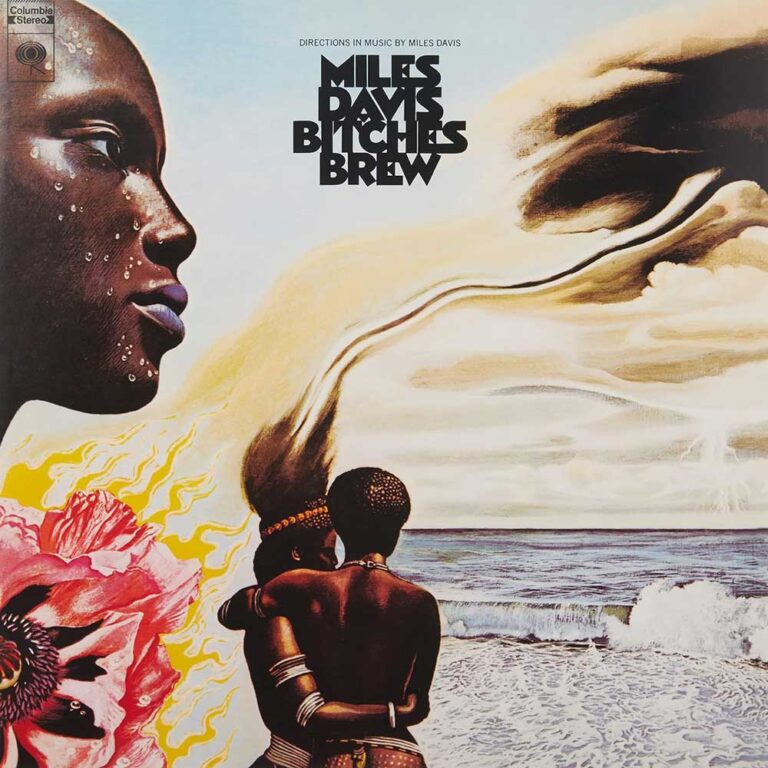
MILES DAVIS Bitches Brew
Available to purchase from our US store.On the Corner
Miles also wanted to connect to young Black audiences who had turned away from jazz to listen to the funk of James Brown and Sly and the Family Stone, and 1972’s “On the Corner” is about as funky as it gets. Built around seriously deep vamps provided by young electric bassist Michael Henderson – whom Miles had poached from Stevie Wonder’s touring band – and with Miles playing trumpet through a wah-wah pedal, it revels in a sweaty, sultry vibe. But this is no ordinary funk album. Miles adds other weird elements to the mix – including tabla, sitar and electric cello – and incorporates the concepts of experimental composer, Karlheinz Stockhausen to create strange, ever-shifting alien vistas.
Agharta
By the middle of the 70s, Miles’s music had moved so far away from his jazz roots as to be almost unrecognisable. Recorded live in Japan in February 1975, “Agharta’ is a wild” challenging distillation of all the experiments that had come before. Its sprawling jams are, again, driven by Michael Henderson’s powerful bass vamps, with electric guitarist Pete Cosey shredding heavily distorted solos and Miles interjecting with sudden, spectral organ drones. It’s as intense and glowering as Miles, the Prince of Darkness himself. Just after its release in August 1975, Miles – in poor health, exhausted and burnt out by substance abuse – temporarily retired from music. He was 49 years old. He would be back five years later, recording covers of pop songs by Michael Jackson and Cyndi Lauper, collaborating with Prince and others and, in 1991, the year of his death, working with hip-hop producer Easy Mo Bee. But it’s that astonishing 30-year blaze of non-stop, relentless innovation for which he will always be best remembered – an astonishing creative journey that transformed jazz over and over again.
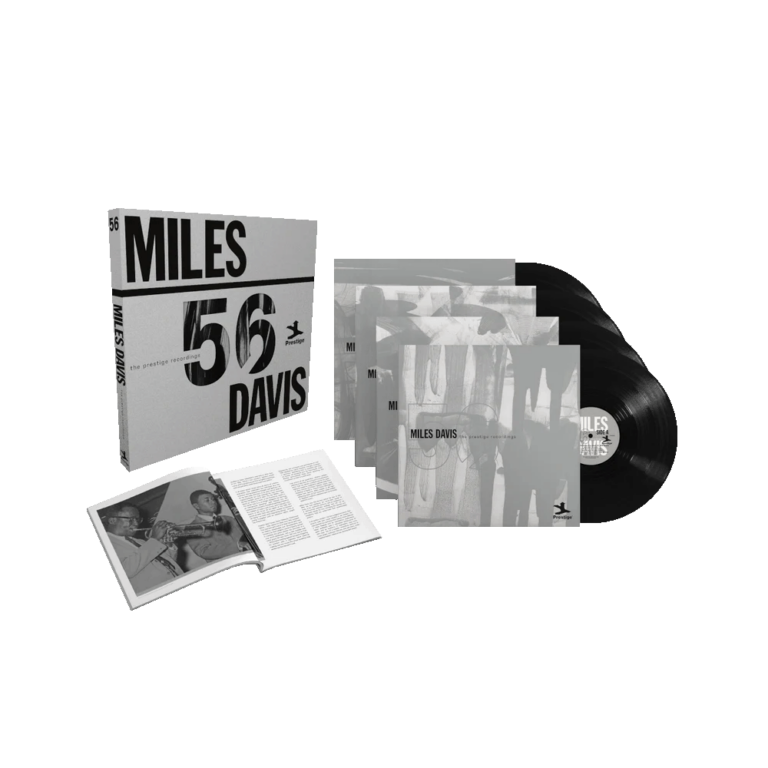
MILES DAVIS Miles '56
Available to purchase from our US store.READ ON…
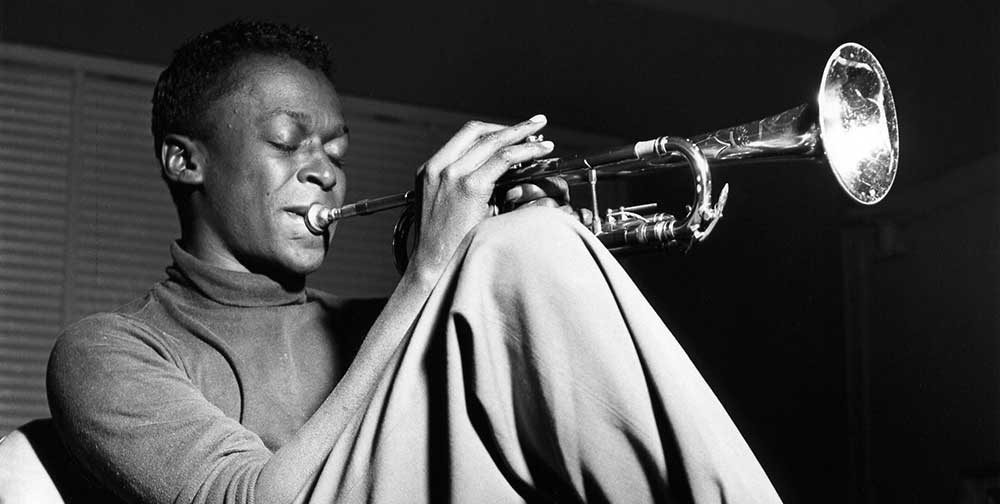
The Making of Miles Davis’ “Birth of the Cool”
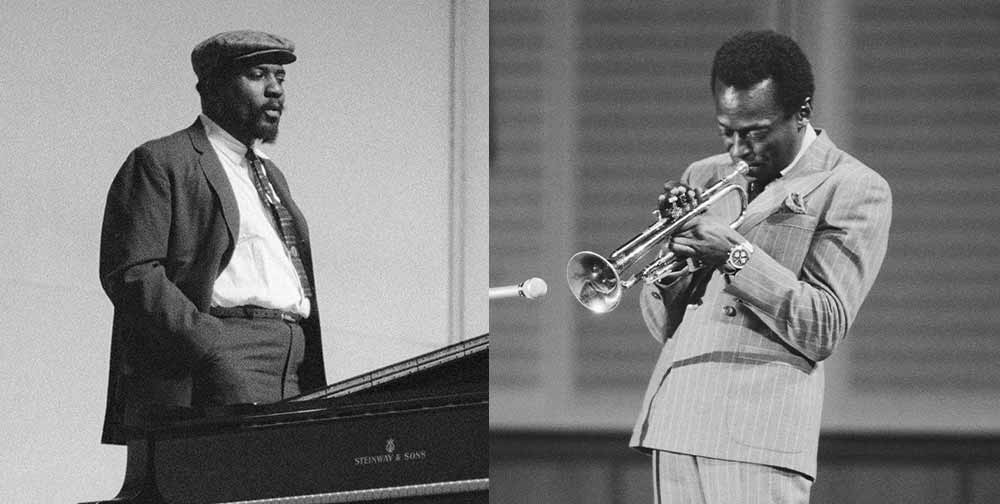
Miles & Monk Meet: Bags Groove
Daniel Spicer is a Brighton-based writer, broadcaster and poet with bylines in The Wire, Jazzwise, Songlines and The Quietus. He’s the author of books on German free jazz legend Peter Brötzmann and Turkish psychedelic music.
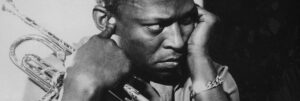
Header image: Miles Davis. Rights reserved. Columbia Studios, New York, June 25, 1958.