
Listen awhile to “The Myth We Choose”, the new recording from pianist and composer Nduduzo Makhathini, and there’s a sense that this is more than an album. It is a spiritual document in which ancestry, ritual and cosmology blend and spark; where memory is invoked through voices that radiate via handclaps, prayerful piano figures and rhythms that feel dug from the earth.
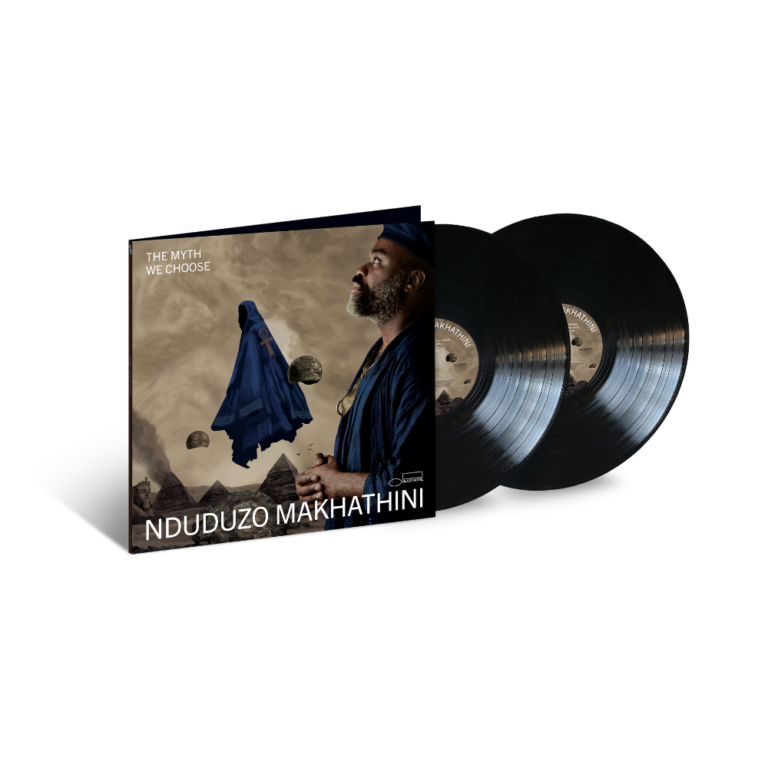
The project’s 16 original songs embrace themes that range from masculinity and remembrance to love and transcendence. Each track feels like a sacred offering. Opener ‘Kuzodlula’, a treatise on forgiveness, unfurls like a procession, buoyed by double bassist Dalisu Ndlazi and drummer Lukmil Pérez – members of Makhathini’s live trio – and the luminous trumpet playing of Robin Fassie. ‘Imvunge KaNtu’, tougher, groovier, and laced with chants and handclaps, comes touched by an ecstasy that seems to summon – what? Collective remembrance? Our deepest self?
“The Myth We Choose”, then, isn’t simply music for music’s sake. As glorious as this listening experience is – these are songs that move in the body before settling in the intellect – Makhathini’s aesthetic speaks to decolonising the past and reimagining the future.
Of creating a world that we all want to live in.
An educator, philosopher, and traditional sangoma healer as well as a musician, Makhathini was raised in a musical family in the umGungundlovu region in KwaZulu-Natal, South Africa. The semi-rural hillscape was formerly the terrain of 19th-century Zulu king Dingane and remains a region where music and ritual practices are inseparable.
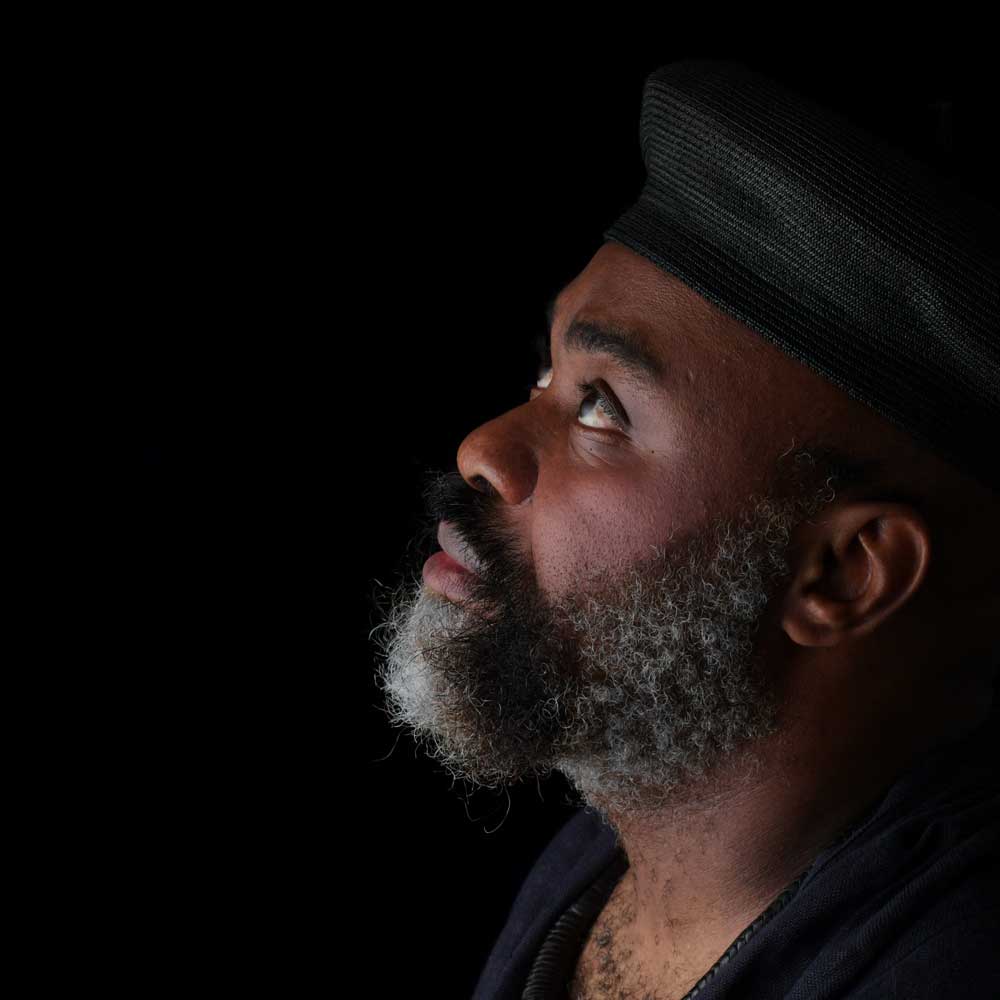
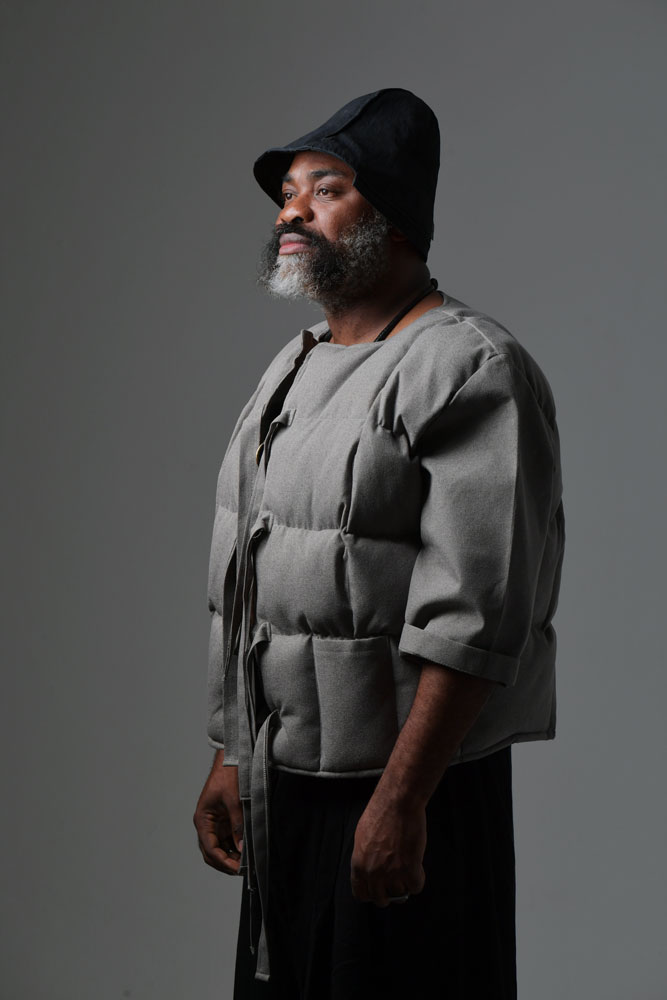
Nduduzo Makhathini. Photos: Siphiwe Mhlambi.
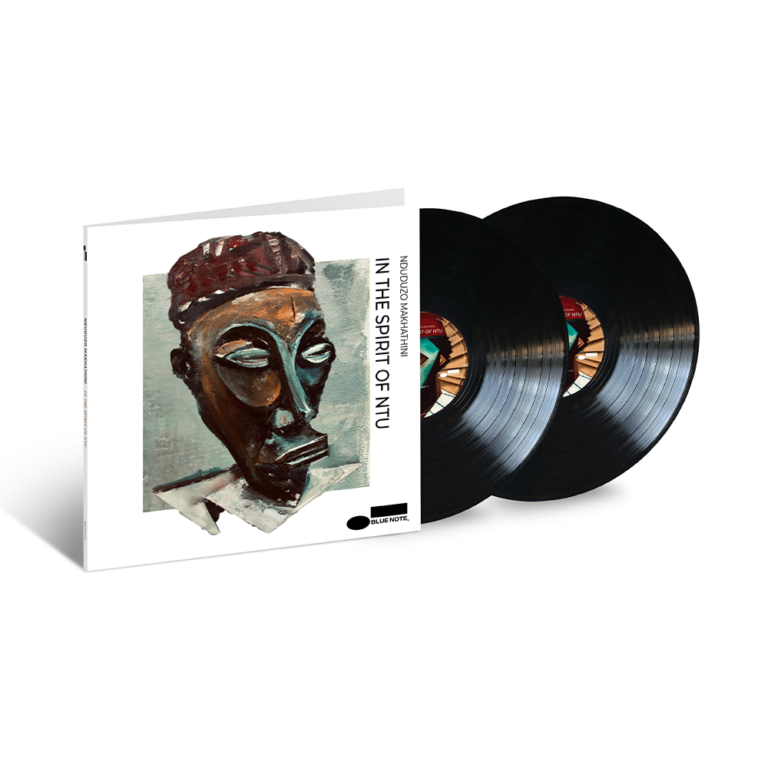
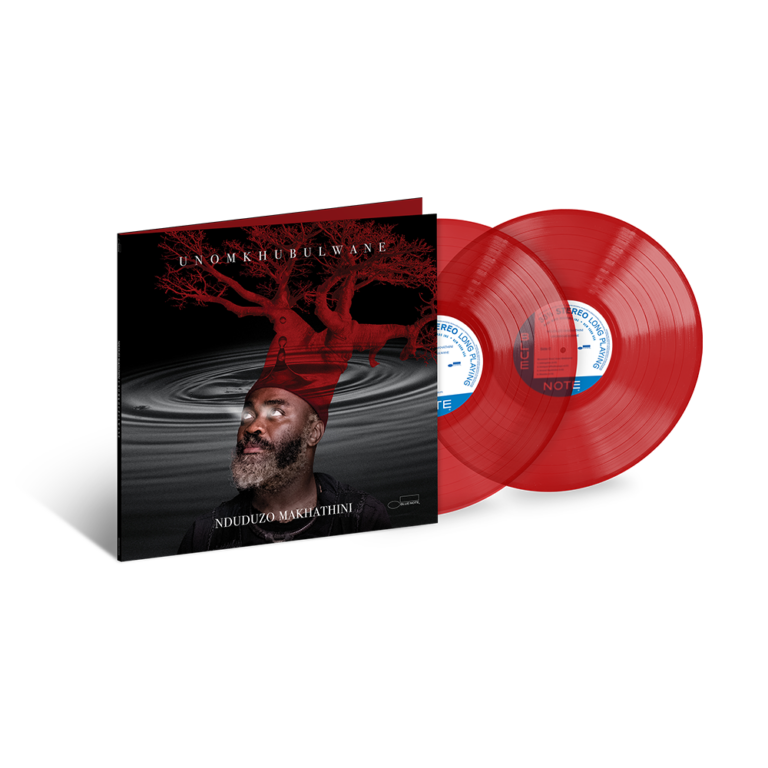
Armed with a PhD in Music – with research that challenges Western-dominated jazz studies by centering African worldviews and spiritualities – Makhathini folded this music-as-ritual symbiosis into his three previous albums for Blue Note: 2024’s “uNomkhubulwane”, a three-movement trio recording; 2022’s “In the Spirit of Ntu”, named for the universal force that bridges the physical and spiritual; 2020’s “Modes of Communication: Letters from the Underworld”, the Blue Note debut that set out his stall.
Recorded between Durban and Johannesburg, “The Myth We Choose” is an inevitable evolution of Makhathini’s sound. It also feels startlingly new. Electronics pulse beneath modal improvisations – whose creations Makhathini likens to the throwing of the bones in sangoma divination – while neo-soul textures and Afro-Cuban vibes brush against spiritual traditions to arrive at a kind of ritual theatre.
Co-produced with Makhathini’s 18-year-old son, Thingo Makhathini (who does not perform on the album), this double album expands the pianist’s sonic language into richer, more contemporary terrain. On tracks like ‘Ekuqaleni’ – a song about the Zulu creation myth – synthesizers and vocoder reshape the atmosphere, lending Hancock-esque fusion to a spiritual jazz language that nods to Coltrane and McCoy Tyner, the cosmologies of Zulu thought and the prophecies of South African improvisation. Indeed, few contemporary pianists combine such technical fluency with such spiritual intentionality in the way Makhathini does.
The father-son dynamic deepens the album’s recurring meditations on lineage and inheritance, as evidenced on ‘Linwalo la Mubebi’, a father’s love letter to his child, co-written with Thingo and vocalist Muneyi, whose exquisite singing exposes the power of vulnerability and boundaries-down emotion.
Makhathini’s collaborators arrive invested in shared spiritual labour: vocalists Thando Zide, the aforementioned Muneyi and Omagugu, Makhathini’s wife and frequent collaborator. DJ and producer Black Coffee contributes understated effects to ‘What People Say’ (Reprise), a tune about the creation of myths. Guitarist Keenan Ahrends brightens ‘Umbono’, a song that encourages the retrieval of our intuitive sixth sense. Shabaka Hutchings appears on flute on ‘Liyoze Line Nagakithu’, weaving his instrument gracefully around Makhathini’s piano and Ndlazi’s bass in a hymn to rain as blessing.
Drummer Ayanda Sikade joins on ‘Zimthilili’, the closer, a gently hypnotic love song reflecting on youthful embarrassment, longing and eventual connection. It finds Makhathini singing softly over mesmerising grooves, intimate yet distant, that seem to dissolve into … well, into the cosmos.
The ceremony, you feel, is complete.
“The Myth We Choose” feels certain to feature on Album of the Year lists. For all its ambition and complexity, despite its mighty philosophical framework, it’s an album – a document – that never loses its sense of melody, flow or emotional immediacy. Success, however, is arguably incidental to Makhathini’s central purpose – to heal, confront and re-enchant the world.
READ ON…
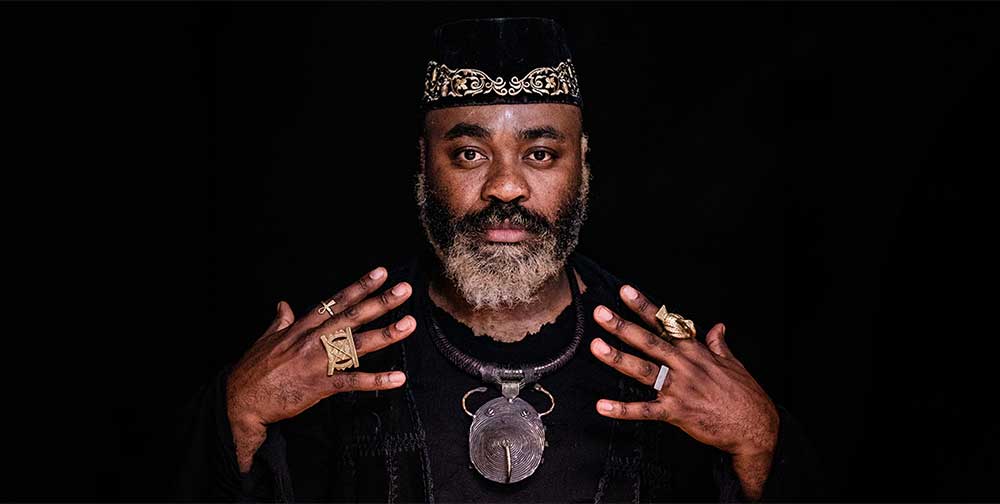
Nduduzo Makhathini – The Spirituality of Sound
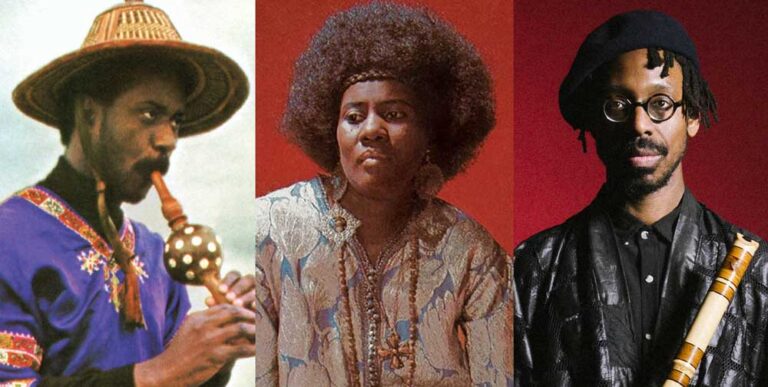
What is Spiritual Jazz?
Jane Cornwell is an Australian-born, London-based writer on arts, travel and music for publications and platforms in the UK and Australia, including Songlines and Jazzwise. She’s the former jazz critic of the London Evening Standard.
Header image: Nduduzo Makhathini. Photo: Siphiwe Mhlambi.