
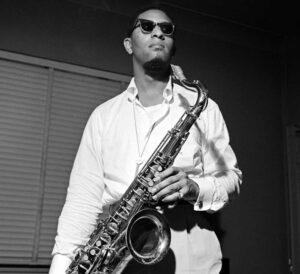
For many jazz fans, it’s hard to imagine a world without Sonny Rollins.
He seemed a force of nature, a titan of the tenor with the huge, swaggering tone, someone who would always be around. But sadly we have finally lost Sonny at the age of 95, the last survivor of the famous “Great Day In Harlem” photo.
He was surely the quintessential jazzman – bold, fearless, searching, totally committed to improvisation in all its varieties. Above all, he was surely jazz’s greatest ever storyteller. He was also one of the loudest sax players ever. “I don’t care how many ideas you have – a loud sound is something that you have to work on, but it’s very important,” Sonny told Michael Jarrett for the book “Pressed For All Time”. He worked hard on maintaining a high volume, particularly important when playing in venues without amplification, a common occurrence early in his career.
Every Sonny fan will have a favourite story. One event particularly sticks out for this writer, seen in Robert Mugge’s 1986 documentary “Saxophone Colossus”. In the middle of a solo, wanting to get closer to his audience, he suddenly jumped 15 feet from the Central Park stage, breaking his heel in the process. After the briefest of sojourns, he just continued straight on with his improvisation while lying flat on his back.
In general terms, he claimed that he basically liked “simple” songs, ones that offered the most chance of development, ones that “take you through difficult waters, and then bring it back,” as he told Ben Sidran in 1986. And he loved playing without a piano player, priding himself on outlining the chord changes himself as ingeniously as possible.
Rollins thrived on live performance, resolute in giving an audience its money’s worth. But he was always his own harshest critic. “If they like it, then I’ve shown that I’m a professional. That’s all,” he told JazzTimes in 2016.
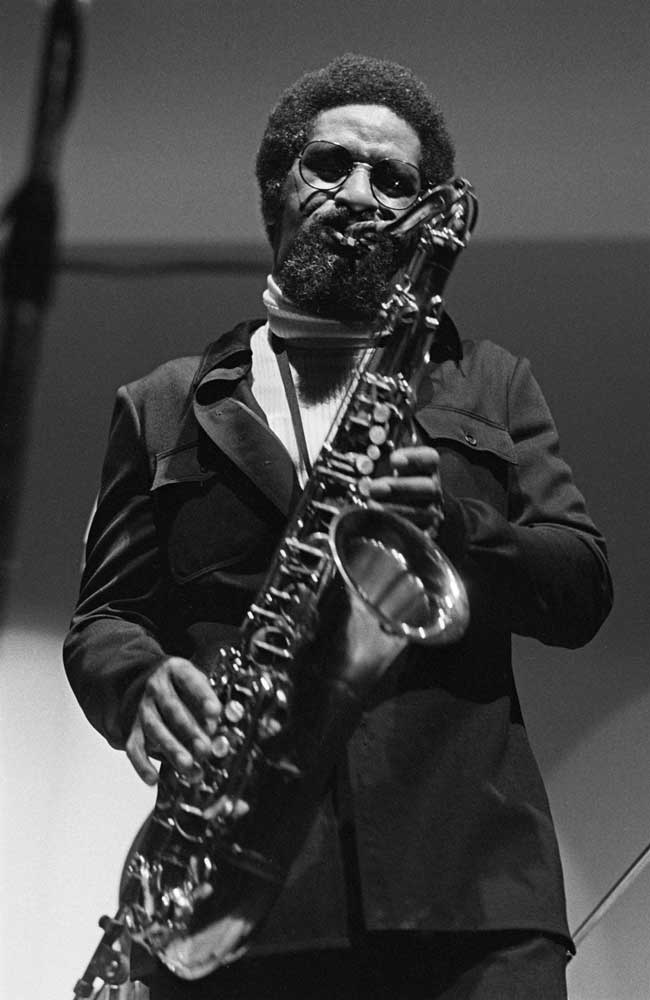
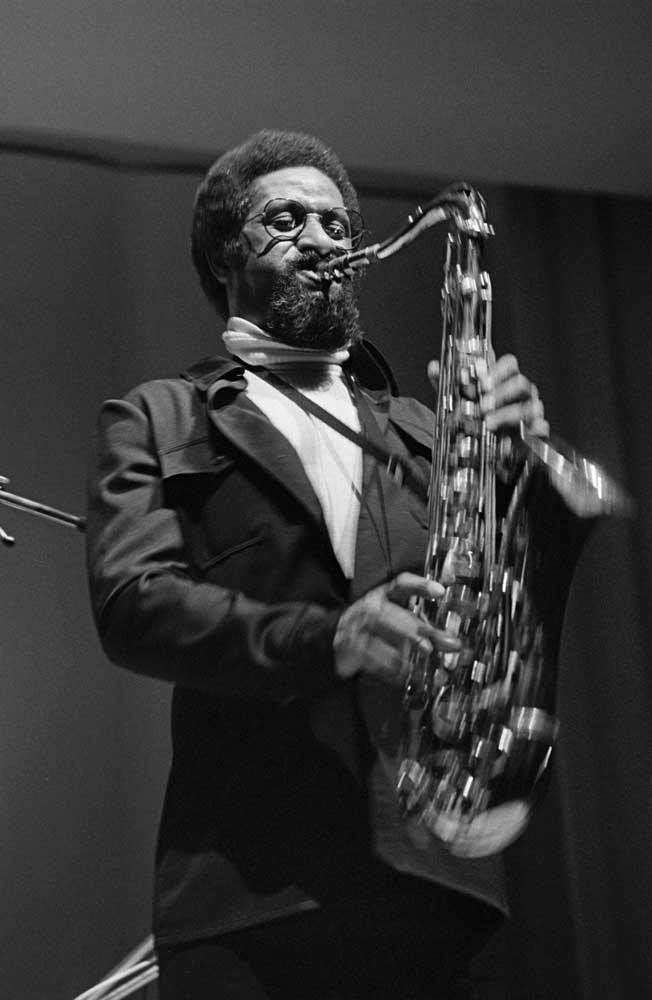
Sonny Rollins’ concert “Saxophone ’72” at the Finlandia Hall in Helsinki 30.8.1972. Photo: Timo Hämäläinen / Finnish Heritage Agency.
He was born Theodore Walter Rollins in Sugar Hill, a middle-class district of Harlem, New York, during the peak of the Renaissance, a time when it wouldn’t be unusual to see WEB Du Bois, Duke Ellington or Coleman Hawkins at the local store.
Inspired by Charlie Parker’s words – if not his deeds – he beat drug addiction in the mid-‘50s and from then on led an evolved life, practicing yoga and meditation and locating music as a universal element, above human concerns. He also believed in reincarnation: “Life goes by like that, but it’s just a trip. My friend Ira Sullivan said, ‘This is a rehearsal down here.’ That’s right. This is just a place to learn,” he said in 2016. He was also one of the first jazz musicians to bring social matters into play, with “Freedom Suite”, and his famous composition “Airegin” (Nigeria spelt backwards).
He took his first major break from performance in 1959, famously heading to the rafters of the Williamsburg Bridge to practice. But his final break happened at the end of 2012, after being diagnosed with pulmonary fibrosis (which he partly traced from being six blocks north of the World Trade Centre on 9/11). But he remained an active figure in the media right up until a few years before his death.
We know that he defined himself by live performance and was deeply suspicious of the studio, but
he did leave a few nuggets. Here are just a few key recordings:
“Old Devil Moon” from “A Night At The Village Vanguard” (Blue Note, 1957)
A remarkable display of tenor creativity. Things particularly heat up around the three-minute mark, when Rollins inserts a military march feel, and a host of question-and-answer phrases that delight the ear. Elvin Jones supports all the way, inserting a lovely calypso feel at times, perhaps nodding to Rollins’ background (his mother was from Saint Kitts).
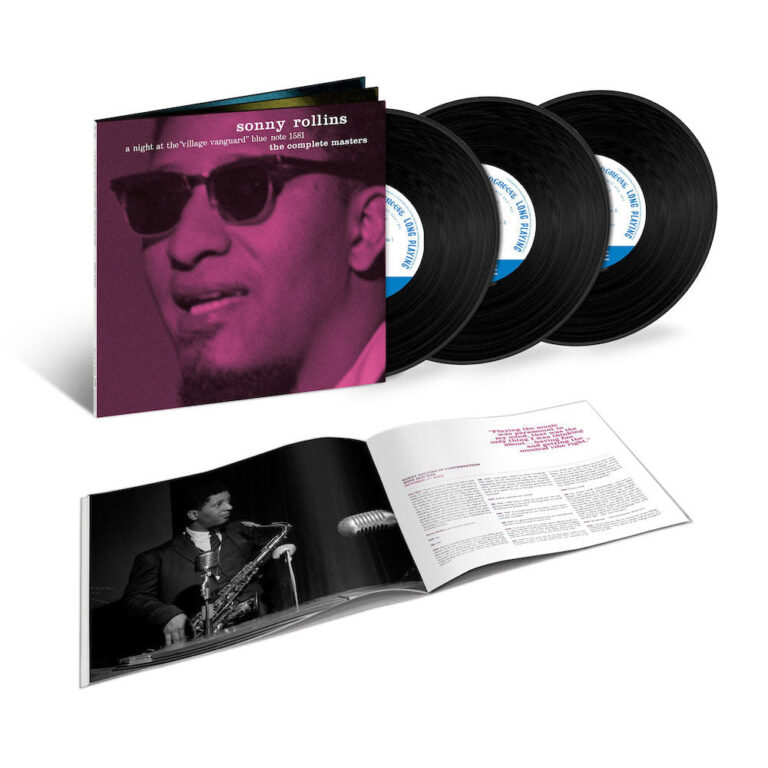
Sonny Rollins A Night At The Village Vanguard (Blue Note Tone Poet Series)
“The Eternal Triangle” from “Sonny Side Up” (Verve,1959)
Rollins duets with another legendary tenor player Sonny Stitt, and there’s no grandstanding, just deep focus and narrative improvisation, with plenty of surprises. Rollins’ break was named in JazzTimes’ list of “40 Essential Solos” in 2017.
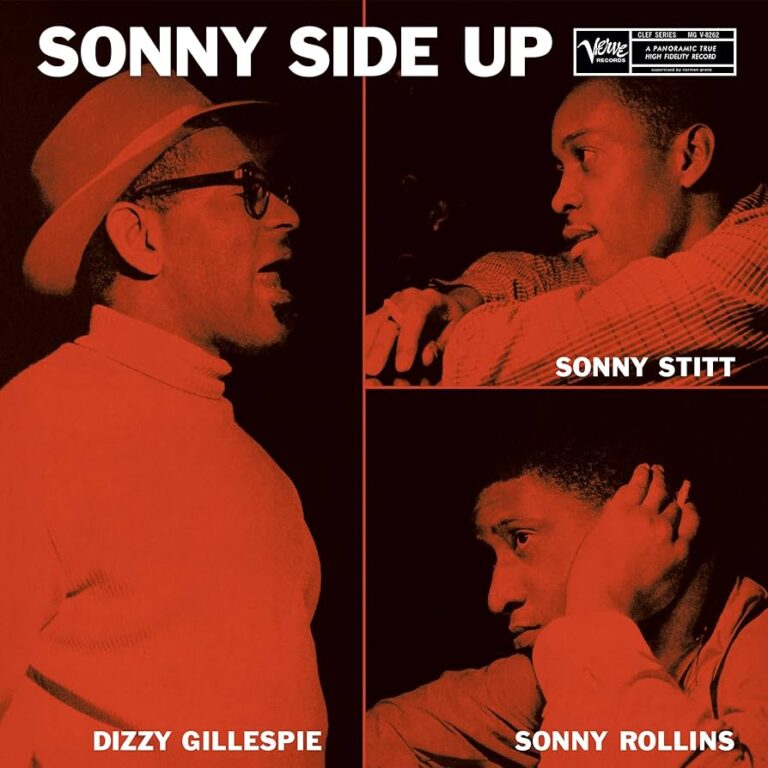
DIZZY GILLESPIE, SONNY STITT, SONNY ROLLINS Sonny Side Up
Available to purchase from our US store.
“The Surrey With the Fringe on Top” from “Newk’s Time” (Blue Note,1959)
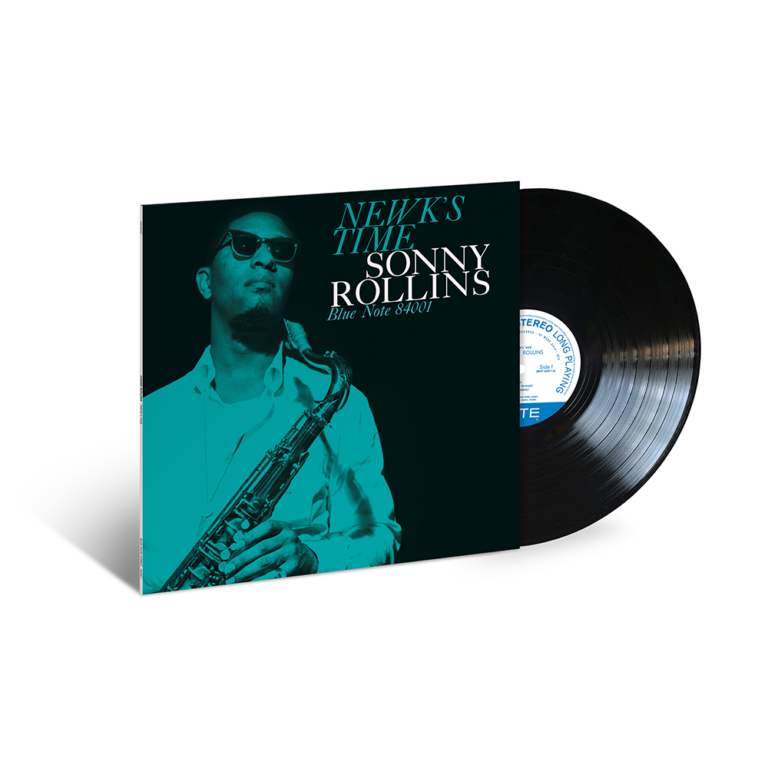
Sonny Rollins Newk's Time LP (Blue Note Classic Vinyl Series)
The duet with drummer Philly Joe Jones on this Rodgers & Hammerstein song from the musical “Oklahoma” is an absolute delight. Rollins’ tenor has seldom been better recorded, with its fluid, creamy tone.
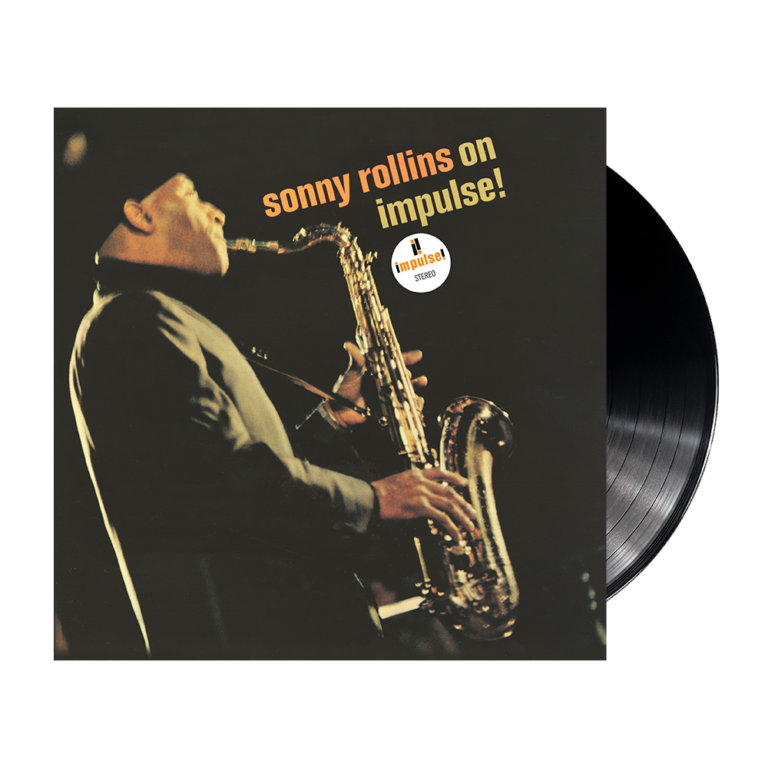
“Three Little Words” from “On Impulse!” (Impulse!1965)
Philip Larkin called his performance on this standard “smoothly amazing”. He embellishes the simple tune with striking intervallic leaps and challenging percussive ideas, with striking tonal varieties captured by engineer Rudy Van Gelder. Rollins’ closing cadenza injects some gentle humour too.
“Alfie’s Theme” from “Alfie” (1966)
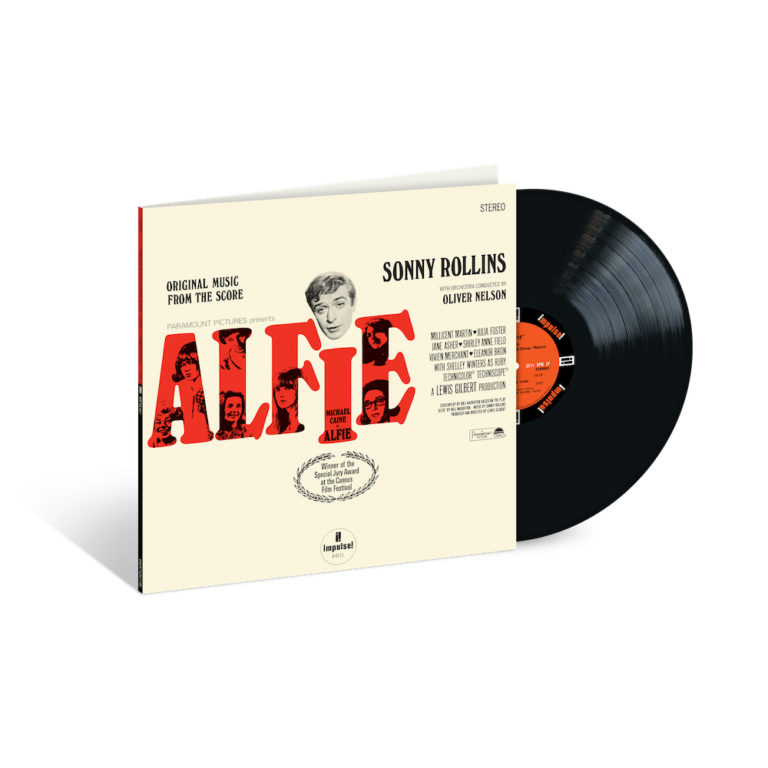
Sonny Rollins Alfie (Verve Acoustic Sounds Series) 1LP
Sonny’s original score for the Michael Caine movie includes a long, strutting solo on “Alfie’s Theme,” one of his most enduring original compositions. The power coming from his horn is remarkable. The catchy melody is also augmented by Oliver Nelson’s fine arrangements.
READ ON…
Miles Davis’ Best Albums: His Six-Decade Career in 8 Essential Albums
Sonny Rollins’ “East Broadway Run Down”
Matt Phillips is a London-based writer and musician whose work has appeared in Jazzwise, Classic Pop, Record Collector and The Oldie. He’s the author of “John McLaughlin: From Miles & Mahavishnu To The 4th Dimension”.
Header image: Sonny Rollins. Photo: Francis Wolff / Blue Note Records.