

There comes a point in some conversations when you realise that, although you’re talking about one thing, you’re actually talking about something much bigger.
I thought I was talking to Meshell Ndegeocello about her new album, Synonym. By the end, I wasn’t so sure. Because whether she was discussing language, collaboration, bass, arrangement, African music, melody, identity or ageing, she kept circling back to the same idea: what happens when you stop centring yourself and start serving something larger?
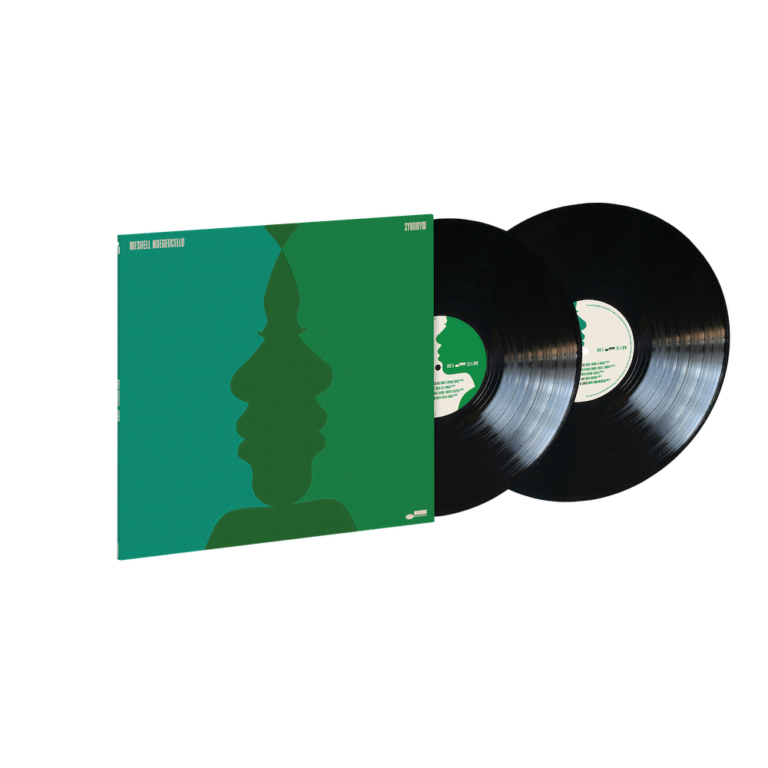
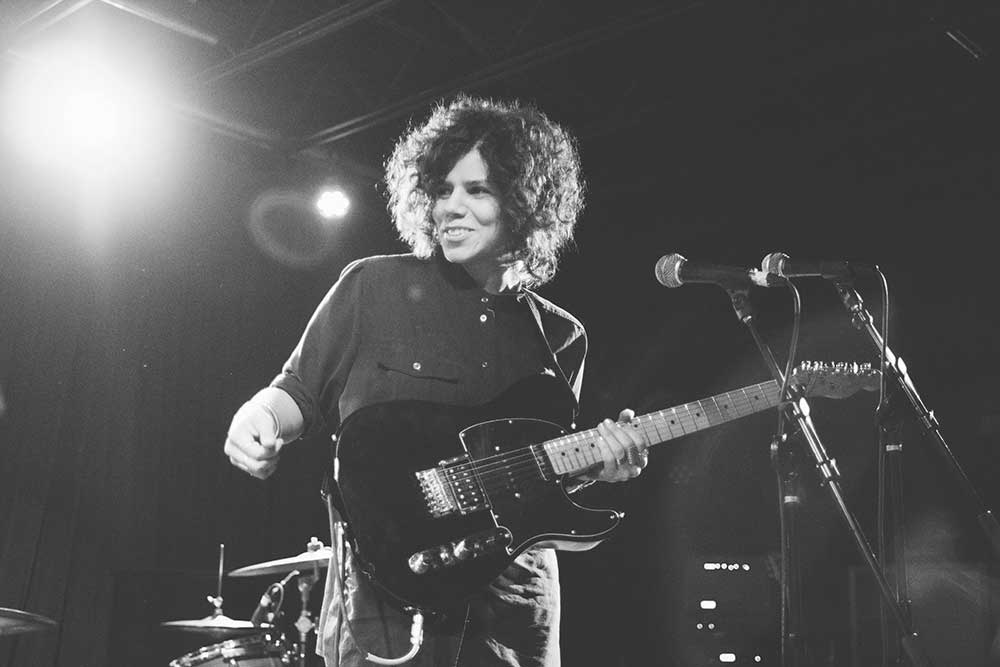
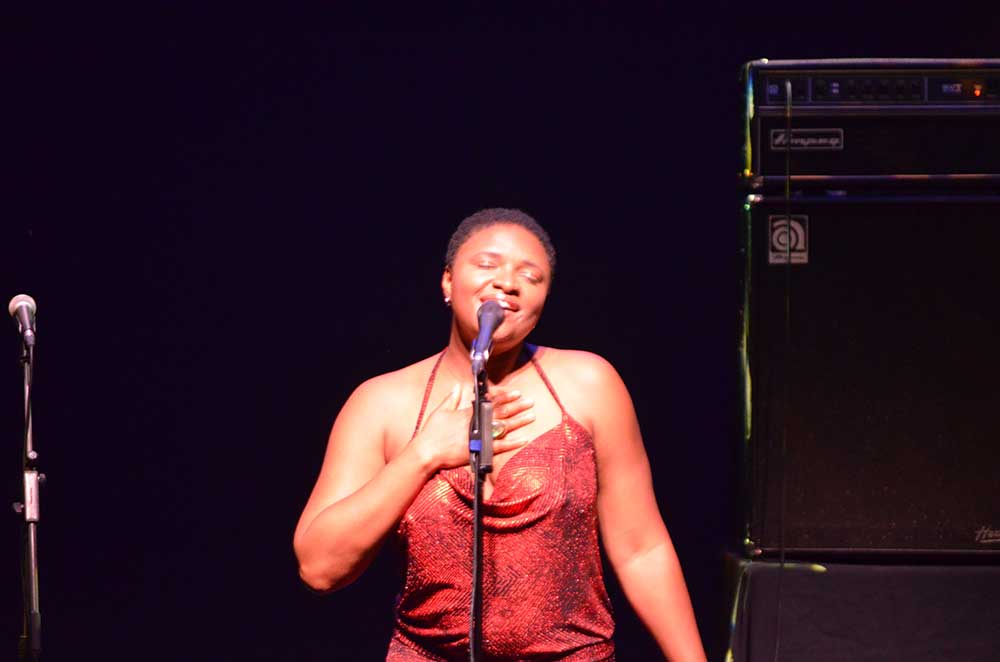
That feels especially apt for Synonym, an album that brings together an extraordinary range of artists including Cynthia Erivo, Chaka Khan, Cat Power, Lianne La Havas, Moses Sumney, Emily King and Lizz Wright. These aren’t guest appearances for the sake of guest appearances. They’re part of a larger conversation.
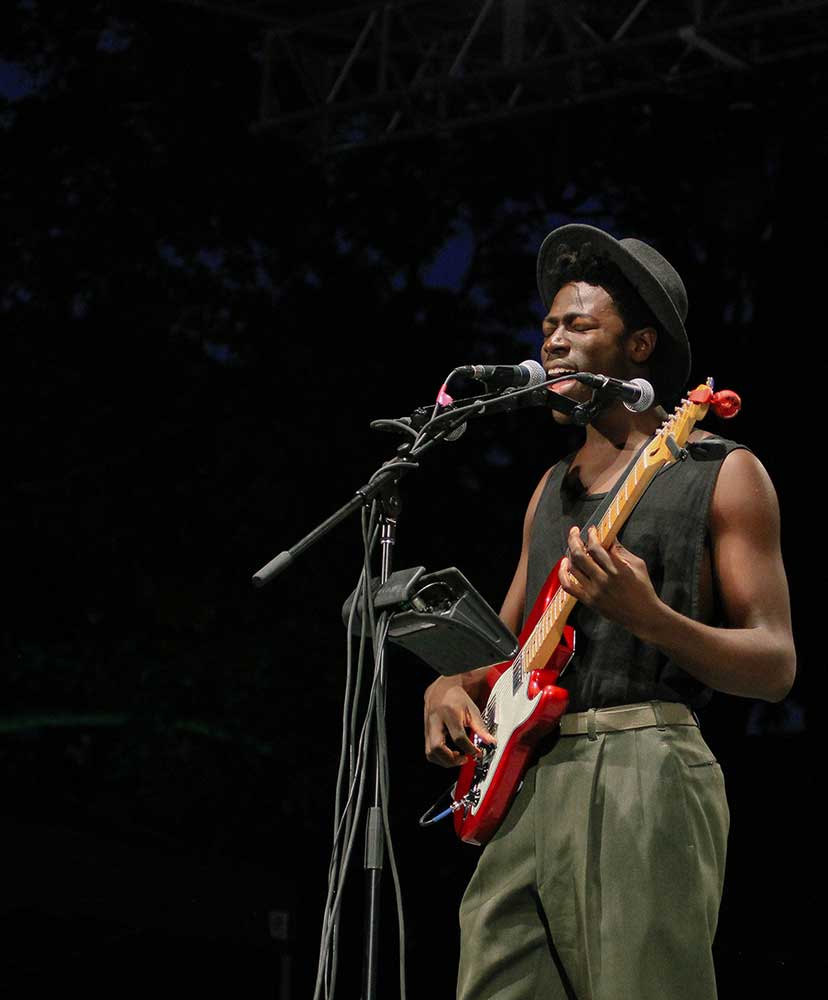
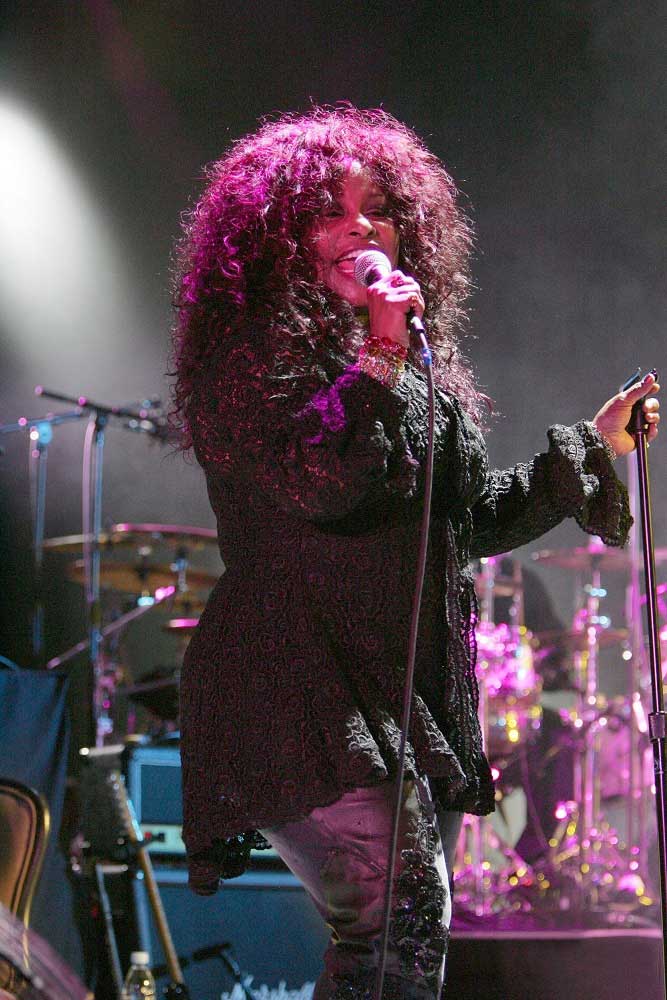
The title itself is a clue. “I’m a lover of language,” Meshell tells me. “Especially etymology or how language shifts and morphs.” For her, Synonym is a gentle challenge to the divisions people create. “We’re more the same,” she says. “We all want to feel loved, have some sort of self-defined meaning in our life. We all want clean water. And clean food.”
It’s a simple idea, but one that runs against much of modern culture, which often seems determined to sort people into categories as quickly as possible. Meshell has spent more than three decades resisting precisely that impulse. “When you make a quick generalisation, or you label something, it makes it easier to sell,” she says. She’s experienced that tendency personally. “I’ve had people say, ‘You used to be this black, angry young woman.’ And I’m like, ‘No, that’s your definition of what was happening.’” What troubles her isn’t disagreement but reduction. “I don’t want anyone in my life to quickly surmise me like that or give the Cliff Notes on my life. Get to know me deeply.”
Growing up, she remembers hearing artists who would later be placed in very different musical genres sharing the same airwaves. “I grew up where I could hear Fleetwood Mac and Stevie Wonder on the same station,” she says. “There never were these racial distinctions or R&B pop distinctions when I grew up. Good music was just good music.”
That refusal to accept neat boundaries is all over Synonym. Listening to it, I kept thinking about how many of the songs felt simultaneously familiar and unfamiliar. At one point in our conversation, I tell her that I feel as though I’m on a journey with the record, one that is “sonically challenging” in the best possible sense. Songs we think we know are suddenly asking to be heard differently. She laughs, recognising exactly what I mean.
The conversation turns to collaboration and artistic freedom, and it quickly becomes clear that she doesn’t think of music as an individual pursuit at all. I tell her about seeing her perform in London a few years ago. What stayed with me wasn’t any display of ego or even virtuosity, though there was plenty of that. It was the fact that she seemed entirely within the music. Not in front of the band, locked into the middle of the band. That, to me, was what felt magical.
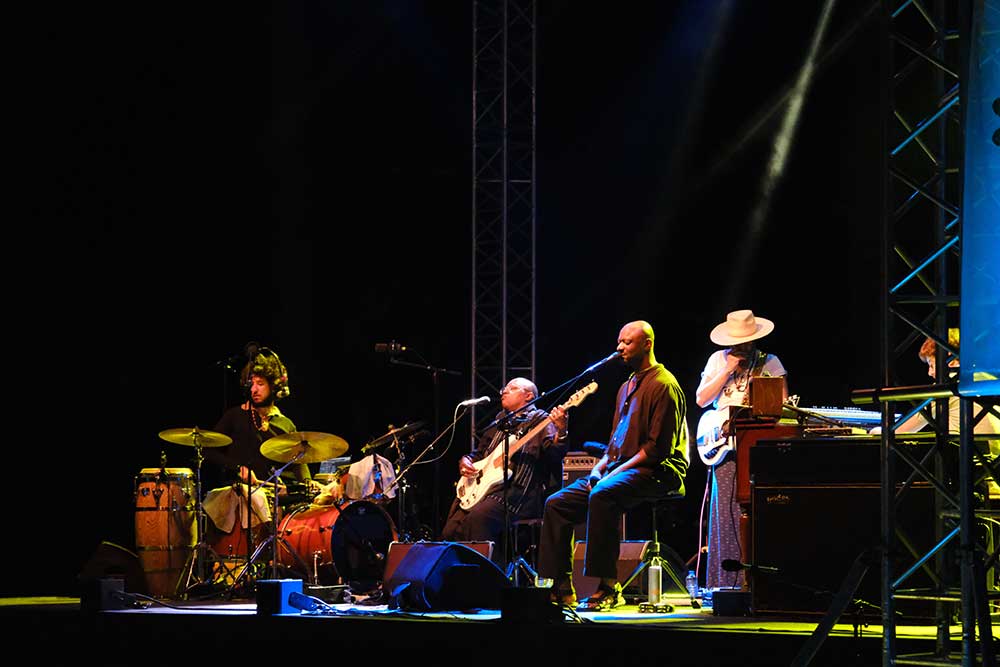
“Oh, it’s transcendent,” she says. “Meshell Ndegeocello is a band.” She laughs when she says it, but she means it. In fact, the phrase appears on a T-shirt as part of the merchandise sold at her shows.
Again and again, our conversation returns to collaboration rather than celebrity. Cynthia Erivo was the first artist she approached. “I’m a huge Cynthia Erivo fan; I’ve watched Wicked at least eighteen to twenty-two times.” When Erivo agreed to participate, Meshell says she and her team were stunned. “When she said yes, I think we were all so gobsmacked we didn’t even talk about it.”She laughs, remembering what happened next. My team, they were like, ‘You can’t go.’ They knew I would be totally starstruck; I don’t even think I could have functioned.”
What stayed with her was Erivo’s generosity. “She sang with me, not against me, or above me, or below me.” Reflecting on that, she said, “For people who truly love the music and the craft, it’s about making the best song.”
The same spirit runs throughout the record. Moses Sumney transformed one arrangement so completely that she had to rebuild it, while Emily King’s appearance on Be Real Black For Me came after Meshell realised the song needed something beyond what she could provide on her own. “Sometimes you have to humble yourself or be kind enough to say, ‘I need help.'”
One of the most revealing parts of our conversation concerns her longtime collaborator, Abe Rounds. “I’ve known Abe since he was 21.” For years, she was the one passing on knowledge, but she speaks warmly about how creative relationships evolve. “There was a time when I was telling him things or trying to instill him with knowledge. But again, I’m not a dinosaur.” “Eventually, she reflects, ‘you have to see that young people have something to offer that’s not just energetic, trending, or youth-oriented.” Rounds’ influence can be heard throughout Synonym. It was a dream he had that led to Emily King’s involvement in Be Real Black For Me, and Meshell repeatedly describes the album as a genuinely collective endeavour. “I really feel this record is about collaboration in all ways.”
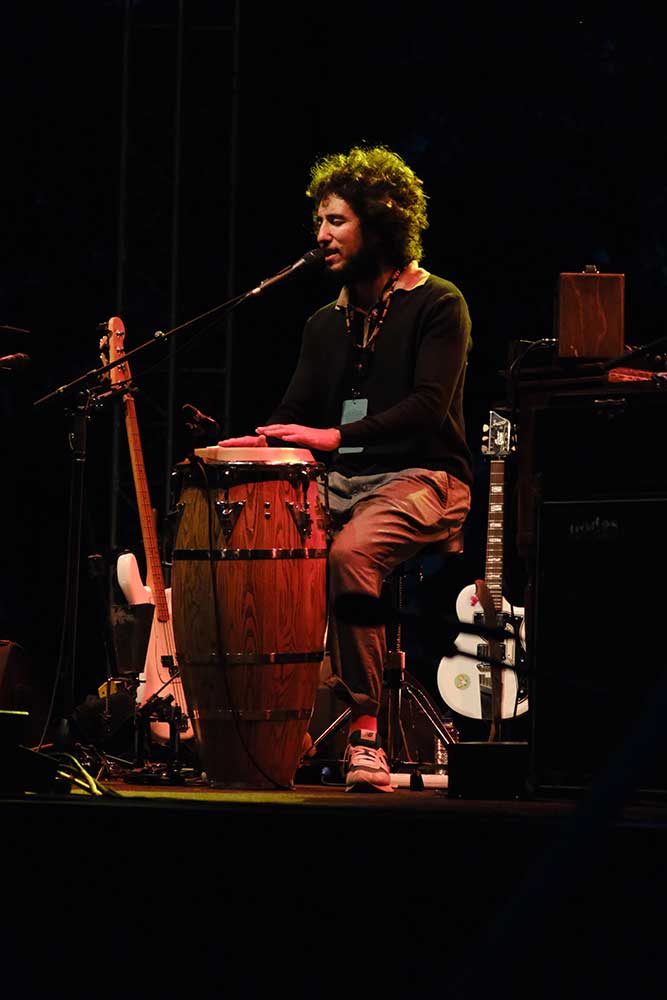
Increasingly, she sees her role less as the featured voice and more as the architect behind the scenes.”I’m never gonna be a chanteuse or some great jazz singer,” she says. “I think my gifts are in arrangement and in production.”
I try to describe what I hear in her work and eventually settle on the idea that her music often feels as if it operates at an atomic level—the sonics matter. The spaces matter. The textures matter. She immediately understands. “I definitely feel music on an atomic level; I am fascinated by the physical reality of sound. It enters your body as waves. I think of the band as a molecule. All the parts together make it what it is.” It’s an observation that explains a great deal about her music. She wants songs to be felt as much as heard.
She describes Synonym as existing in both spaces simultaneously. “To me, Synonym is a party.” But she also wants listeners to understand that it is “an intimate listen” and “a personal record”—one of the biggest lessons she took from making Synonym, she says, concerned melody. “Melody is forever.” Revisiting these songs forced her to think deeply about what survives when arrangements, production styles and genres change. Islands in the Stream became, in her words, almost a mathematical puzzle, while Be Real Black For Me revealed a different lesson. “Be Real Black For Me kept trying to tell us it didn’t need more.”
What emerged from Synonym was a renewed admiration for songwriting itself. “To write a great melody is a gift,” she says. Then she catches herself. “I say gift, but I know people work hard on it. It’s a craft.” She has her own philosophy for arranging material she didn’t write. “The song is the clothes, and I want to wear them well, but I want to add different accents. Maybe take out the vest and make it my own.” She traces that instinct back to her time playing go-go, a high-energy, percussion-heavy subgenre of funk and hip-hop. “Part of go-go and hip-hop is about taking something and making it your own.” But if rearrangement is about interpretation, it is also about respect. The song remains at the centre.
When I mention the echoes I hear between her bass playing and African musical traditions, Meshell lights up. She speaks with enormous affection about the teachers who first introduced her to artists such as Fela Kuti, Miriam Makeba and Oumou Sangaré. “I am a person born in America who doesn’t have the beauty of knowing where I come from,” she says.
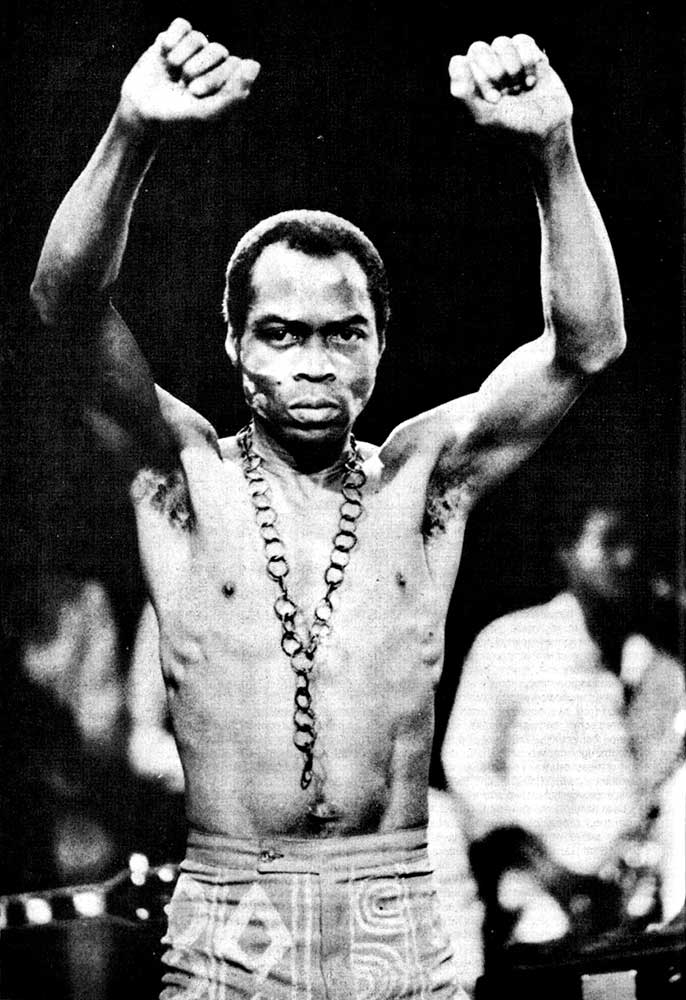
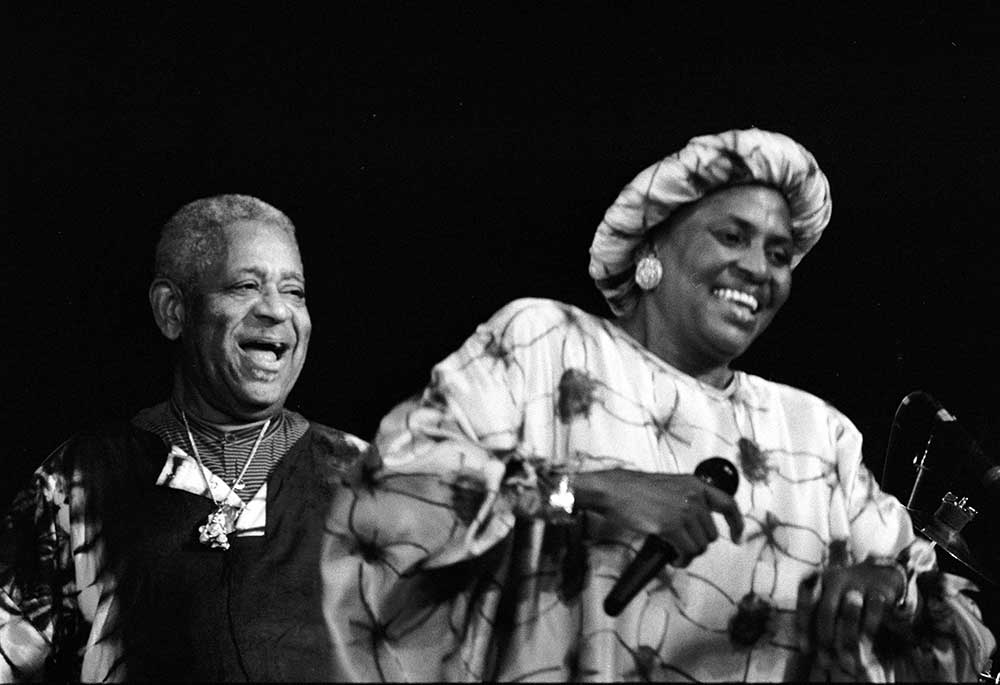
Then she describes what it felt like to discover those musical roots. “Once I was introduced to the motherland, the beginning of time, the beginning of this whole situation that we call life, it was like water. It was the water I had been seeking.” “When you listen to Fela, they all have a part, and if you veer from that fabric, that part, the fabric unravels.” James Brown. Parliament-Funkadelic. Go-go music. The lesson is always the same. The greatest bands, she says, “play like one organism”. They succeed because every musician serves the music rather than themselves.
As our conversation draws to a close, everything seems to converge on a single thought. “Sometimes you have to tap into the purpose.” She pauses. “And the purpose is not about you. I never thought I’d get this far,”
One day my hands won’t work properly,” she muses. “But I do hope I go blind and not deaf, because I do really enjoy sound; I just love music.”
Before we finish, she adds a final thought. Half the proceeds from Synonym will go to the American Civil Liberties Union. “This is the first record that isn’t selfish for me,” she says. “I only really want it to sell well because people are going to need help.”
By the end of our conversation, what lingers is not merely the music, though it is remarkable. It’s the philosophy behind it: humility, curiosity, collaboration, and the belief that, beneath all the labels we assign to ourselves and one another, we may all be closer than we think. In other words, Synonym.
READ ON…
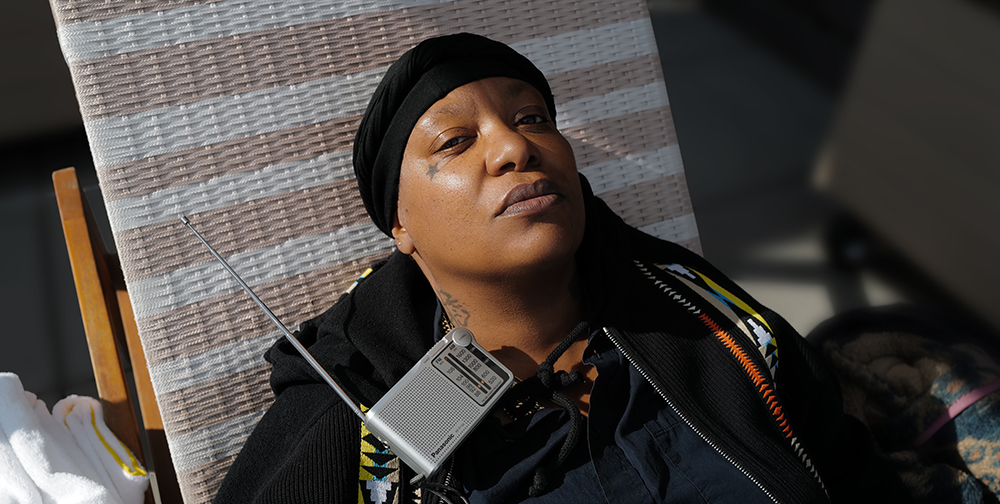
Meshell Ndegeocello Doesn’t Play Jazz
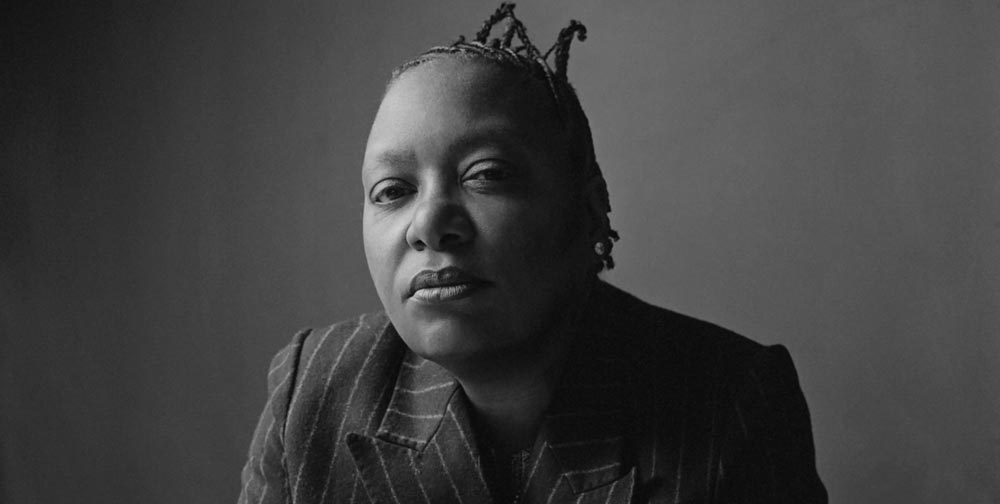
Meshell Ndegeocello – No More Water
Jumoké Fashola is a journalist, broadcaster and vocalist who currently presents a range of Arts & Culture programmes on BBC Radio 3, BBC Radio 4 & BBC London.