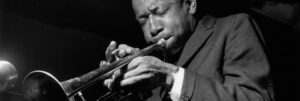
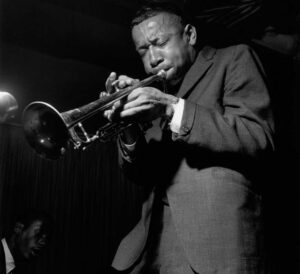
“It’s all music. It’s either hip or it ain’t,” said Lee Morgan, whose music was the hippest. You felt that when, as a 19-year-old trumpet hotshot in 1957, he recorded “City Lights” with a sextet of happening young gunslingers, covering tunes including Heyman-Green’s edgy-smooth standard ‘You’re Mine, You’ and Benny Golson’s ‘City Lights’, with its vibrant bass-and-horn intro and night-time Broadway zing.
Philadelphia-born, church-raised, Morgan was a rising star, a technically gifted wünderkind. He’d jammed with Sonny Stitt and had graduated, hipster cum laude, from Dizzy Gillespie’s big band. Morgan’s electrifying solo on the latter’s iconic ‘Night in Tunisia’ got the Blue Note peeps in the Birdland crowd double-taking, saw him snapped up and signed. His first session as a leader, 1956’s “Lee Morgan, Indeed!”, had a mighty triumvirate – Horace Silver, Wilbur Ware, Philly Joe Jones – as its rhythm section.
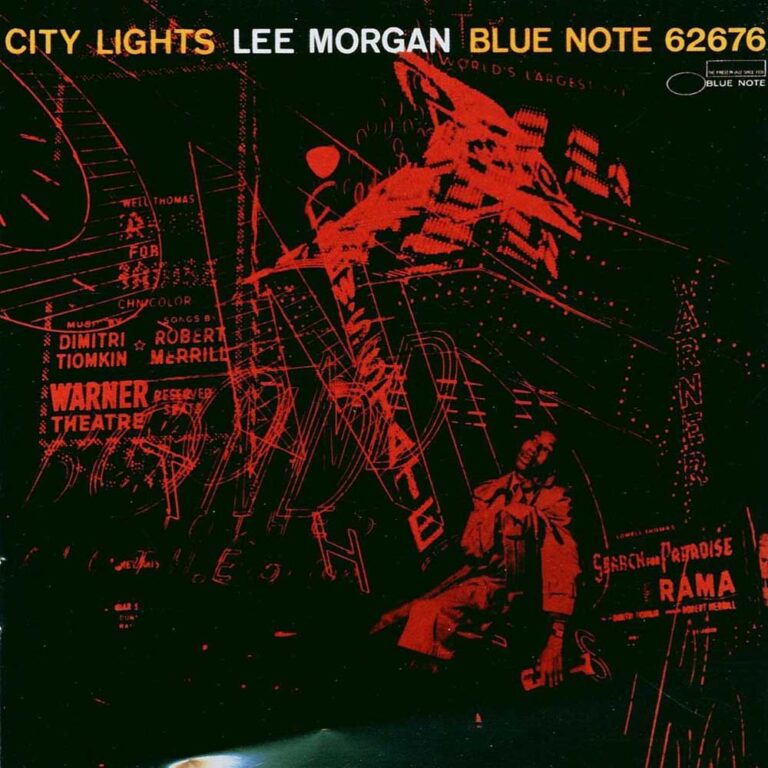
LEE MORGAN City Lights
Available to purchase from our US store.1957, though, was a seminal year for Morgan. He performed with Jimmy Smith, featured on John Coltrane’s “Blue Train” and, after the death of his idol and mentor Clifford Brown, was in steady demand as a recording artist. He released a clutch of records: “Lee Morgan Sextet” with Hank Mobley on tenor sax. “Dizzy Atmosphere” – on Speciality – with the tenorist Billy Mitchell. “Lee Morgan Vol.3”, out that same year, with tenor wielded by Benny Golson – who supplied four compositions to “City Lights” (including the title track) to the burgeoning star; textured tunes that let him flex his chops, showcase his singular style.
His sidemen on “City Lights” – trombonist Curtis Fuller, sax player George Coleman, pianist Ray Bryant, bassist Paul Chambers and drummer Art Taylor – were dynamic, hungry, on-the-up. Reviewing “City Lights” in 1958, the year of its release, Downbeat’s Dom Cerulli praised Morgan’s control and creativity, and wrote admiringly of “an assurance that promises more to come if he can sustain his present pace.”
That same year, settled in New York, Morgan permanently joined Art Blakey’s Jazz Messengers – he’d sat in for two weeks in Philly in 1956 – and spiralled into a heroin habit that in 1963 put him in rehab (that is, the Narcotic Farm in Lexington, Kentucky, erstwhile host to the likes of William Burroughs and Chet Baker). Rumours spread that Morgan had died or run off and joined the army. When he came out, strong and revitalised, in November of that year, he blew himself back into the studio – and when the band ran out of material allegedly ducked into the loo and wrote the jazz-funky ‘Sidewinder’ on a sheet of loo paper.
The crossover tune, the title track of Morgan’s critical 1963 Blue Note album, was a huge hit – no.35 in the pop charts – and allegedly shored up the label’s shaky finances. In 1964 Morgan recorded “Search for a Lost Land”, shifting from hard bop to something more meditative and spiritual, and in 1965 was in the studio for “Cornbread” (Herbie Hancock! Jackie McLean! Hank Mobley!). Then, struggling, back briefly with The Messengers, he relapsed into addiction, hitting rock bottom with a decidedly unhip clatter.
He sold his trumpet, slept in gutters and on pool tables, got beaten so badly his embouchure was disfigured. He was a fully-fledged junkie by the time he met Helen Moore/More, a clean-living woman known in jazz circles as “the little hip square”, and a friend, confidante and lover who would nurse him, support him, take his name, love him like a wife. Who would manage his Phoenix-like renaissance to the point he was appearing on TV and touring the West Coast with his band – and, on a snowy night on February 19, 1972, at Slug’s Saloon in NYC’s East Village, shoot him dead in a fury, right there in front of his mistress.
It wasn’t how he was meant to go out, certainly not back in 1957. Variously warm, graceful, spicy and elegant, “City Lights” is the life-affirming sound of a one-of-a-kind artist. The sort of artist, it turned out, who burned brightly, made foolish choices. Whose time, it seems, was up.
LEE MORGAN City Lights
Available to purchase from our US store.To listen to “City Lights”, however, is to hear what was – and to feel Lee Morgan shine.
READ ON…
Lee Morgan’s The Sidewinder turns 60
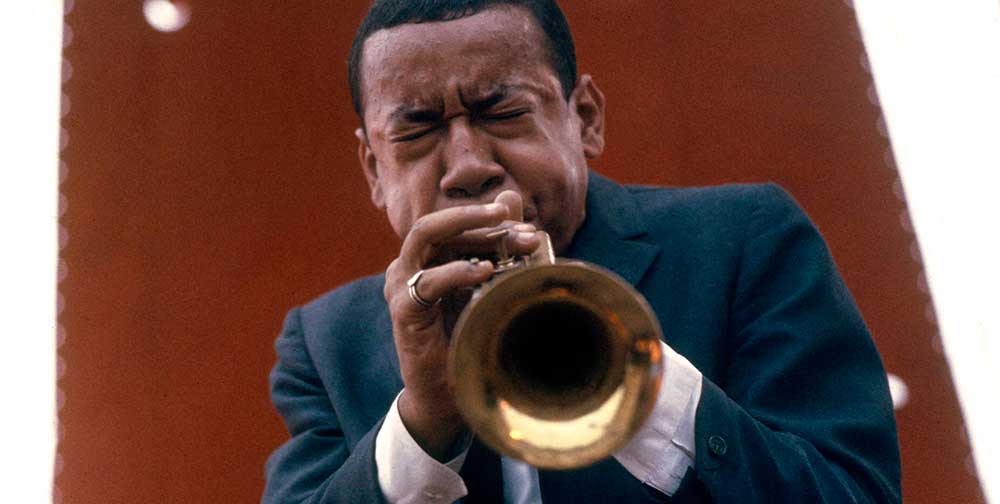
Lee Morgan – Search for the New Land
Jane Cornwell is an Australian-born, London-based writer on arts, travel and music for publications and platforms in the UK and Australia, including Songlines and Jazzwise. She’s the former jazz critic of the London Evening Standard.
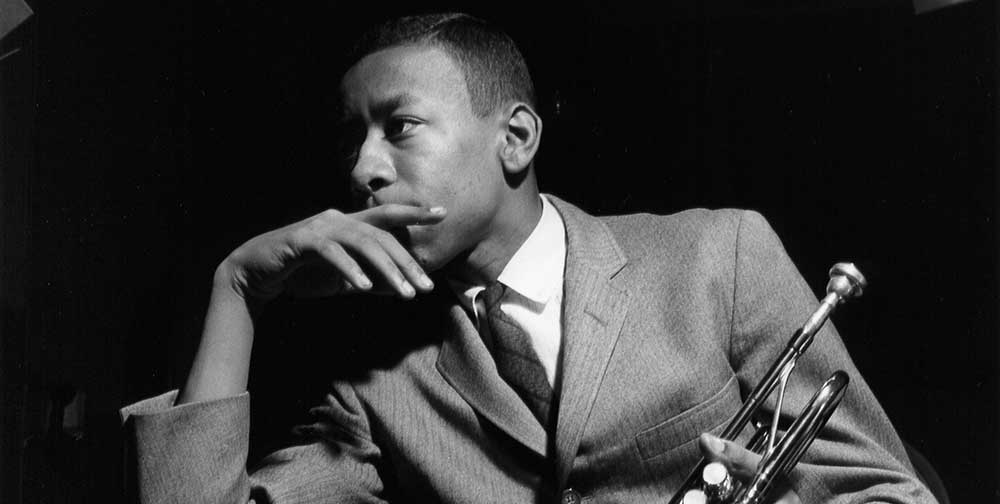
Header image: Lee Morgan. Photo: Francis Wolff / Blue Note Records.