
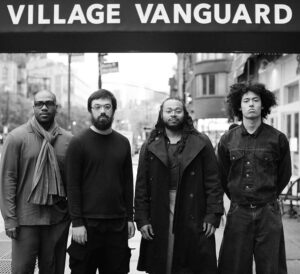
Alto saxophonist Immanuel Wilkins clearly remembers the first time he set foot in the most vaunted club in jazz history, the Village Vanguard. “The first time I went to the Vanguard, it felt like how I thought it would actually look.” He had recently moved from Philadelphia to New York City to study at Juilliard and remembered his first show: “Barry Harris. I went with my mother. I’m really thankful that I was in New York at the same time as Barry Harris. He was a true master. Barry Harris used to teach that jazz class in Midtown at the time and all his vocalist students were there. And during the set you would hear all these voices from the audience just start singing along. What he was playing was super magical.”
Opened in 1935 as a venue for folk music and poetry, by 1957, the Vanguard became a bustling West Village hub for live jazz, which it has remained well into the 21st century. As a teenager immersing himself in jazz history, Wilkins cut his teeth on a number of iconic jazz albums recorded in that downstairs club right off Greenwich Avenue. “Trane’s on there, Sonny Rollins, obviously,” he says, before naming some more recent beloved albums captured at the Vanguard. “Jason Moran, both lives of his Vanguard records. His first one, “The Bandwagon” (2003), and then “Thanksgiving Live at the Vanguard” from 2017. Both of those records, like, really up there, top for me. Brad Mehldau’s “Art Of The Trio Live at the Village Vanguard” is also incredible. There’s some great recordings there and it’s been fun for me to go back in the archive and deal with some of them now.”
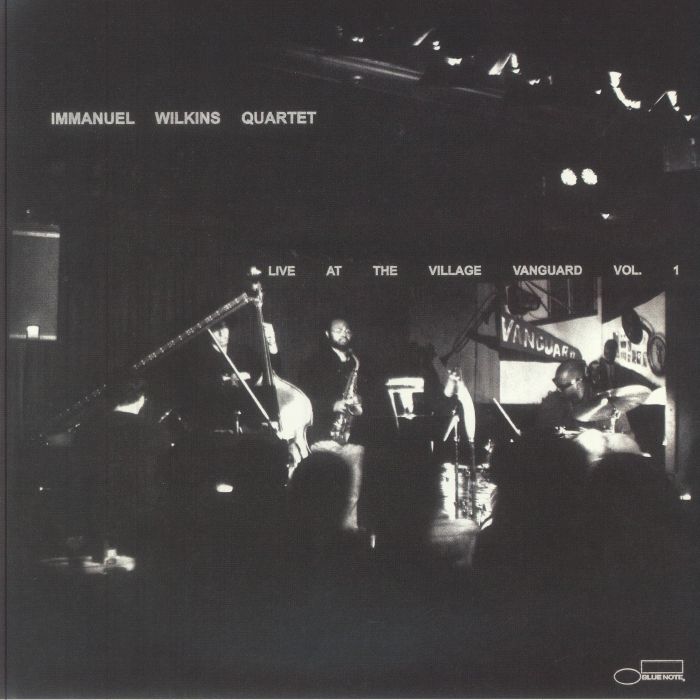
IMMANUEL WILKINS QUARTET Live at the Village Vanguard Vol. 1
Available to purchase from our US store.Wilkins can also add his name to that august list, with the release of “Immanuel Wilkins Quartet: Live At The Village Vanguard”, capturing two nights recorded there. It finds his working quartet in a questing, exploratory mode and the sidelong expansions of Vol. 1 are sure to garner instant comparison to the exhaustive sax work of his forebearers Coltrane and Rollins. Almost every tune across all three volumes stretches past the ten-minute mark, allowing for ample space for Wilkins and his horn to gush with a fount of lyrical ideas and harmonies, amply supported by pianist Micah Thomas, bassist Ryoma Takenaga, and drummer Kweku Sumbry.
“Trane, I think that’s my first imprint, especially in preparing for recording there, “John Coltrane Live at the Village Vanguard” is probably the first one I remember,” Wilkins enthuses, but quickly adds Sonny Rollins’s own entry. “Sonny’s playing on “A Night At The “Village Vanguard“” is ridiculous. I like how that one sounds. It feels like the Vanguard. When I hear that one, it feels like the room in a way to where I was taking notes on that.”
For Wilkins, the Vanguard is the platonic ideal of a jazz club. “Great jazz clubs are always that cozy. The better the jazz club is, the smaller it is,” he says. “It kind of has to be small, it has to be dry, it has to have carpet, it needs that old carpet, you know? Even the colour of the Vanguard is perfect, that darkish crimson red you got going on with the curtains. Everything about it feels like the sound of the room, feels like the records, and feels like an old school jazz club.”
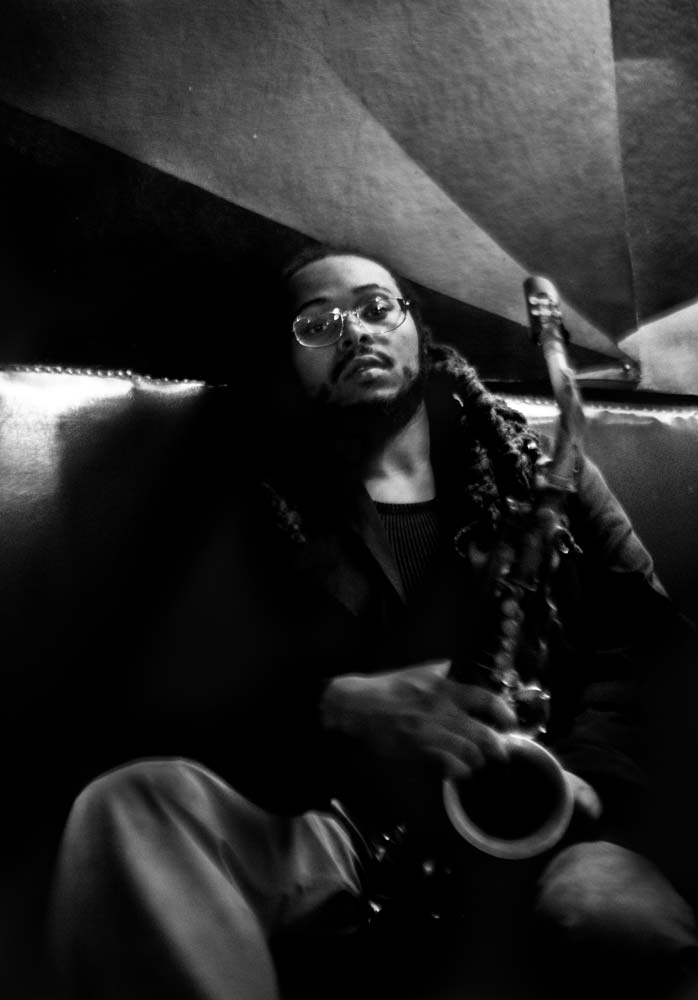
Aside from the room, there’s another common thread connecting all of the classic jazz albums cut there and making all the music possible, which is the audience itself. “There’s something about the audience that actually paints the atmosphere of the Vanguard in a beautiful way,” he says. “You have real listeners there, people who are dedicated to the music, people who go to see Moran during Thanksgiving every year, or the people who go to see Kenny Barron at the Vanguard every Christmas. It’s a beautiful hub for New York listeners but also tourists. It’s the coolest tourist spot and it’s not a touristy place.”
Another trick of the album is that Wilkins didn’t divulge to the newest member of the group, 21-year-old bassist Ryoma Takenaga that they were recording, lest the pressure be too much. “I remember the first time I played at the Vanguard and it was a lot of pressure already,” Wilkins recalls. “And then recording on top of that, it’s just too much mental stress.” Takenaga was relieved that the band didn’t tell him until after the two nights were in the bag.
After two critically-acclaimed studio albums that cemented him as a strong new voice in jazz, Wilkins was relieved to leave it all on that legendary bandstand. “We were unleashed and it was freeing,” he says. “Recording live at the Village Vanguard was like being on a tightrope.” He then adds. “A very long tightrope.”
IMMANUEL WILKINS QUARTET Live at the Village Vanguard Vol. 1
Available to purchase from our US store.READ ON…
Melissa Aldana’s “Filin” – Revisiting Cuban Ballads
Wayne Shorter’s “Speak No Evil” at 60
Andy Beta is the author of the forthcoming book, “Cosmic Music: The Life, Art, and Transcendence of Alice Coltrane”. He is based in New York City.
Header image: Immanuel Wilkins Quartet, The Village Vanguard. Photo: Ming Smith.