
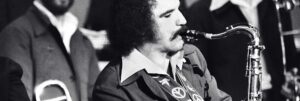
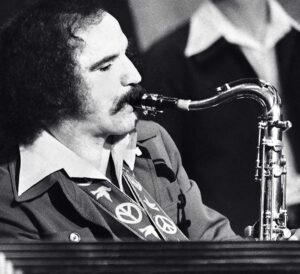
For fans and devotees of John Coltrane, 2026 has been an exciting year, occasioning high-profile recordings and concerts honouring the centenary of the man many believe to be the most significant and innovative jazz saxophonist of all time. But the biggest buzz is being created by the belated release of a set of live recordings that have, until now, been an almost mythical holy grail for musicians and Coltrane completists. Long rumoured but never heard, the recordings – known as the
Tiberi Tapes – finally receive an official release, marking a crowning moment in the celebration of Coltrane’s 100th birthday.

The man responsible for capturing the recordings during the space of two years at the very beginning of the 1960s is Frank Tiberi, a seasoned saxophonist himself, who spent 20 years in the touring band of Woody Herman, and a respected educator who, at the age of 97, still teaches at the famous Berklee College of Music in Boston, Massachusetts.
Having largely kept the tapes to himself for more than six decades, he’s now fully aware of the splash they are making. “So many great musicians have told me through the years that they were waiting for the tapes to come out,” he chuckles. “I used to take small copies on the bus when I was with Woody. I had some great friends, and I would let them listen to them, but I would police them. I would be right beside them. Once, one tried to record it and, boy, I flipped!”
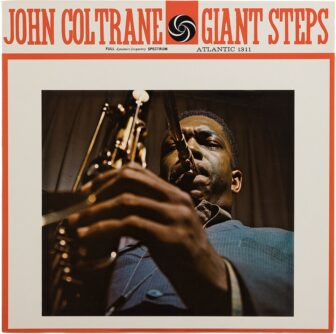
It was the release of Coltrane’s groundbreaking album ‘Giant Steps’ in 1960, when he had stepped away from his tenure in Miles Davis’s quintet and begun to concentrate on leading his own band, that first spurred Tiberi into action. “I’m a jazz musician,” says Tiberi, “and, of course, I was always interested in new material. Trane certainly did excite me when he came out with the group. That was really exciting because that was a new concept. I wanted to be ahead of everybody, and I thought I would get everything from him. It was very personal. It was all for me.”
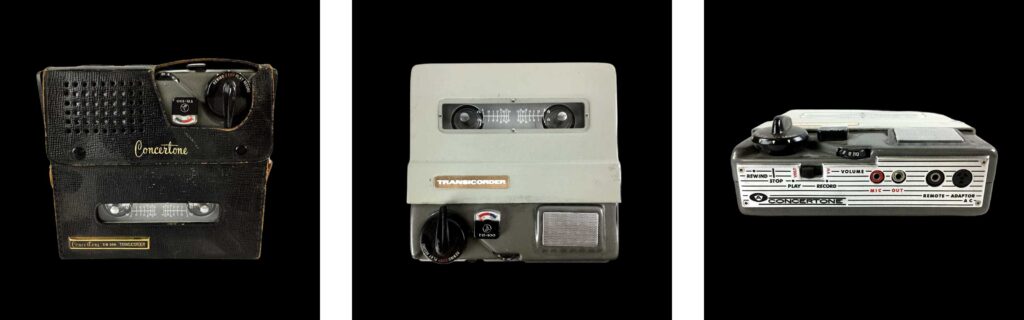
Hungry to understand more about Coltrane’s rapidly evolving aesthetic, Tiberi began smuggling a Concertone TR-100 reel-to-reel tape recorder into jazz clubs in Philadelphia and New York City, where he witnessed the birth of what became Coltrane’s Classic Quartet. Across more than 80 reels, containing upwards of 60 hours of music, Tiberi captured stellar performances by the core quartet of Coltrane, pianist McCoy Tyner, bassist Jimmy Garrison and drummer Elvin Jones, with guest and additional appearances by saxophonist Eric Dolphy, bassists Reggie Workman and Steve Davis, and drummer Pete La Roca.
In a club situation, freed from the restrictions of the recording studio, Coltrane was able to stretch out in a way that had never made it to any of his records. It’s fair to say, the music he played blew the young Tiberi’s mind. “He was able to just make an entire story out of every selection that he played,” Tiberi remembers. “There were so many situations where he built it right up to a frenzy.
The clubs didn’t house any more than 100 or 150 people, so he was just playing as much as he wanted to. That’s why all the tunes are very lengthy. That’s the reason I have about 30 pieces that would be considered fragments. He would play and play and play and – BOOM! – the tape runs out.”
Reluctant to let any of the amazing sounds he was hearing go undocumented, Tiberi took resourceful measures: “The reels that came with my tape recorder were three inches. What I did is I bought four-inch reels and cut them down to three and half to get more space – and I bought mylar tape, which holds twice as much as the regular tape. That’s how I was able to get a half-hour on each side. I did everything I possibly could to get more out of them because his tunes were all so lengthy.”
Even getting the reel-to-reel tape recorder in position to make the recordings required some skill and daring. Despite being marketed as a portable device, the Concertone TR-100 was a bulky piece of kit, but Tiberi found a way of running a microphone through his coat while keeping the Concertone concealed. “I had her in a satchel right on my lap and I hid it all the way through,” he says.
“McCoy used to come up to me and say, ‘are you coming from school?’ because he saw that satchel. In the club, we were all sitting on benches, like college benches. They were wall-to-wall and we were sitting right together, but nobody knew anything!”
Born and raised in Camden, New Jersey, just across the Delaware River from Philadelphia, Tiberi had been gigging in the city since the late 1950s – which was how he was on easy terms with Tyner, who was born and grew up in Philadelphia and had shared bandstands with Tiberi there. But getting to know the mysterious Coltrane proved a more difficult matter: “The only time I saw Trane and said hello was when he was through a gig and he was putting his horn in McCoy’s trunk. I went out to say hello to McCoy and Trane was there. That’s the only time I talked to him.”
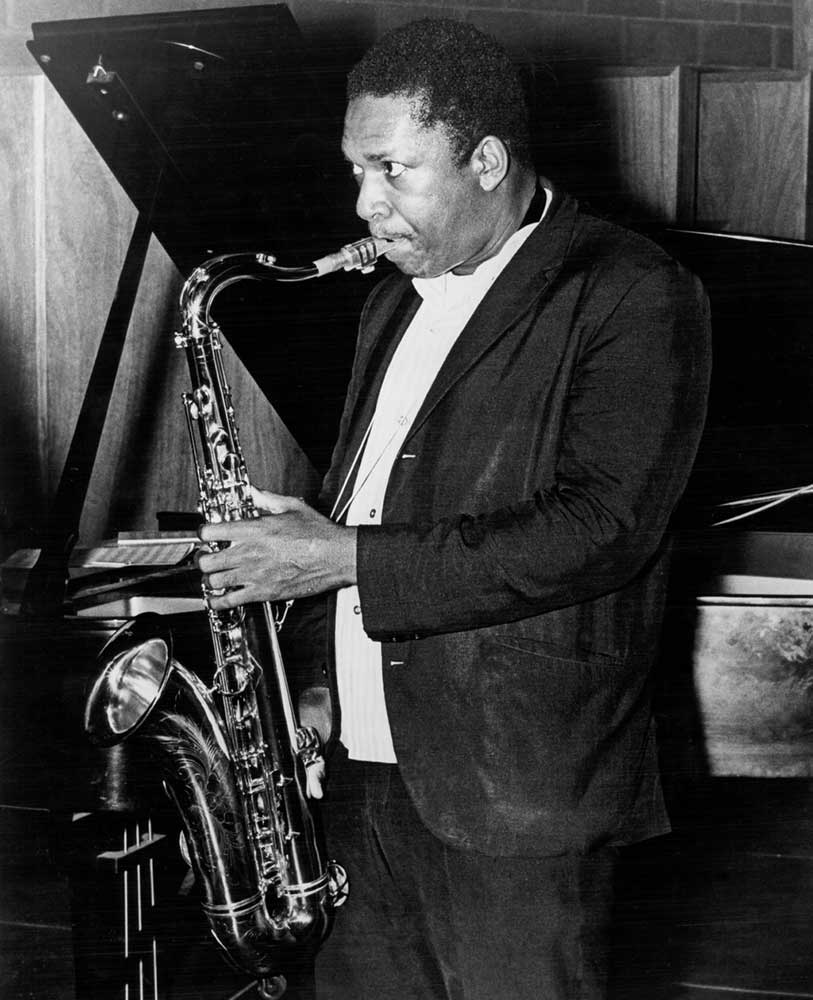
It doesn’t seem surprising. Famously taciturn and intensely focused, in person Coltrane exuded the same seriousness and spiritual charge that can be heard in his music. “It’s amazing,” Tiberi says. “All those tapes I have, only one time he talked, when he introduced something. I never saw him at the bar drinking a beer or talking to anybody. He just never came out after he played. Maybe he wanted to practice. He might have been going to pray.”
With the timely and long overdue release of selections from the Tiberi Tapes, now we have the chance to experience that same dedication and devotion, expressed through some of the most powerful live performances we’re ever likely to hear.
READ ON…
Coltrane 100 Mini Site

Our Free Course on Jazz History
Daniel Spicer is a Brighton-based writer, broadcaster and poet with bylines in The Wire, Jazzwise, Songlines and The Quietus. He’s the author of books on German free jazz legend Peter Brötzmann and Turkish psychedelic music.
Header Image: Frank Tiberi, Rochester, New York, 1976 Photo: Tom Marcello/Flickr