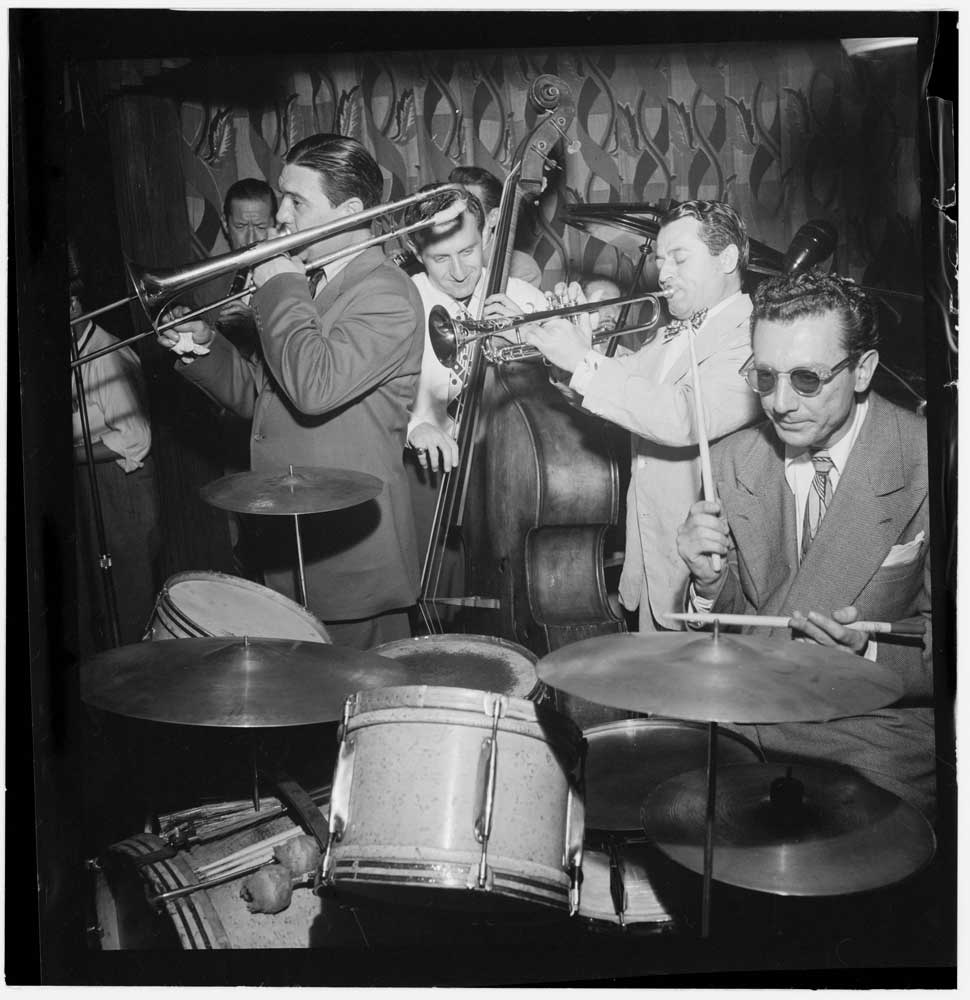
It was during the Dixieland era that the trombone came to the forefront in jazz through pioneers like Edward “Kid” Ory. Born in LaPlace, Louisiana, in 1886, Ory began on the banjo before discovering the trombone through William “Beads” Cornish in the band of New Orleans cornet player Buddy Bolden. Ory was soon to move to New Orleans himself and by the 1910s had become the most famous of the so called ‘tailgate’ style of trombone players.
In the early days of Dixieland jazz, small groups would promote the evening’s gig on wagons with the trombonist sitting on the back to manoeuvre the long slides on their instrument, hence the name ‘tailgate’. Kid Ory became its greatest improviser through his raucous glissando (sliding notes) growls and raw, blues drenched countermelodies. By 1925 Ory was in Chicago co-leading a band with cornetist King Oliver before joining Louis Armstrong’s first studio band Hot Five.
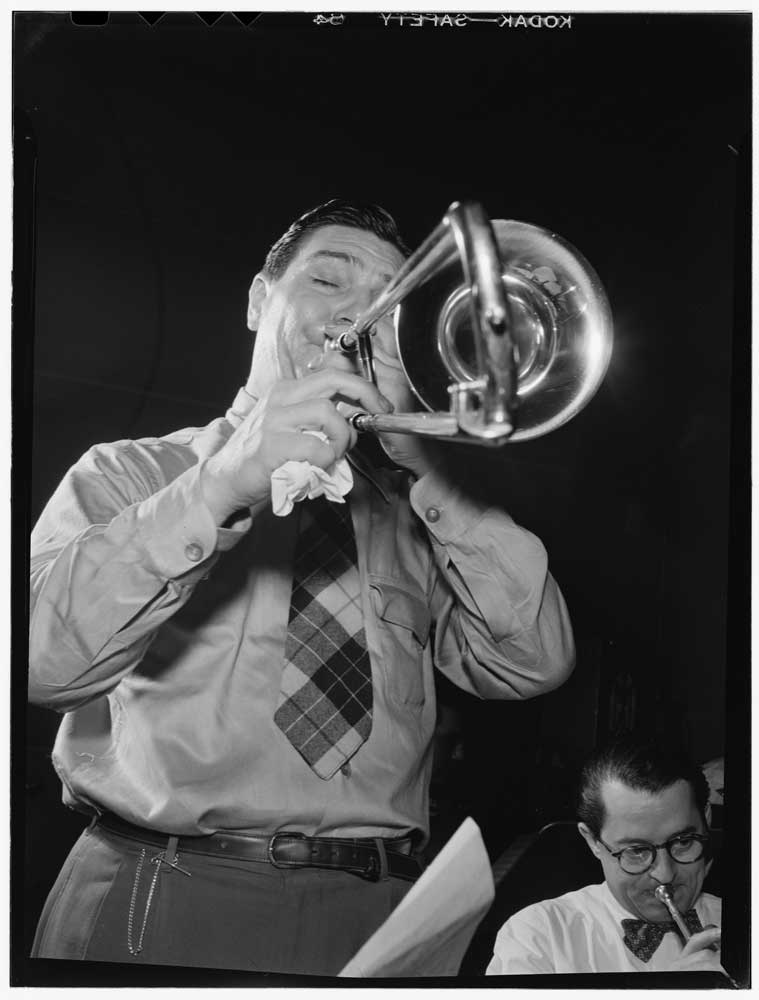
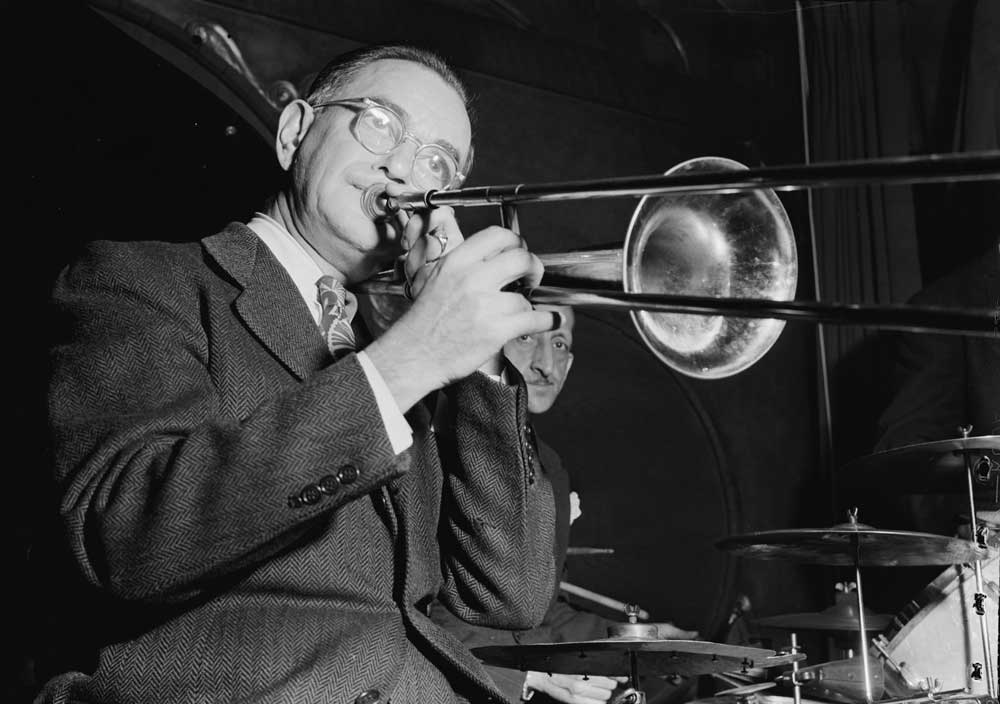
Other Dixieland trombonists like Miff Mole brought their own character to the trombone but it was in the swing era that the next innovations came. Rather than the small combos of Dixieland, the big bands of the swing era employed three or four trombonists who created a more matured melodic and harmonic sound. The smoothest and most sophisticated of these musicians was Jack Teagarden whose fluid playing became a huge influence to the famous trombonists of the swing era like Tommy Dorsey.
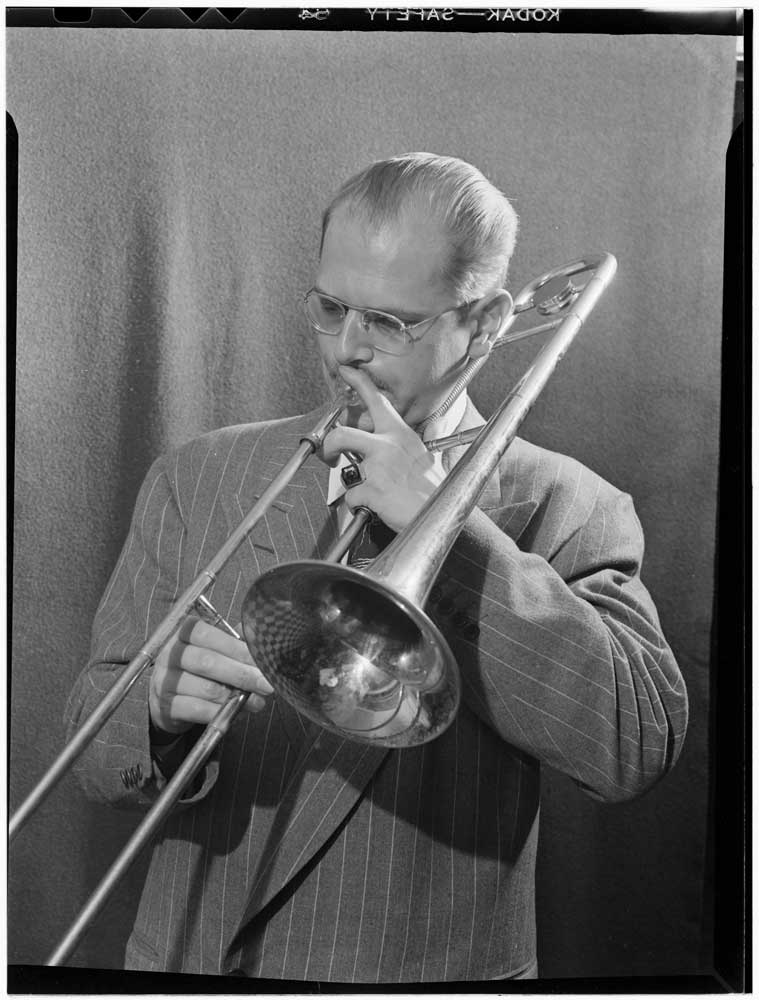
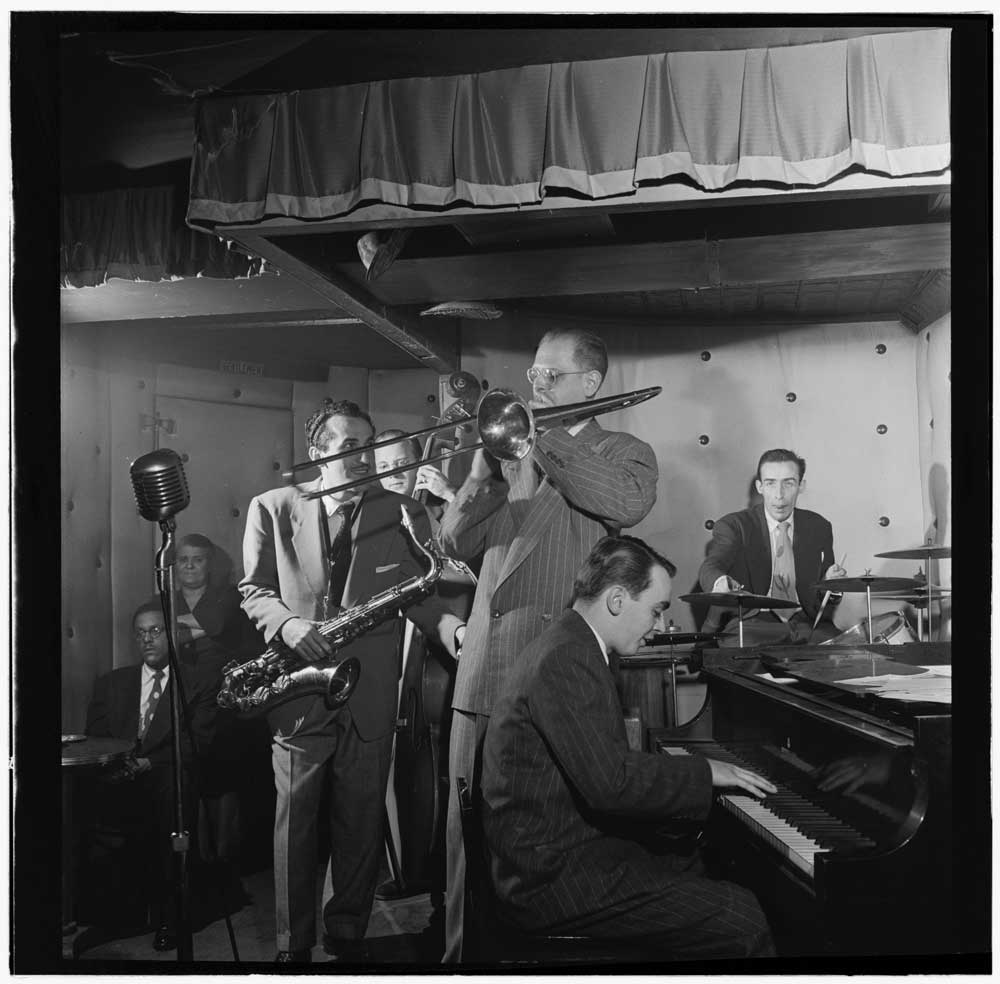
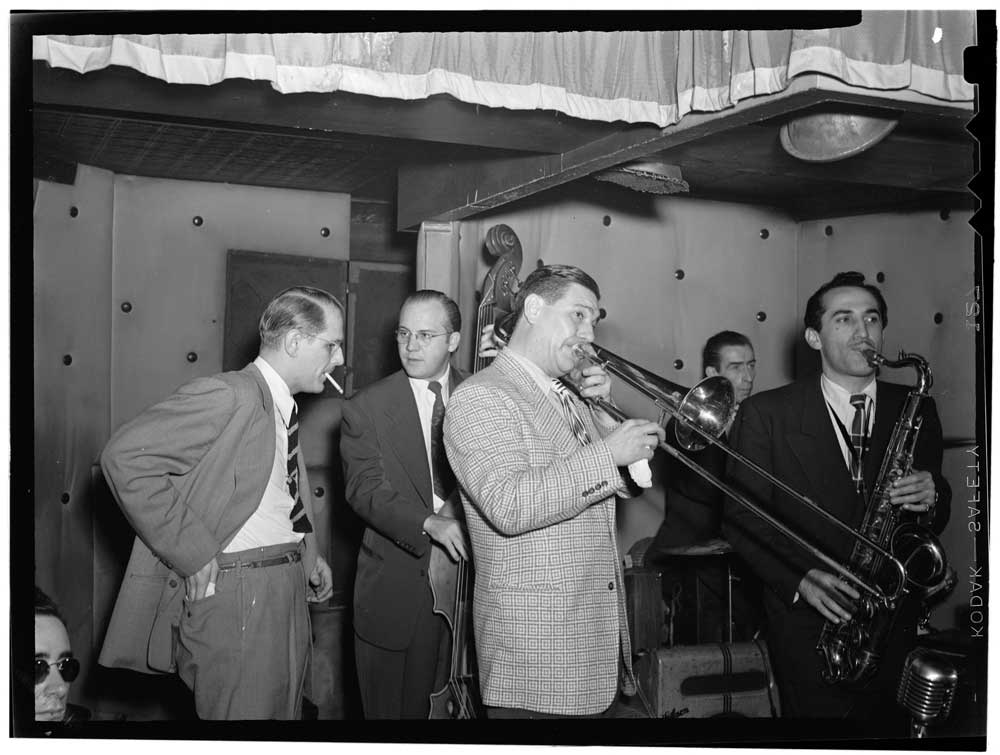
The development of Bebop presented a challenge to trombonists because of the technical limitations of their instrument on the faster tempos. One of the first to take on that challenge was Bill Harris, who made the transition from the swing of Woody Herman’s big band to the bop of “Bill Harris Collates” for Norman Granz’ Clef Records. But the two trombonists most associated with the foundations of Bebop were J. J. Johnson and Bennie Green who would both go on to record important albums for Blue Note.
The Eminent Jay Jay Johnson, Vols 1 & 2 (Blue Note)
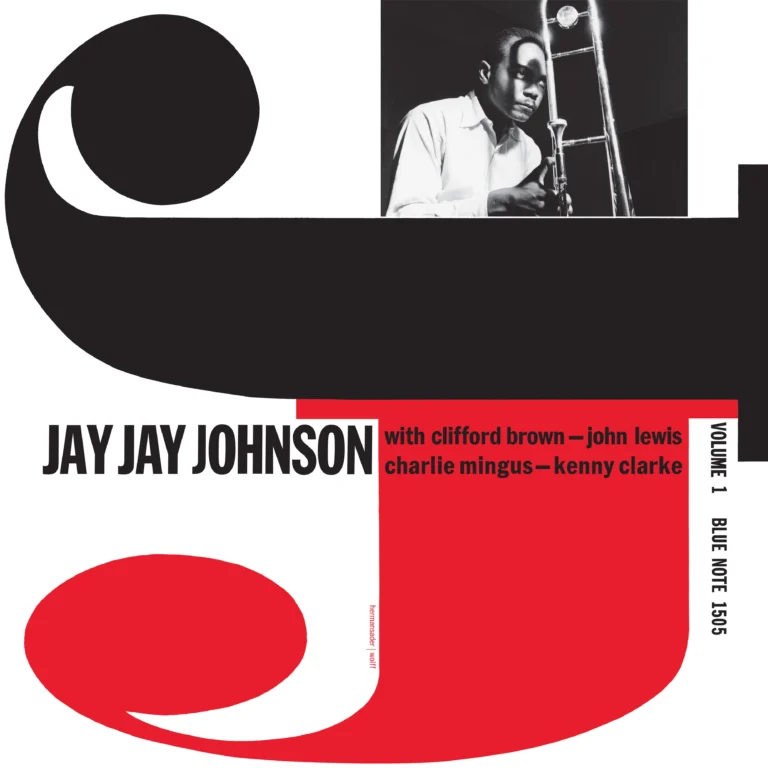
J. J. Johnson The Eminent Jay Jay Johnson, Vol. 1
Available to purchase from our US store.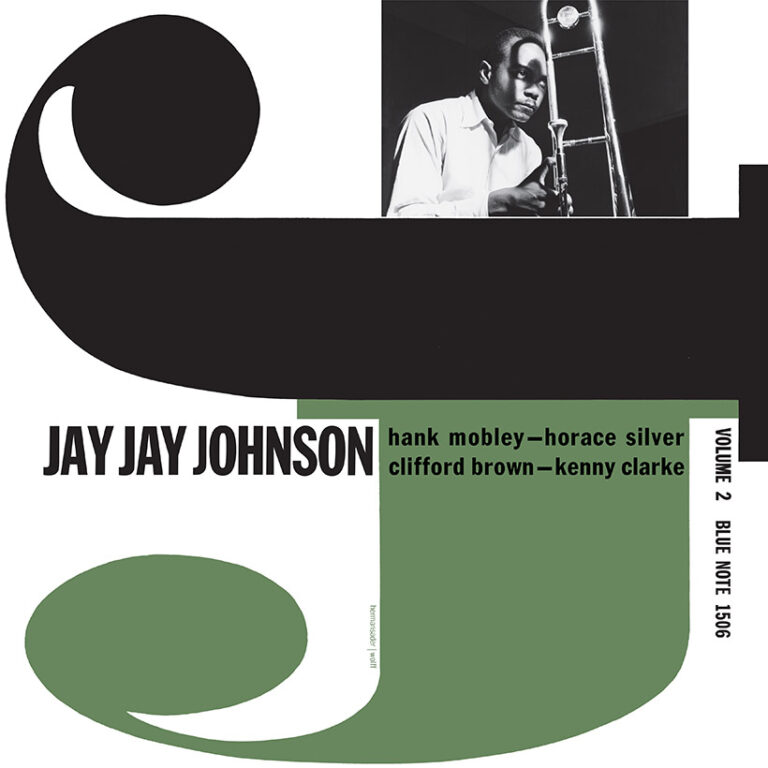
J. J. Johnson The Eminent Jay Jay Johnson, Vol. 1
Available to purchase from our US store.Widely regarded as the most important trombonist in modern jazz, J. J. Johnson got his break in Benny Carter’s Orchestra with whom he made his first recordings in 1943 before joining the big band of Count Basie. According to Joshua Berrett and Louis G. Bourgois III in the 1999 book The Musical World Of J.J. Johnson in 1946 Dizzy Gillespie heard Johnson playing and remarked: “I’ve always known that the trombone could be played different, that somebody’d catch on one of these days.”
Encouraged that he had the tone, technique and harmonic knowledge to play the music of Dizzy Gillespie and his other hero Charlie Parker on the trombone he formed J.J. Johnson‘s Be’Bopper’s with drummer Max Roach and pianist Bud Powell. Released on Savoy in 1946, the “Coppin the Bop” and “Jay Jay 10” would prove as influential to future trombonists as Coltrane’s “Giant Steps” was for saxophonists.
By the end of the 1940s Johnson had joined Miles Davis’ nonet playing on the famous “Birth of the Cool” sessions from 1949/50 for Capitol (released in 1957) and the Alfred Lion recording from 1952-53 “Miles Davis Volume 1 & 2” (featuring the Johnson compositions “Kelo” and “Enigma”) released by Blue Note in 1955/6. Then came his own first albums for Blue Note The Eminent J J Johnson Volume 1 &2. Released in 1955-56 the LPs collected the musically advanced bop and hard bop tracks from his three 10”s recorded with many of Blue Note’s pre-eminent artists.
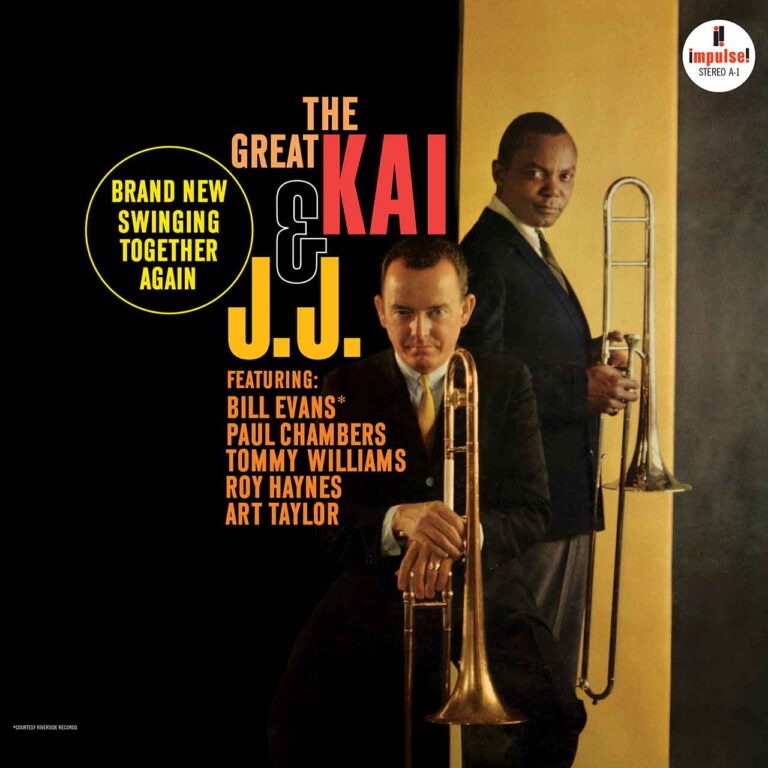
J. J. Johnson & Kai Winding: The Great Kai & J. J. (Verve, 1960)
J. J. Johnson & Kai Winding The Great Kai & J. J.
Available to purchase from our US store.Shortly after recording the Blue Note sessions, Johnson paired up with Danish trombonist Kai Winding for possibly the most famous jazz trombone album of all time. The first ever release on Impulse! it was actually a reunion for the pair who had first recorded together as Jay & Kai for Prestige in 1954. Next to Johnson, Winding was one of the first trombonists to master the faster lines of be bop but was known for having a slightly rougher style. Here this great pairing are joined by Bill Evans (piano), Paul Chambers (bass), and Art Taylor & Roy Haynes (drums) for an album that moved between the uptempo groove of “Going Going Gong” to the mournful ballad “Just for a Thrill”.
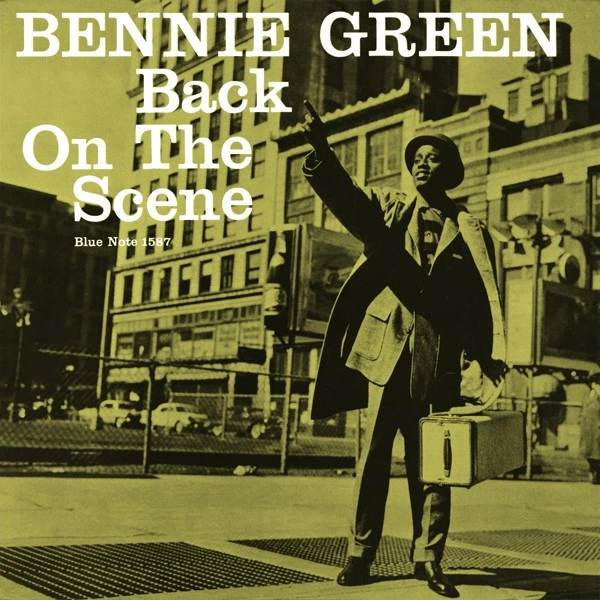
Bennie Green – Back On The Scene (Blue Note, 1958)
BENNIE GREEN Back on the Scene
Available to purchase from our US store.Coming out of the Earl Hines Orchestra of the 1940s, Bennie Green competed with J. J. Johnson as the first trombonist to take on the harmonic and rhythmic language of Bebop without ever losing his love of swing. His albums for Prestige demonstrated his transition to bop including “Modern Jazz Trombones – Volume Two” alongside J. J. Johnson. The first of three albums for Blue Note in 1958/59 “Back on the Scene” brought together a quintet including the horns of saxophonist Charlie Rouse and fellow trombonist Melba Liston with whom Johnson trades some wonderful solos throughout. Mixing standards such as “Just Friends” with storming originals like “Benny Plays the Blues” and Liston’s masterful composition ‘Melba’s Mood” it was right up there with the best of late ‘50s Blue Note.
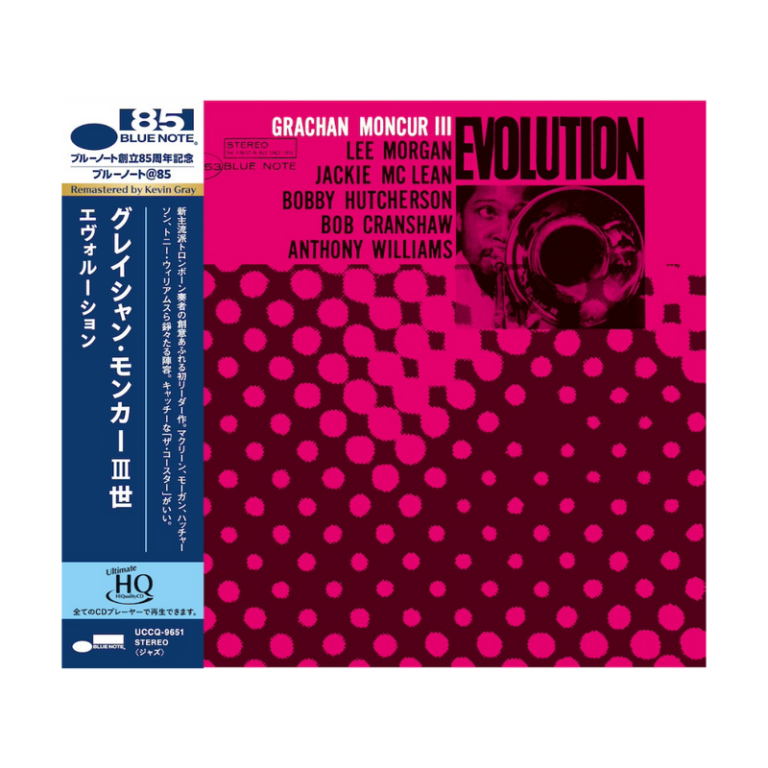
Grachan Moncur III: Evolution (Blue Note, 1964)
GRACHAN MONCUR III Evolution (UHQCD)
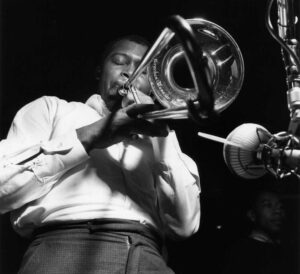
Available to purchase from our US store.It would take the New Yorker Grachan Moncur III to bring the trombone back to Blue Note and into the post bop and avant garde era. After touring with Ray Charles in the late ‘50s and joining Art Farmer and Benny Golson in The Jazztet he formed a partnership with Jackie McLean appearing on his albums “One Step Beyond” and “Destination… Out!” composing two tracks on the former and three on the latter. Those sessions featured vibes player Bobby Hutcherson and drummer Anthony Williams who Moncur took into Van Gelder Studio on November 21, 1963 with trumpeter Lee Morgan and bassist Bob Crenshaw for this most advanced of Blue Note debuts. Released in 1964 “Evolution” (1964) ranks alongside the great post bop and avant garde albums of that most explosive of years with Moncur pushing his instrument way beyond what had come before.
Grachan Moncur III: Some Other Stuff (Blue Note, 1965)
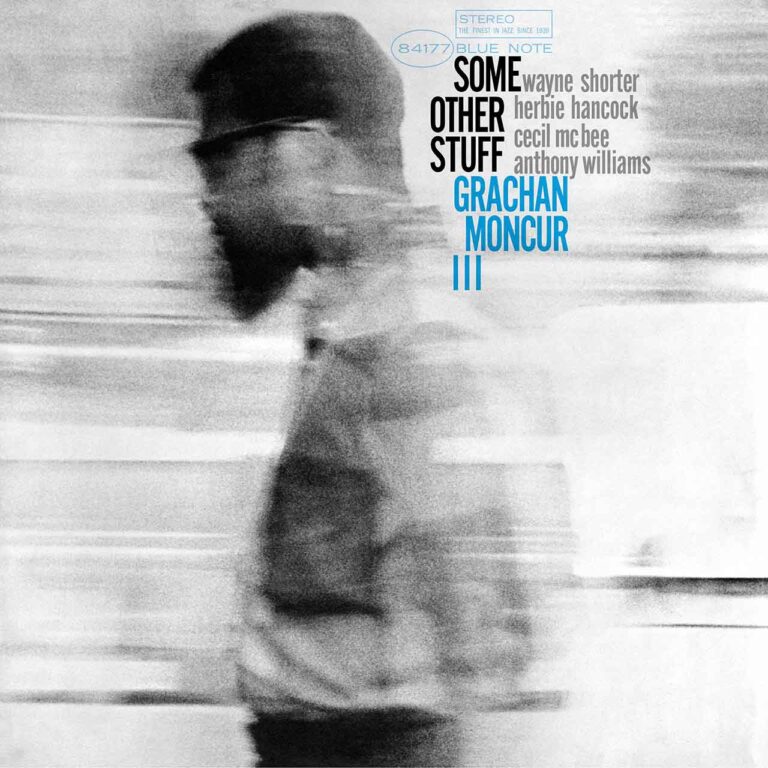
GRACHAN MONCUR III Some Other Stuff
Available to purchase from our US store.The following July, Grachan Moncur returned to Van Gelder Studio with saxophonist Wayne Shorter, bassist Cecil McBee and pianist Herbie Hancock for an even more exploratory album. On “Some Other Stuff” Moncur was on a mission, showing the way forward to the greater rhythmic and tonal freedom of the avant garde on an unexpected instrument. From the darkly brooding and mysterious “Gnostic” to the angular and jittery “The Twins” this was Blue Note at its most boldly experimental. Now available on heavyweight vinyl to match the music in the grooves.
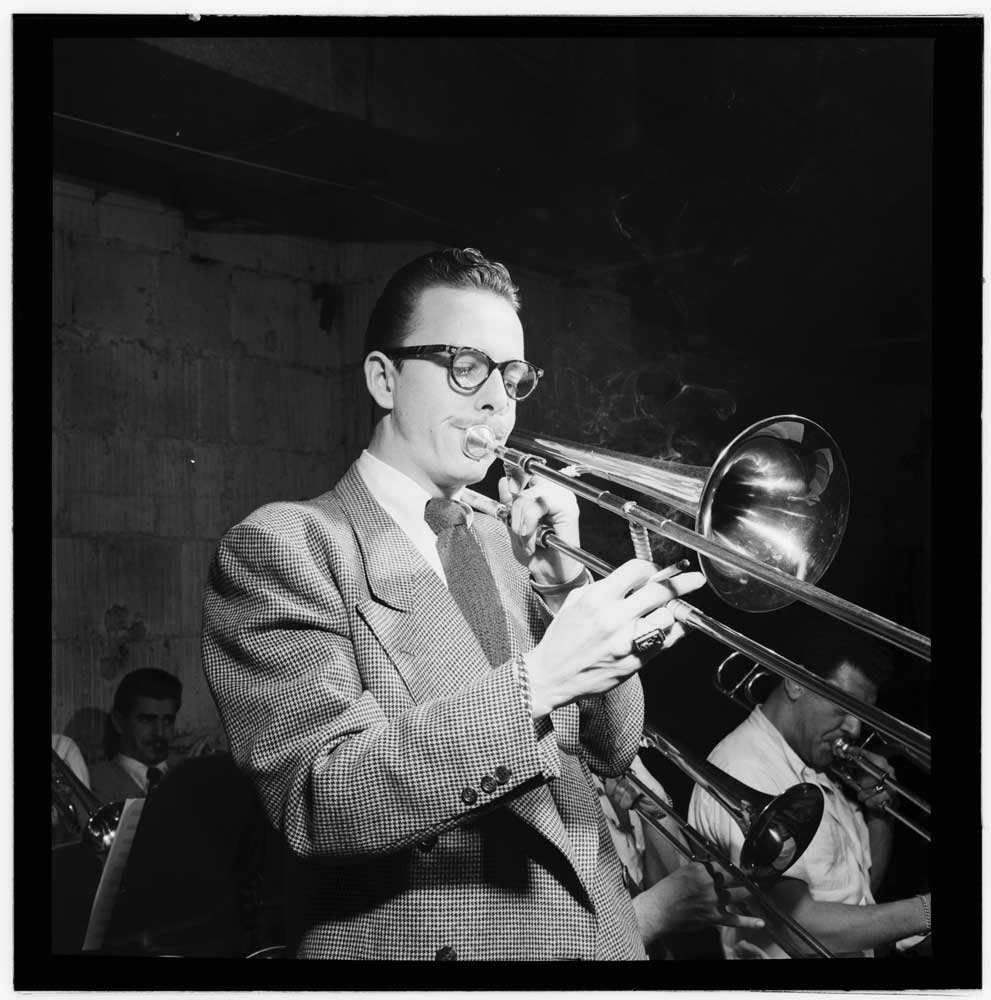
Photos: William P. Gottlieb / Library of Congress.
READ ON…

Melissa Aldana – “Filin” Revisiting Cuban Ballads

Bill Frisell in Five Classic Tracks
Andy Thomas is a London based writer who has contributed regularly to Straight No Chaser, Wax Poetics, We Jazz, Red Bull Music Academy, and Bandcamp Daily. He has also written liner notes for Strut, Soul Jazz and Brownswood Recordings.
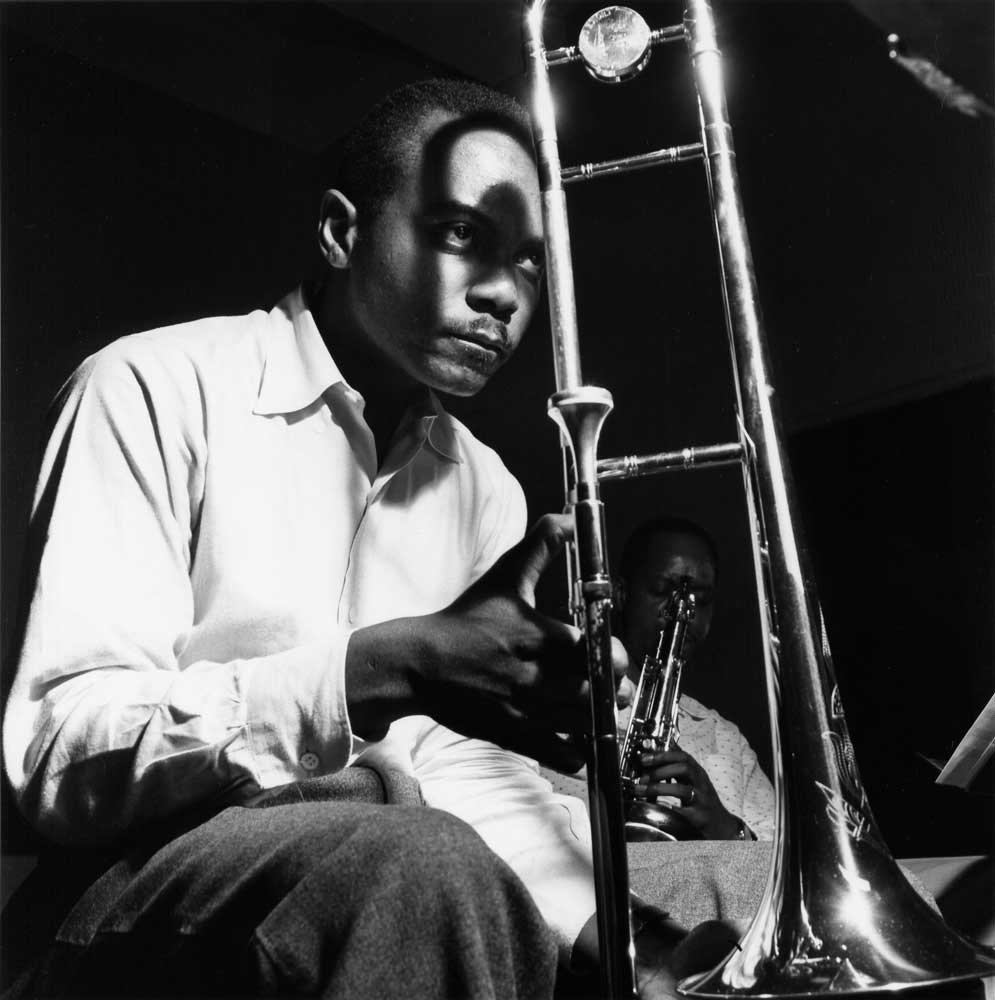
Header image: Grachan Moncur III. Photo: Francis Wolff / Blue Note Records.