The origins of modal jazz can be traced back to the pioneering work of pianist, composer and theoretician George Russel and his groundbreaking 1953 book The Lydian Chromatic Concept of Tonal Organization. This highly technical work lit a fuse under questing jazz musicians seeking to move beyond the limitations of bebop and hard bop. Crucially, it suggested that, rather than soloing within the strict structures of fixed chord changes (known as vertical improvisation), instrumentalists could stretch out and create melodic lines over a sustained harmonic centre (horizontal improvisation). This simple but profound insight offered a glimpse of spacious new vistas full of endless possibilities.
By the late 1950s, various artists had begun to experiment with the freedoms provided by this daring new form. Pianist Bill Evans had played with Russell, and his 1958 recording of ‘Peace Piece’ from his 1959 album “Everybody Digs Bill Evans” is often cited as an early example of modal composition.
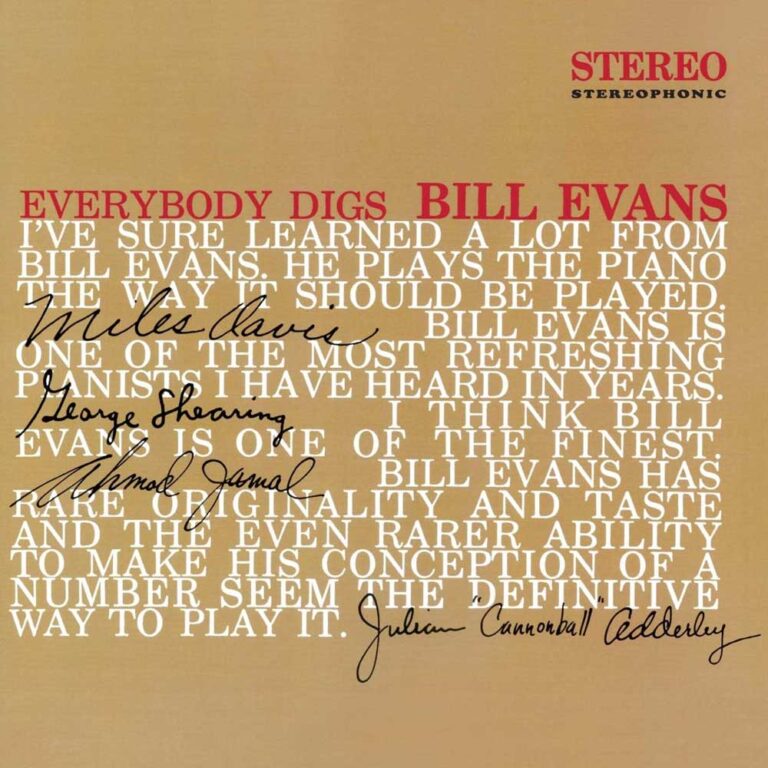
BILL EVANS Everybody Digs Bill Evans
Available to purchase from our US store.But it was another album that Evans played on, released the same year, that embraced the idea more completely than any other date thus far. In a major breakthrough, Miles Davis’s epochal “Kind of Blue” was an album based entirely in modality. On tunes such as “So What” and “All Blues,” Davis conjured an unhurried, late-night feel that foregrounded the heightened storytelling potential of modal compositions.
Playing tenor saxophone on “Kind of Blue” was none other than John Coltrane. There’s no doubt that his experience of playing Davis’s modal pieces was a major revelation, and a huge catalyst in the development of his own music. In 1960, he left Davis’s group and formed his own quartet, keen to strike out into restless new territory and further investigate the modal approach. As the new decade unfolded, Coltrane raced ahead with the idea, going on to create some of the most explosive and exploratory modal jazz ever recorded.
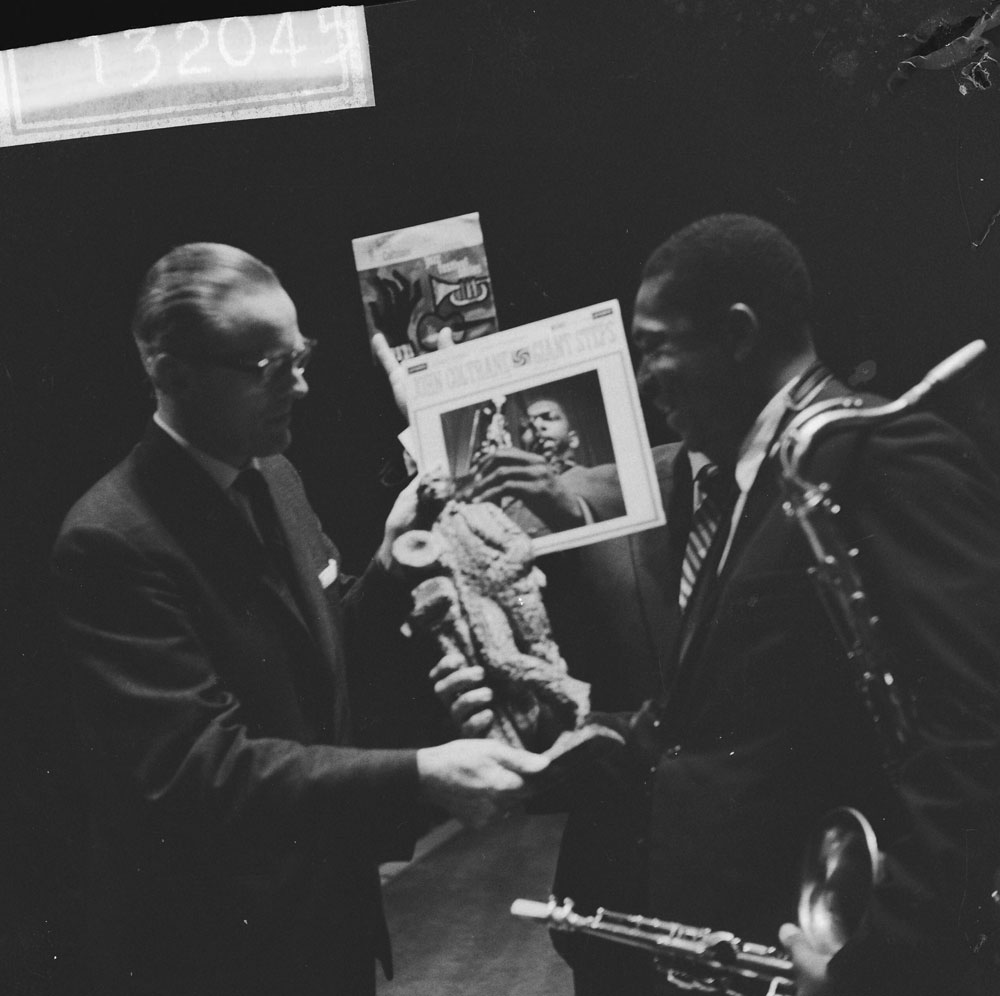
In October 1960, Coltrane – together with pianist McCoy Tyner, bassist Steve Davis and drummer Elvin Jones – recorded a nearly-14-minute interpretation of the Rodgers and Hammerstein song “My Favorite Things,” from the musical The Sound of Music. Released in 1961 on the album of the same name, the track became an unlikely hit single, but it was also a revolutionary landmark in a number of ways: it helped bring the soprano saxophone back into vogue among jazz musicians; its 3/4 time signature proposed the then-unusual concept of the jazz waltz; and – most startling of all – it deconstructed the famous tune, presenting it as a modal journey.
Though it repeatedly returns to the tune’s original melody, Coltrane’s version is largely constructed of long vamps over just two chords, providing ample room for both Coltrane and Tyner to take extended solos. It resounds with a wild, expectant joy and irresistible forward motion – and a palpable sense of freedom, as though soundtracking in real time the throwing off of harmonic shackles. It’s no accident that the tune remained a key part of Coltrane’s live repertoire even as he moved into the turbulent realm of free jazz in his final years during the second half of the 1960s. This is where freedom first took root.
And it opened the flood gates. 1961’s “Africa/Brass” showcased the 16-minute “Africa,” a glowering, endless jam over the barest of chord suggestions with the twin double basses of Reggie Workman and Art Davis adding a drone-like quality. It’s a deep, dark tune, steeped in mystery.
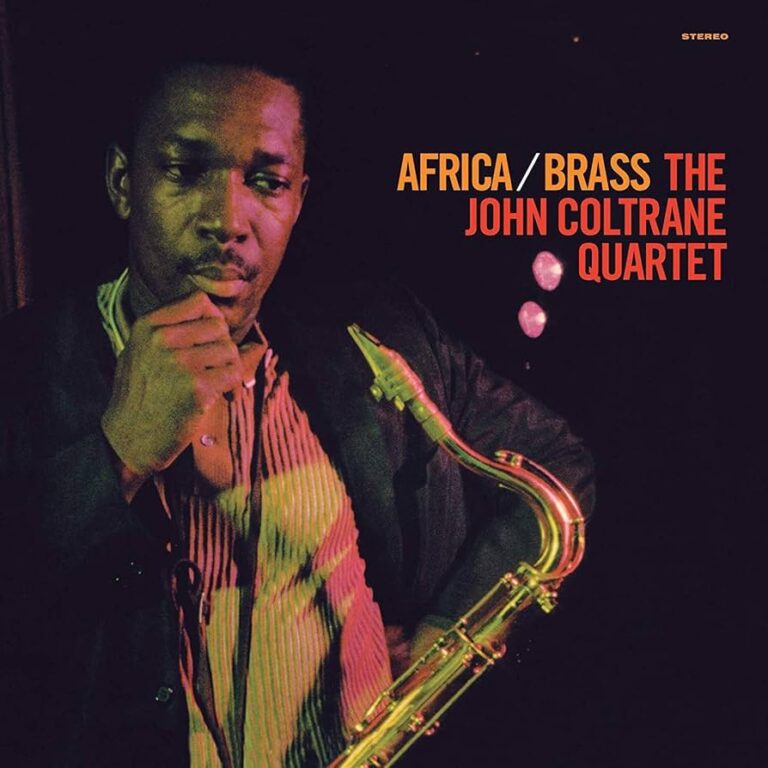
JOHN COLTRANE Africa/Brass
Available to purchase from our US store.That drone is even more in evidence on “India,” recorded at the Village Vanguard in November 1961 and originally released on the 1963 live album “Impressions”. Inspired by the ancient improvisations of Indian raga, this 14-minute journey fused Coltrane’s growing fascination with non-western music with the open-ended possibilities of modal jazz. The title track on “Impressions” is an ebulliently up-tempo hard-swinger based on the changes to Miles Davis’s “So What,” bringing Coltrane back to the root of his modal obsession and creating the perfect springboard to a 15-minute solo that feels like a stolen glance at eternity.
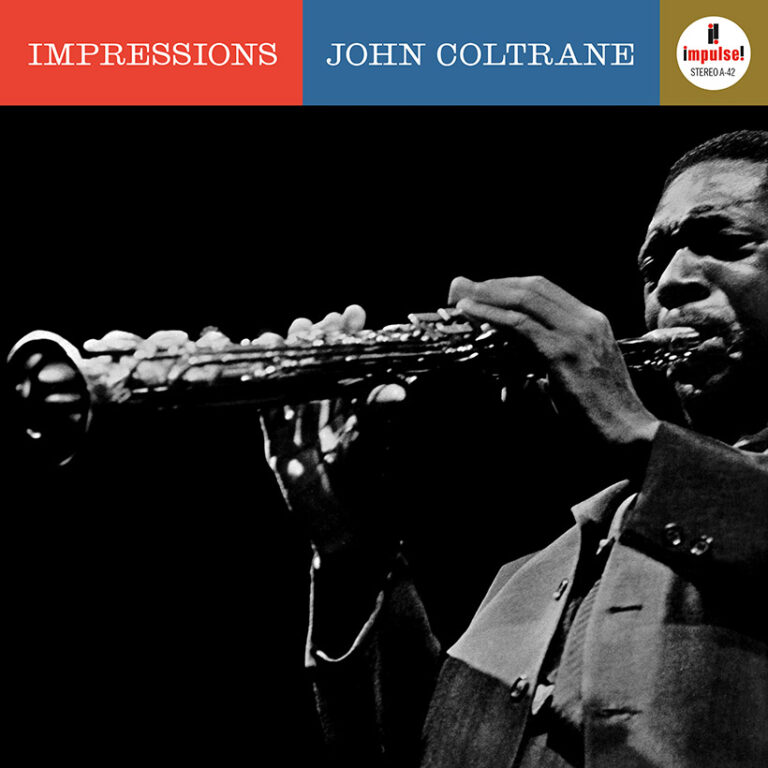
JOHN COLTRANE Impressions
Available to purchase from our US store.Ultimately, it was this mystical quality inherent in the modal universe that held Coltrane’s interest, providing the perfect vehicle for a deepening artistic expression as his music became more explicitly spiritual. On 1964’s “Crescent”, tunes like the title track and “Wise One” are based on simple modal frameworks that feel like natural extensions of the deep, expansive canvasses of “Kind of Blue”. But, where Miles’s explorations were the epitome of nocturnal cool, Coltrane imbues his with a yearning sincerity, revelling in the uncluttered sonic environments to let his heartfelt declarations sing out clearly.
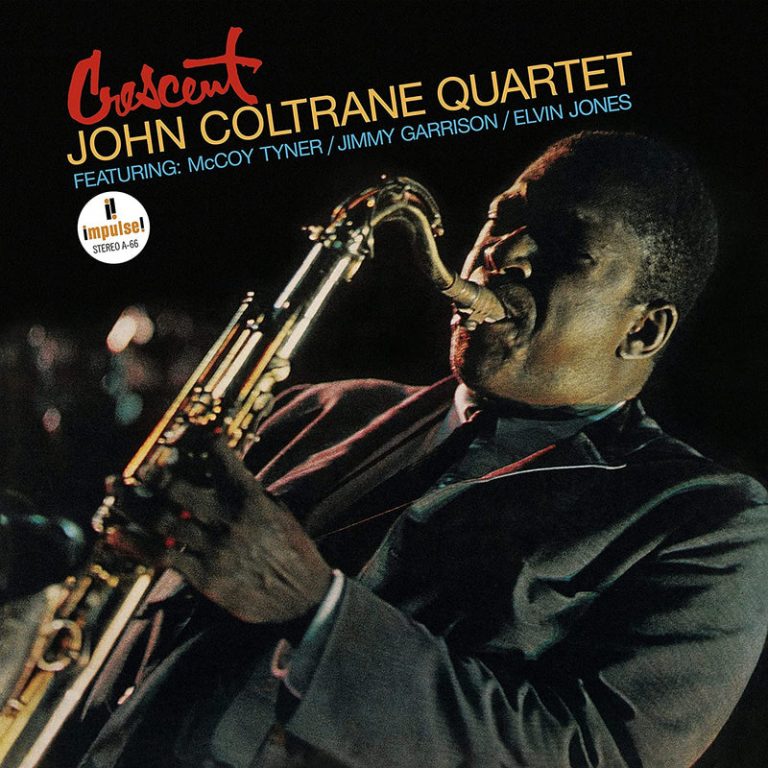
JOHN COLTRANE Crescent
Available to purchase from our US store.It’s this energy that entirely consumes and pervades perhaps Coltrane’s most famous musical statement, and his greatest modal work. Recorded at the end of 1964 and released at the beginning of the following year, “A Love Supreme” begins with the classic “Acknowledgement.” Hung on Jimmy Garrison’s sparse, repeating four-note bass motif, it’s Coltrane’s humble offering of gratitude to the Almighty; a prayer of intense devotion conveyed through the simplest musical means; a purity of intent mirrored and communicated with ineffable precision by the modal imagination. Not just a gift to God, it’s a treasure for all of us, for all time.
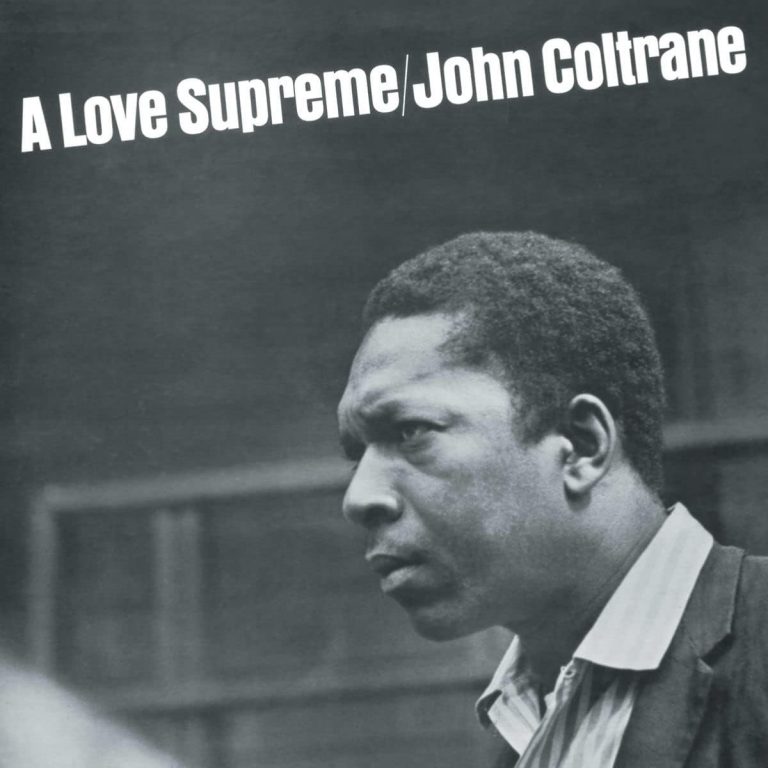
JOHN COLTRANE A Love Supreme
Available to purchase from our US store.READ ON…
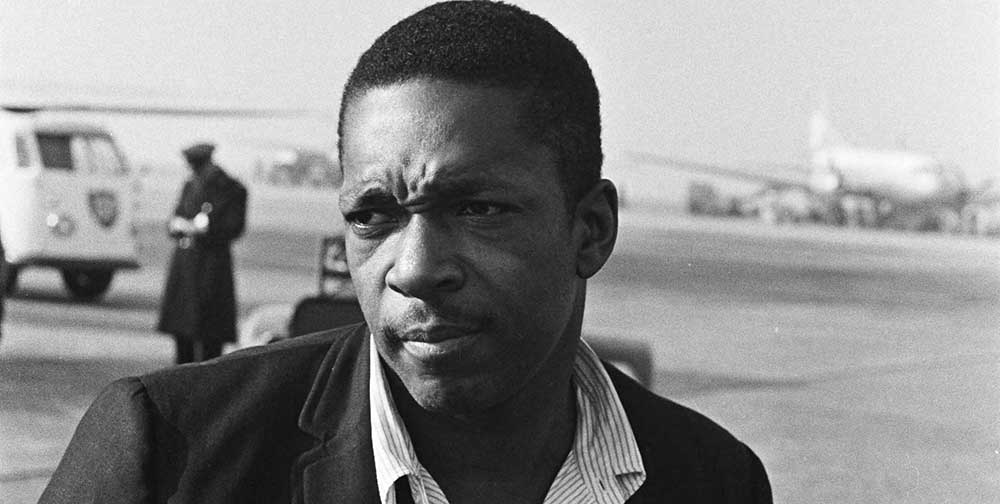
John Coltrane – A Love Supreme Mono Edition
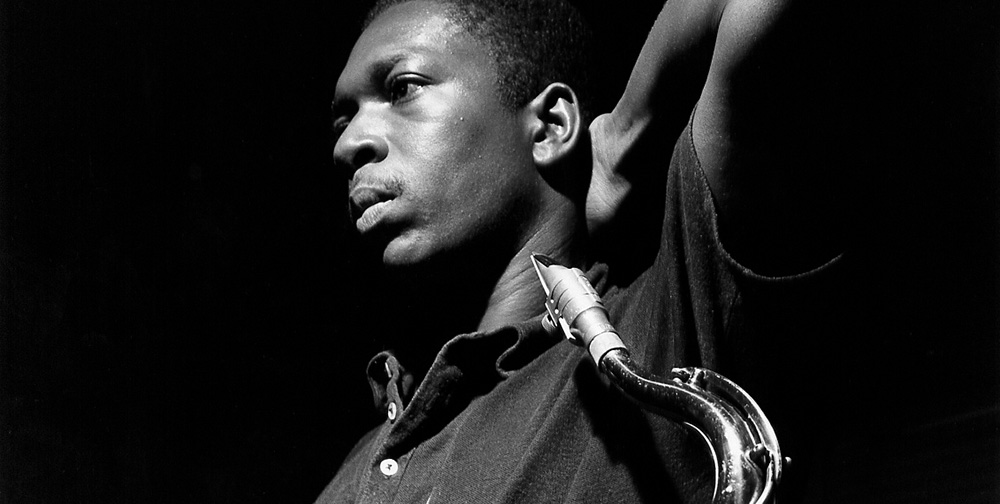
Sitting in with John Coltrane
Daniel Spicer is a Brighton-based writer, broadcaster and poet with bylines in The Wire, Jazzwise, Songlines and The Quietus. He’s the author of books on German free jazz legend Peter Brötzmann and Turkish psychedelic music.
Header image: