


Alfred Lion’s veneration for Andrew Hill’s music is well-documented. In fact, the Blue Note founder encouraged the pianist and composer to record as often as possible, with whomever he desired to play. Much of the material captured throughout the mid- to late 1960s wasn’t released right away, mainly because Hill’s commercial success never quite matched Lion’s enthusiasm.
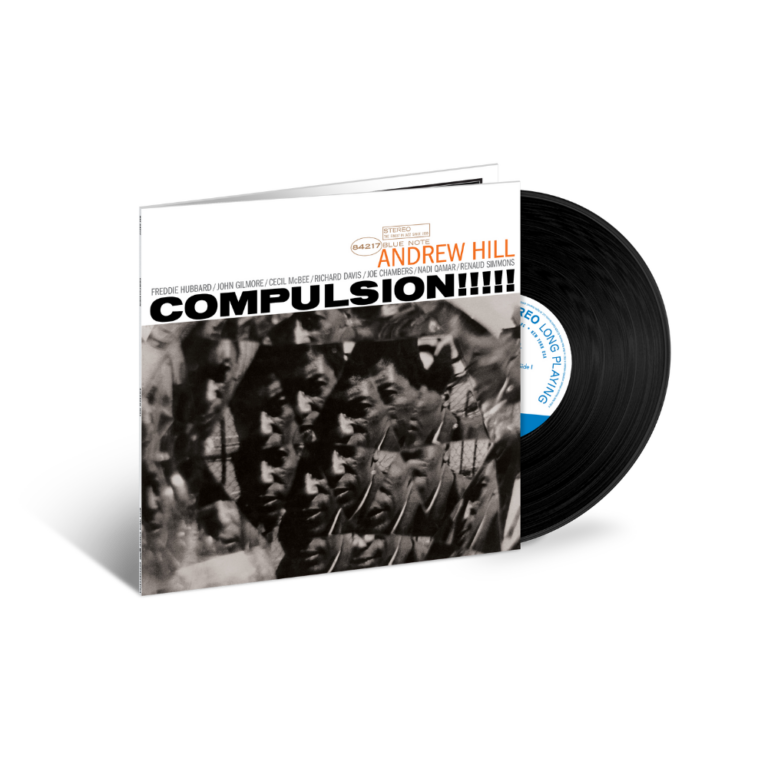
Andrew Hill Compulsion!!!!! (Blue Note Tone Poet) 1lp
But Lion had been through a similar situation before – for many years, critics and listeners couldn’t hear what Lion was hearing in Thelonious Monk’s unorthodox voicings. Hill was a similarly idiosyncratic player, heavily inspired by Monk, Bud Powell and Art Tatum. Born and raised in Chicago, he’d played in R&B bands as a teenager.
As a young man, he’d studied with classical composer Paul Hindemith before getting on the professional jazz circuit. Hill settled in New York City around his 30th birthday in 1961. Two years later, he recorded the album “Black Fire”, his first of five albums to be released on Blue Note between 1964 and 1967 – a stint that established him as one of the defining composers of the post-bop age.

Often overshadowed by his 1965 classic “Points of Departure”, “Compulsion” saw Hill moving further into avant-garde territory than ever before, marking a finale of the pentalogy and a starting point for his out-there explorations towards the decade’s end. For the original liner notes, he told Nat Hentoff that he tried to use the piano “more as a percussive than a lyrical instrument” on this album.
For Tone Poet curator Joe Harley, who chose to include “Compulsion” in the March 2026 batch of his revered remaster series, “each listen reveals new internal logic, new relationships between rhythm, harmony, and intent. Hill is speaking in his own voice. This is Andrew Hill at a moment when his language is fully formed and utterly unconcerned with compromise.”
For the recording sessions, which happened on 8 October 1965 at Rudy van Gelder’s New Jersey studio, Hill brought along three of his regular collaborators: Freddie Hubbard on trumpet, John Gilmore on saxophone and Joe Chambers on drums. Bassist Cecil McBee was a new addition; he was replaced by another regular, Richard Davis, on standout track “Premonition”. Hill added two percussionists – Renaud Simmons and Nadi Qamar – to the personnel for this date, a decision that reflects his ambition of making an album indebted to the Afro-Caribbean musical tradition.
“Compulsion” is Hill’s contribution to the discourse around jazz music’s cultural ancestry, which started against the backdrop of the Civil Rights Movement. Hill might have been drawing from his Haitian ancestry, but he wasn’t part of the Daishiki-and-sandals-wearing crowd. Whether he was influenced by Cecil Taylor’s “energy” style of piano playing, as Bob Blumenthal suggests in his 2006 liner notes, can at least be doubted.
Blumenthal goes as far as to compare “Compulsion” to Taylor’s “Unit Structures“, recorded around the same time and probably the wildest foray into atonality you’ll find in Blue Note’s catalogue. While adventurous in sound and composition, “Compulsion” isn’t a free jazz album though. The tunes follow a pre-composed structure and a relatively steady meter; it’s just that the two percussionists are constantly playing counter-rhythms to Joe Chambers’ grooves, creating a dense
polyrhythmic tapestry.
“Compulsion” is a timeless masterpiece that couldn’t have been created at any other point in time. The A-side of the record sounds like the hazy fever dream of an ancient ritual, evoking the mood of Joseph Conrad’s “Heart Of Darkness”. “Premonition” on the flip, with its spacious, abstract splashes of African thumb piano and bowed bass, feels reminiscent of an AACM group improvisation.
The album concludes with “Limbo”, a tune which Hentoff calls “a collective celebration of the African-American heritage”. While the horns in the beginning do give the final track a joyous and triumphant vibe, they soon give way for long passages of improvisation over waves of percussion that never seem to be arriving anywhere. “Limbo” describes that liminal state between enslavement and liberation, that tension between hopes of achieving true freedom and equity, and the premonition of being fobbed off with a mere simulacrum of the real thing.
Andrew Hill Compulsion!!!!! (Blue Note Tone Poet) 1lp
READ ON…
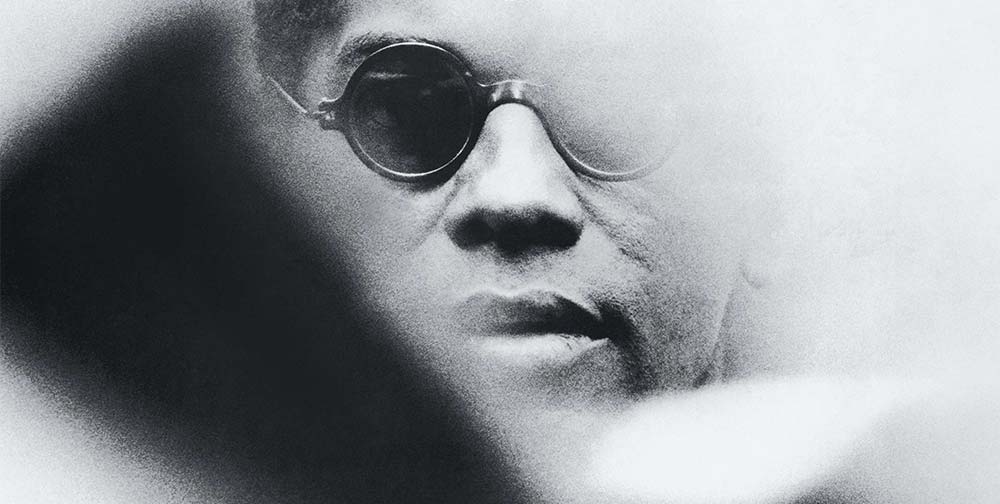
Andrew Hill’s Point of Departure is still light years ahead

Blue Note: Tone Poet Releases 2026
Stephan Kunze is a music and culture writer and book author based in Berlin. He publishes zensounds, a newsletter on ambient and experimental music.