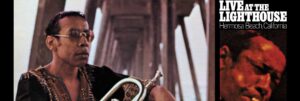
In July 1970, trumpeter Lee Morgan played a weekend residency at The Lighthouse jazz club in Hermosa Beach, California, playing four sets a night, beginning on his 32nd birthday, Friday 10th, and running through until Sunday 12th. The following April, a now legendary double LP – “Live at the Lighthouse” – was released on Blue Note records, containing just four lengthy tracks recorded during that engagement.
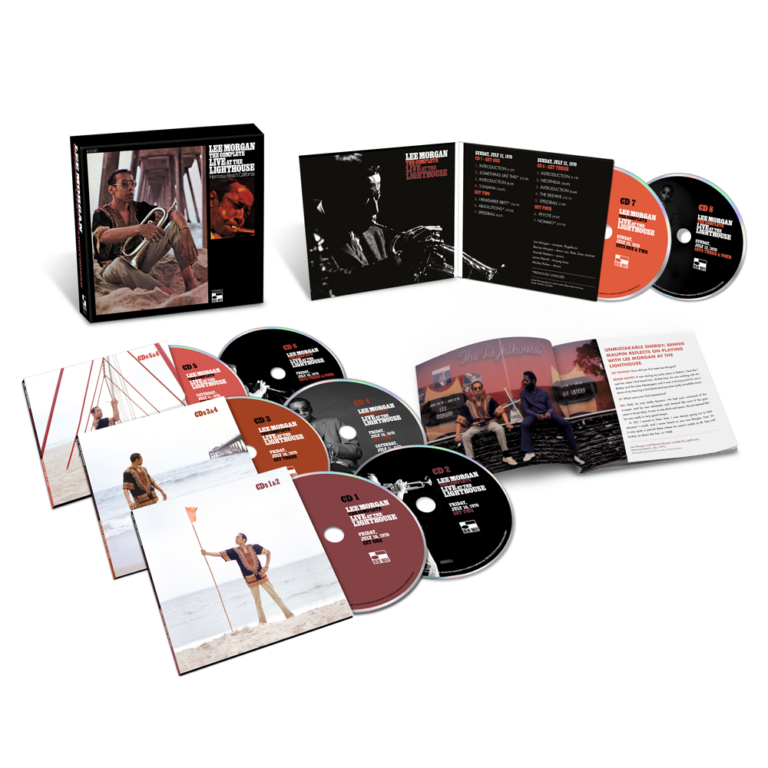
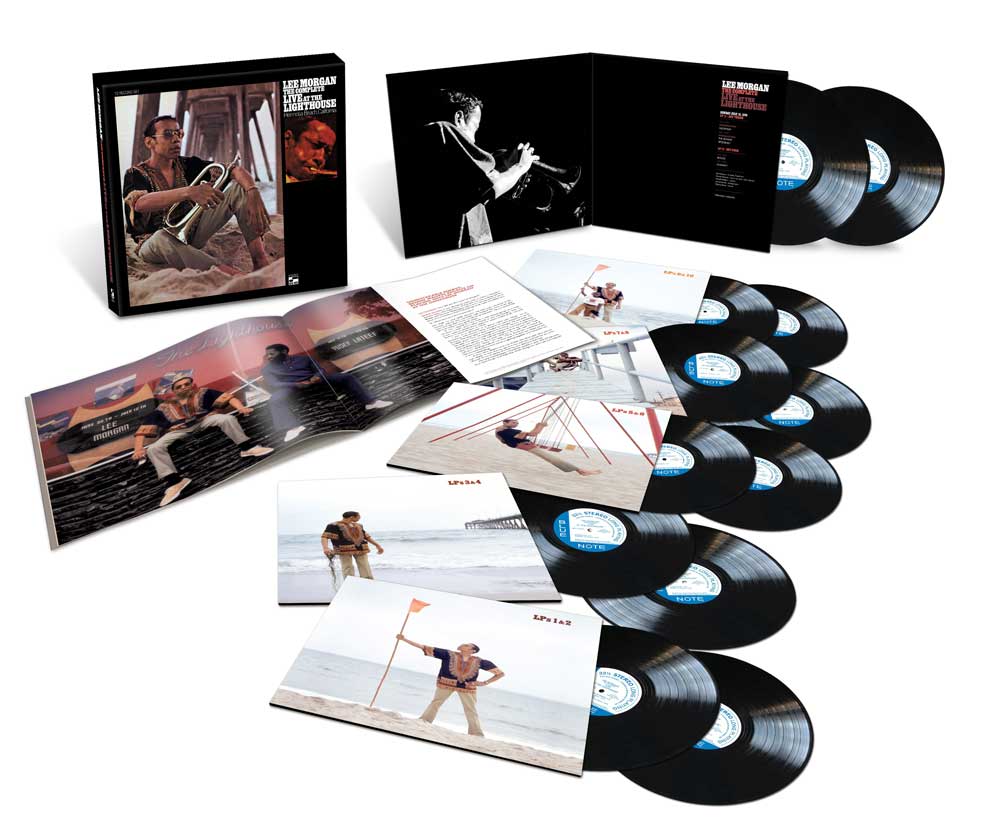
Lee Morgan The Complete Live at the Lighthouse CD Box Set
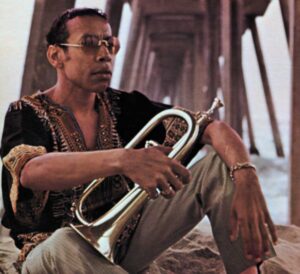
Even before a note is heard, the album’s cover photo signals what to expect. Though Morgan was, by then, a veteran of hard bop, having made his Blue Note debut way back in 1956, here he’s literally thousands of miles away from the smoky, sharp-suited, New York jazz club milieu he’d come up in. He’s relaxing on a beach, flugelhorn in hand, barefoot, wearing shades, slacks and a patterned kaftan-style shirt. He looks like someone embracing the counterculture, the Black Power movement and the chance to reinvent himself.
And that’s exactly what it sounds like. On “Live at the Lighthouse” Morgan deconstructs and makes new shapes out of familiar forms such as soul-jazz and hard bop, while reaching into new and unexpected territories of modal jazz and adventurous post-bop. Much of that is thanks to the extraordinary band he assembled for the dates, which included three major talents who composed almost all the tunes: tenor saxophonist/bass clarinettist/flautist Bennie Maupin, pianist Harold Mabern and bassist Jymie Merritt – plus drummer Mickey Roker.
In 1996, “Live at the Lighthouse” was reissued as a 3-CD boxset containing 12 extra tracks. But, in 2021 – to celebrate the 50th anniversary of its original release – Blue Note dropped the motherlode. “The Complete Live at the Lighthouse” is a monumental, multi-disc set containing 33 tracks, capturing all the music played across all 12 sets during those three nights in July 1970. It’s a vibrant, burning, joyously alive document of a phenomenally gifted quintet operating at the highest possible level, given enough space and time to strike out and explore together.
Morgan contributes just two tunes. “Speedball” is old-fashioned hard bop played briefly at the end of almost every set while he introduces the band. But for the fourth Friday night set, Jack DeJohnette – who just happened to be in town with Miles Davis’s band – sits in on drums, pushing it out to a furious 12 minutes as he crashes at the drums with powerful authority. Morgan’s other composition – appearing just once – is a crowd-pleaser: his 1964 hit, “The Sidewinder.” Here, the easy-going soul-jazz boogaloo stretches out to nearly 13 minutes with Merritt’s bass cutting loose and Roker’s drums turning up the heat with muscular punch. There must have been dancing in Hermosa Beach that night.
There are a few other performances that relish injecting some oomph into well-known forms. Merritt’s “Nommo” is a soul-jazz dash hung on an infectious bass hook and bursting with joie-de-vivre. Maupin’s “416 East 10th Street” is a hard-swinging blast. Best of all is Mabern’s hard-bop scorcher, “The Bee Hive,” which kicks off the first set. After a jerky fanfare punctuated by crisp drum rolls, the gears crunch and Maupin dives into a gutsy tenor solo. Morgan’s solo reveals just what a master he was, mixing rapid blowing with bluesy smears as he negotiates a stream of ever-more complex and imaginative melodic gambits with extraordinary agility and astonishing precision.
But it’s where risks are taken that this collection really comes alive, with a handful of tunes that form the core of the weekend’s repertoire pushing out into unknown lands. Mabern’s “I Remember Britt” begins with a rendition of the French nursery rhyme “Frère Jacques” – performed as a round, with Maupin’s trilling flute overlapping with the trumpet – before sliding into a gorgeously lilting soul-jazz bossa. On pieces like this, and Maupin’s nonchalant ballad, “Yunjanna,” the rhythm section adopts a daring fluidity, constantly playing with time, speeding up and slowing down, coming on in waves, and extending the groundbreaking innovations of Miles Davis’s mid-60s quintet.
The weekend’s deepest cut is Merritt’s “Absolutions,” a heavily syncopated modal growler that he’d already recorded with Max Roach in 1968. Steeped in dark mystery, it rides a hypnotically repeating bass hook and simmering drums, with jagged horns surging and soaring. It’s also the longest track, with every rendition coming in at around 20 minutes as the players lose themselves in a meditative trance.
Yet, it’s Maupin who emerges as the most multi-faceted composer and performer. “Neophilia” is a showcase for his bass clarinet, beginning with a sly, unaccompanied intro and gently unfolding into a slinky blues with a beautifully low, rich and irresistibly velvety solo. “Something Like This” is urgent post-bop with a Latin feel and the drums tangled up in intricate polyrhythms. “Peyote” is a mid-tempo stroller with a weary, wistful feel – like the come-down after a long, sleepless night – and his tenor solo reaching out into wild avant-garde exhortations.
Lee Morgan The Complete Live at the Lighthouse CD Box Set
It’s a revelation to hear these tunes develop over the three nights, as the quintet locks in, repeatedly finding new surprises and hidden treasures. Maupin said: “Right from the beginning, we developed such a heart-to-heart connection with each other… It was just about being in the moment and capturing the moment.” Merritt goes even further: “In a sense, it is holy music… this was totally uncompromised music in terms of the way it went down.”
READ ON…
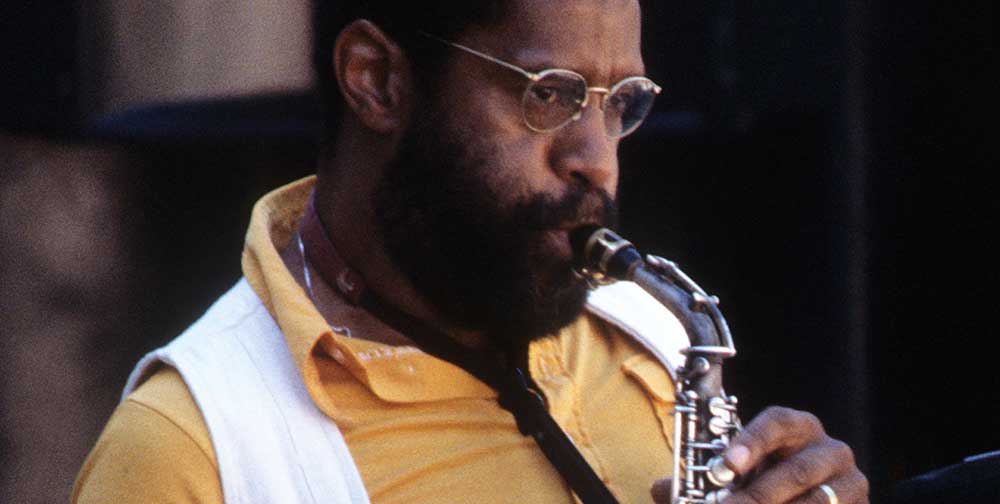
Bennie Maupin – Slow Traffic to the Right
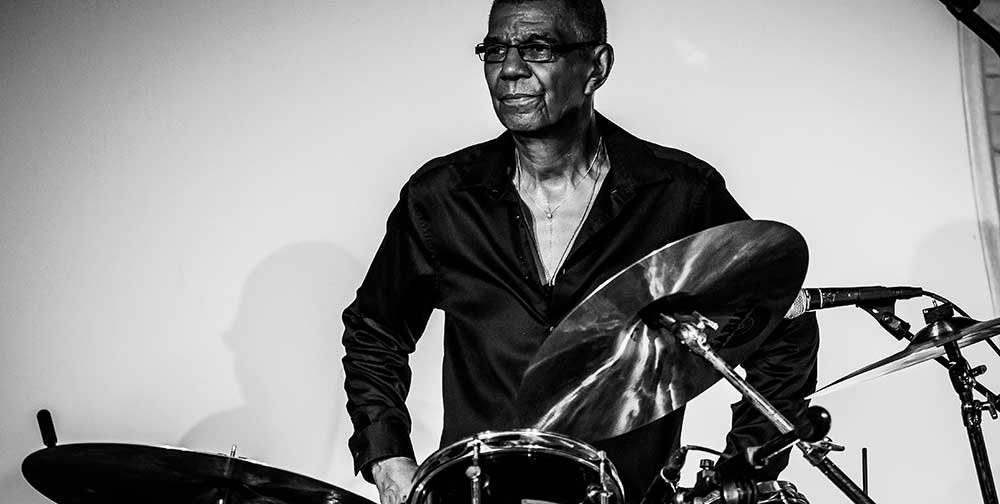
Jack DeJohnette in 6 Classic Drum Performances
Daniel Spicer is a Brighton-based writer, broadcaster and poet with bylines in The Wire, Jazzwise, Songlines and The Quietus. He’s the author of books on German free jazz legend Peter Brötzmann and Turkish psychedelic music.