
Who are the most influential jazz guitarists in the music’s history? Django Reinhardt, Charlie Christian, Bill Frisell, Joe Pass, Pat Metheny and Jim Hall would have to make the list.
But arguably the laidback, modest John Leslie “Wes” Montgomery trumps them all, and jazz would have been completely different without him. A starstruck 13-year-old Metheny got the autograph of his idol at the 1968 KC Jazz Festival while celebrated writer Ralph J Gleason – one of the few journalists to interview Wes – described the first time he heard his playing: “It was like being hit by a bolt of lightning.” In his autobiography, George Benson explained that “Wes showed an entire generation that there was a different way of looking at an instrument.” (The two became firm friends.) Elsewhere John Scofield, Lee Ritenour, Larry Coryell, Pat Martino, Kevin Eubanks, Carlos Santana and countless others owed a huge debt to Wes.
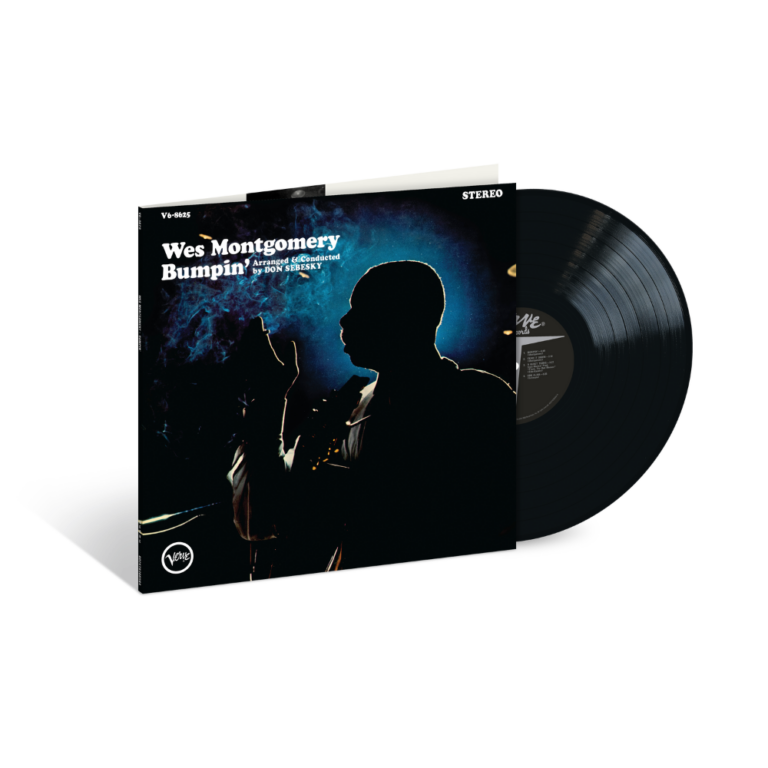
Wes Montgomery Bumpin' (Verve Acoustic Sounds Series) 1LP
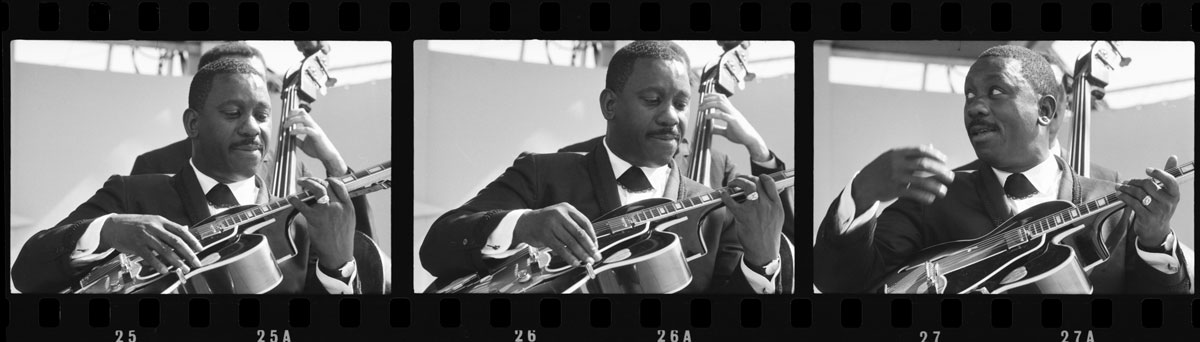
By any standards, he’s one of the most extraordinary figures in jazz history. Self-taught and influenced by Charlie Christian, Django Reinhardt and Les Paul, Wes stumbled upon the guitar at the age of 19. He used a plectrum to start with but after a few months of playing began exclusively using his thumb. The most imitated aspect of his style has been his use of octaves (the discovery of which he called a “coincidence”, stumbled upon while tuning his cheap guitar), but his single-note improvisations and chord solos were just as notable. He brought horn-like phrasing and an innate sense of storytelling to the instrument.
Born in Indianapolis and growing up with two musician brothers, he served his apprenticeship playing with big-band pioneer Lionel Hampton between 1948 and 1950, but didn’t come to the attention of the wider jazz audience until making his solo debut album on the Pacific Jazz label (in the meantime, he had spawned seven children, and had continued day jobs including welder and dairy plant operative). A subsequent move to Riverside Records and then Verve in 1964 introduced him to a whole new audience.
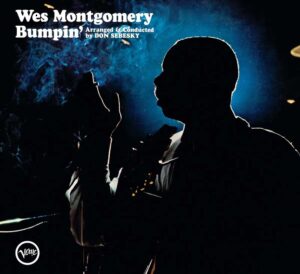
“Bumpin’” was Wes’s second Verve album, and it’s one of the most sumptuous-sounding records in the entire Verve catalogue, borne out by the fact that it was recorded over an unprecedented four days during March and May 1965 at Rudy Van Gelder’s studio in Englewood Cliffs. Produced by Verve boss Creed Taylor, it also foregrounded Wes’s interest in bossa nova and Latin jazz, assisted by the widescreen string arrangements of Don Sebesky.
The album kicked off with two Wes originals – the title track is almost as dreamily evocative as Miles’s “So What”, the guitarist’s lengthy octave solo hanging thrillingly above Sebesky’s strings. Also listen out for Margaret Ross’s delicate harp interjections. Meanwhile the brief, uptempo “Tear It Down” is notable for its stop-start structure and unusual major key. Wes fires off an uplifting solo, while Roger Kellaway’s subtle comping in the left channel is reminiscent of Bill Evans.
“A Quiet Thing” is a dreamy lullaby, Wes’s guitar at its prettiest, while the version of Dizzy Gillespie’s “Con Alma” starts with a bachata beat, Candido Camero’s bongos high in the mix, before drummer Grady Tate cleverly inserts the swing. On his website, guitarist Steve Khan toasted the “love, grace and care” with which Wes played on this track.
Elsewhere “The Shadow Of Your Smile” is nothing less than a Latin Jazz landmark, while Wes illustrates his chordal mastery at the beginning of the beautiful “Mi Cosa”. “Here’s That Rainy Day” gets a gorgeous bossa nova makeover, complete with Wes’s delightfully melodic octave solo, while Sebesky’s closing “Musty” brings back the blues feeling.
Wes Montgomery Bumpin' (Verve Acoustic Sounds Series) 1LP
Upon its release in late 1965, “Bumpin’” became Wes’s first album to reach the Billboard pop charts and received two Grammy nominations. Clocking in at just over 31 minutes, it sounds fantastic on vinyl and was the first successful collaboration between Wes and Taylor, who reported that – with the help of manager John Levy – the Verve albums got Wes booked into concert halls rather than nightclubs.
And there was a lot more to come from Wes on Verve – watch this space…
READ ON…
Julian Lage: Scenes From Above
Jimmy Smith in 5 Classic Albums
Matt Phillips is a London-based writer and musician whose work has appeared in Jazzwise, Classic Pop, Record Collector and The Oldie. He’s the author of “John McLaughlin: From Miles & Mahavishnu To The 4th Dimension”.