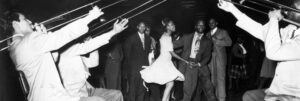
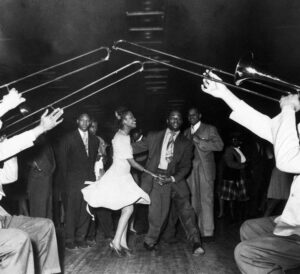
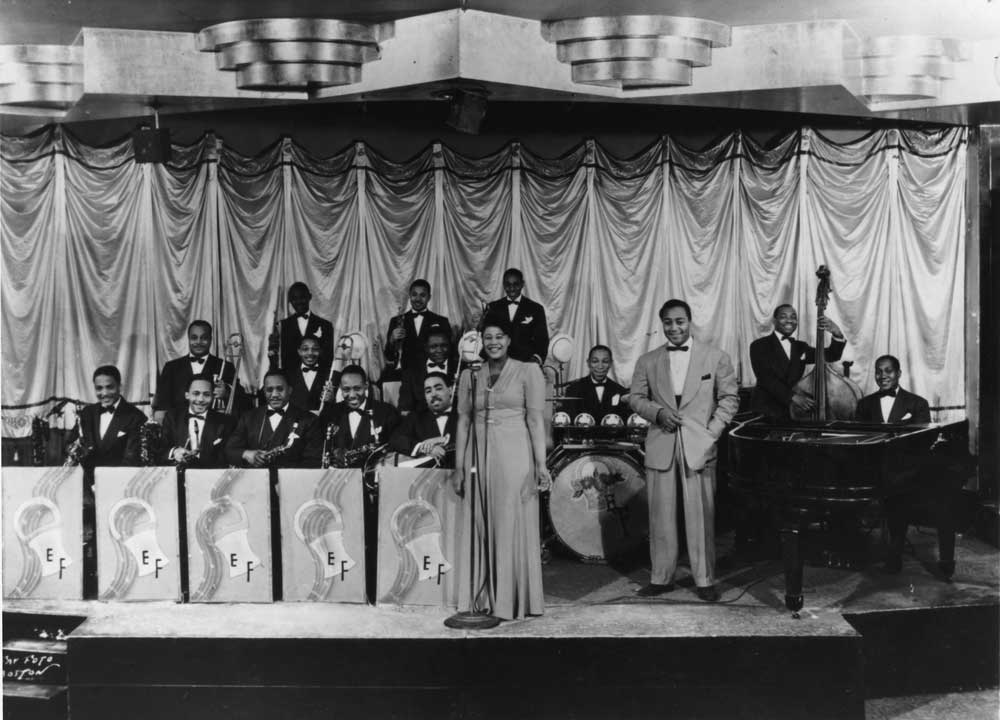
It goes without saying that musicians influence each other. During the Swing era, when spacious, ubiquitous dancehalls attracted thousands of people each week, the dancers also had a huge impact. Robert Hylton’s fascinating book, “Dancing In Time”, describes the relationship between the house band at the Savoy Ballroom in New York – Chick Webb and his Orchestra – and the highly-skilled dancers who regularly attended the club, which became the birthplace of Swing. The orchestra, he wrote, “both inspired and were inspired by the Lindy Hop dancers”. Whether with Count Basie, Benny Goodman, Glenn Miller or Cab Calloway, dance continued to shape and form the music as it travelled the world.
Dance craze The Big Apple, eventually memorialised by Whitey’s Lindy Hoppers in the movie “Keep Punching” (1939), illustrates the relationship between Swing’s music and movement. The counter-clockwise circle dance became popular and mainstream after a group of white students made their way into the segregated Big Apple nightclub in South Carolina in the early 1930s. Wowed by what they saw on the dancefloor, a version of the dance travelled back out with them, and gradually spread. By 1937 Tommy Dorsey recorded “The Big Apple Swing” and the dance was covered by Life Magazine. The origins, though, are believed to lie in West Africa, specifically in the counter-clockwise and devotional Ring Shout, which is still practiced by Gullah Geechee communities on the North American Atlantic Coast.
Swing was inseparable from the places in which it was heard and danced to, whether attending in person or at home, as commercial radio stations including Radio Luxembourg broadcast performances into the UK and Ireland from 1933 onwards. So, if you listen to Jimmy Dorsey’s “The Breeze and I”, Count Basie “Doggin’ Around”, or Cole Porter’s “Begin the Beguine” you’re not just hearing the drums, horns and bass. You’re also hearing the dancers, firing them up, and moving the music into a global sound which continues to evolve, nearly a century later. Jazz is dance music.
5 Essential Swing Albums
Count Basie and his Orchestra – April in Paris (Verve, 1957)
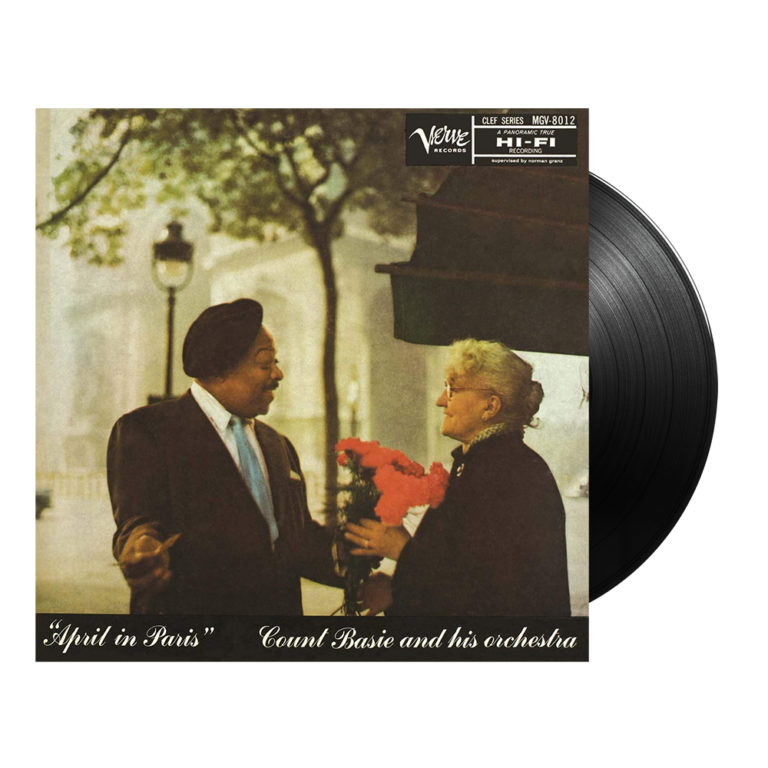
This Verve album is powered by the interplay between musicians and dancers, notably on “Mambo Inn”. The tune was first released by Bobby Woodlen’s Harlem Mambos in 1953 and was widely covered in the decade that followed the Swing explosion. The drum breaks on Count Basie’s extraordinary rendition still sound like pure dancefloor energy.
Ella Fitzgerald – Jukebox Ella (Verve, 2003)
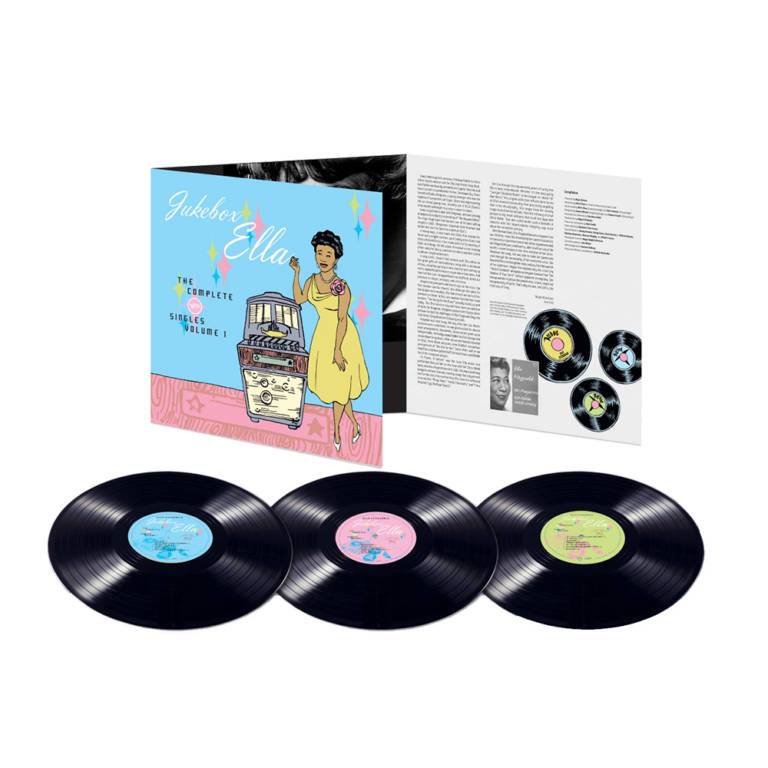
Ella Fitzgerald Jukebox Ella: The Complete Verve Singles, Vol.1 3LP Box Set
Right from the start, Ella Fitzgerald was in the thick of the emerging sound, playing and recording with Chick Webb’s musicians at the Savoy. When Webb died in 1939, the band was renamed Ella Fitzgerald and her Famous Orchestra. This release collects all the singles the First Lady of Swing recorded for Verve in the decade after 1953 including the bracket-heavy “(If You Can’t Sing It), You’ll Have To Swing It (Mr Paganini)”.
Duke Ellington – Money Jungle (Blue Note, 1962)
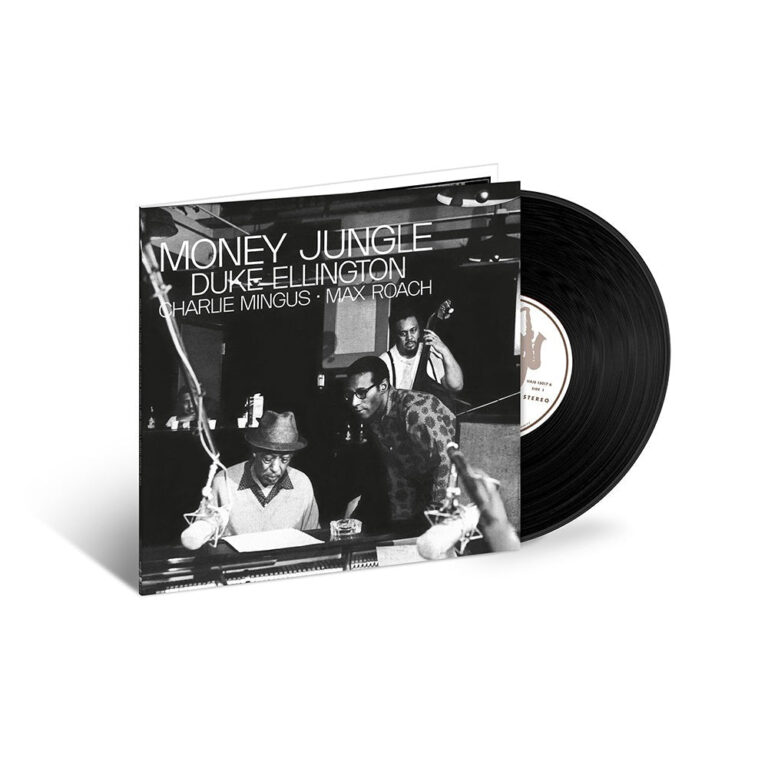
Duke Ellington Money Jungle LP (Blue Note Tone Poet Series)
You couldn’t talk about the dance roots of Swing without including some Ellington. But instead of going for the obvious, here’s the spectacular Blue Note collaboration with Charles Mingus and Max Roach. The recording is bursting with fireworks, with each musician pushing each other into new pockets of skill and invention. And underneath it all, intricate footwork, air steps and the ghosts of some phenomenal dancers.
Betty Carter – Out There (Verve, 1958)
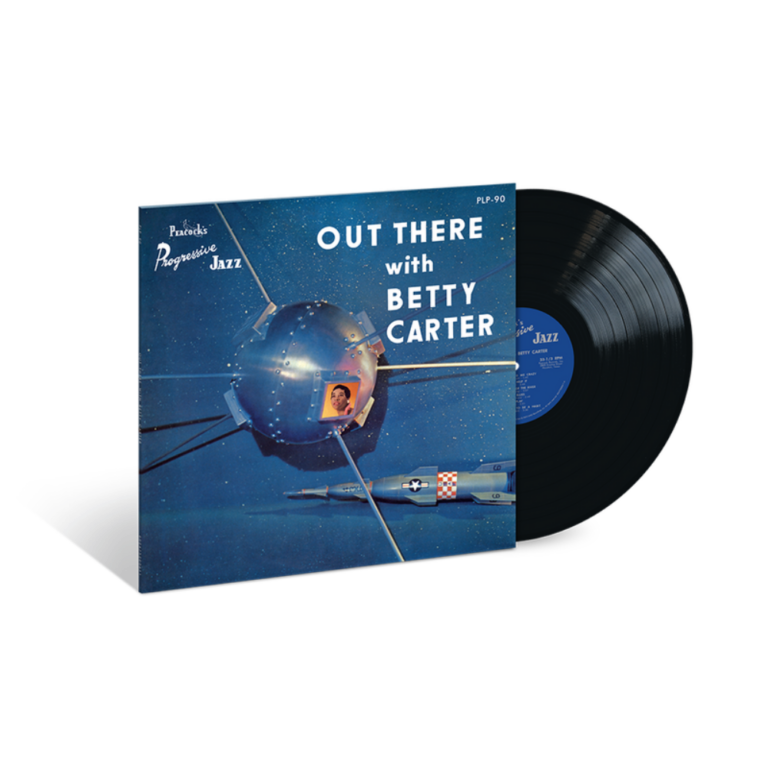
Betty Carter Out There With Betty Carter (Verve By Request) 1LP
Musicians who joined Swing bands regularly went on to individual success, as with Betty Carter. The singer, who came through Detroit’s churches, toured with Lionel Hampton’s band (who himself had come through Benny Goodman’s quartet). Carter’s famous ability to scat, improvise and experiment didn’t always go down well with her band leaders, but it did lead to her first solo album. An early gem, “Out There” includes the understated and percussive “You’re Getting to be a Habit with Me” alongside the infectiously colourful musicality of “All I’ve Got”.
Art Pepper – Smack Up (Verve, 1960)
Whilst the Swing era had peaked and passed by the time Art Pepper released his album “Smack Up”, the influence of the music and the dancers continued to percolate. The West Coast saxophonist included “A Bit of Basie”, a celebration of Count Basie’s movement-inspiring music on his iconic album, remaking the dancefloor energies for a new moment in time. At the heart of this tune sits the unstoppable drummer Frank Butler, propelling the song with distinctive, future-funky, forward motion.
READ ON…
The Roots of Jazz
Explore our Great American Songbook page
Emma Warren has written extensively about UK jazz. Her books include Make Some Space: Tuning into Total Refreshment Centre, Steam Down: Or How Things Begin and Dance Your Way Home. Her new book Up the Youth Club is an Irish Times Book of the Year.
Header image: Dancers swing to the sound of trombones at the Savoy Ballroom, namesake of the popular song “Stomping at the Savoy”. Photo: Bettmann.