

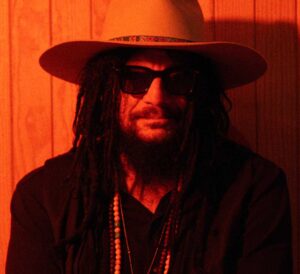
Don Was is a revered record producer, musician, and president of Blue Note Records. He’s also the bassist in the Pan Detroit Ensemble – a loose limbed, soulful 9 piece, fronted by the charisma bomb that is Steffanie Christ’ian. Their second album “Blues for Allah” is a vibe heavy, super slick live recording of the Grateful Dead’s 1975 record of the same name.
Whilst on tour with the Pan Detroit Ensemble, Don joined us to talk about his connection to one of America’s most mythologised bands, the musical fingerprint of the Motor City, and grooving in the face of adversity.
Freya Hellier
Hi Don, it’s great to see you, tell me about your new record?
Don Was
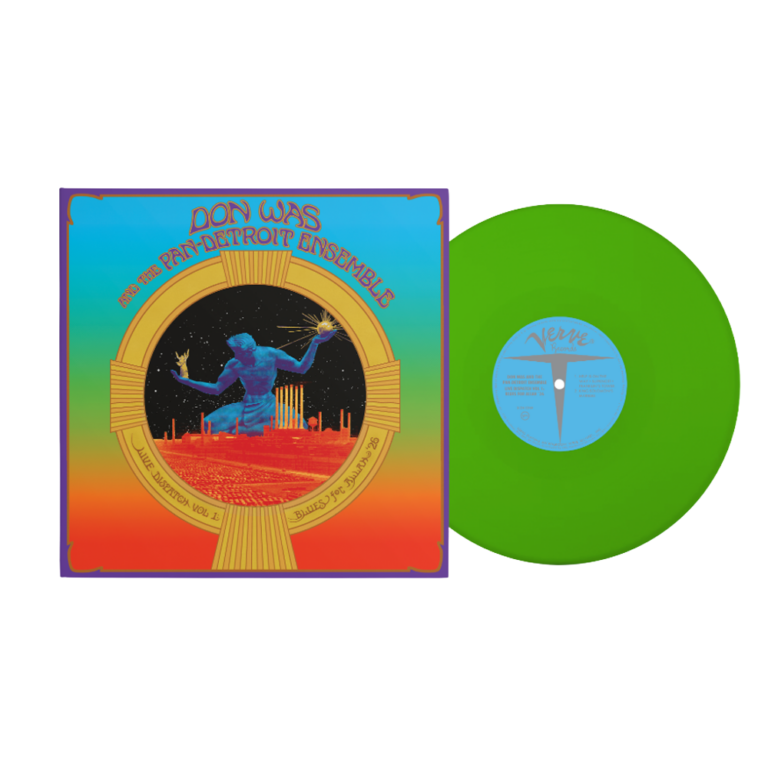
My band, Don Was and the Pan Detroit Ensemble has just released a new live album on Verve Records. It’s a live version of the Grateful Dead’s album “Blues for Allah,” performed in its entirety in sequence to celebrate the 50th anniversary of the album.
FH
Your history with the Grateful Dead goes back quite a way, how did you make the initial connection?
Don Was
I was introduced to Bob Weir of the Grateful Dead in the early ’90s by a bass player named Rob Wasserman, who was playing bass with Bob and his band Rat Dog. And in 2018, Bobby called me up, and he said that Rob Wasserman, who had passed a couple years earlier, had come to him in a dream. And he said that the reason he introduced us back in the ’90s was that I was supposed to take his place in Bobby’s band when Rob was gone. So Bobby said, “Would you like to start a band with me and Jay Lane, and we’ll call it the Wolf Brothers”, which is also a name that came from the dream.
So, from 2018 up until Bobby passed (in January, 2026), I was touring with him, and we went deep into the Grateful Dead catalogue, and played hundreds of shows. I learned so much from playing these songs with him.
FH
What did you learn from that time?
Don Was
When he called me up at first, I thought, well, this not only will it be awesome to play with him and to tour with him, but I’m going to get to take a master class in fearlessness from one of the titans of the field, a guy who really is not afraid to walk out in front of a stadium full of people without a master plan and just improvise. So it was a great experience, and a lot of the songs that are on the “Blues for Allah” album, we played with the Wolf Brothers. So when I started my own group [comprised] of people from Detroit, I remembered some lessons I learned with Bobby.
One of the things he told me…he could tell I was trying to imitate [Grateful Dead bassist] Phil Lesh a little bit with my bass playing. And you can’t imitate Phil Lesh. He had a unique musical signature. He was a brilliant bassist, but Bobby could see me struggling to do that, and he pulled me aside, and he said, “You know, all Phil was really doing was being himself when he played. Play these songs the way you would play them, because that’s the most Grateful Dead way of doing things.” That’s all any of them were doing. It’s not only great advice for music, but it’s also great advice for life.
So, when our band started learning these songs, we were adamant about not playing karaoke versions of them. We tried to find our own natural way into these songs, even if it meant “Detroiticising” a few of them a little bit. A really good case in point is “King Solomon’s Marbles”, which is in some pretty wild time signature. And to be honest with you, I always just thought it was a jam. I never understood that there was a form underneath that was clear cut and tangible as a song like “Ripple”, but once we learned the form of it, we couldn’t quite play that feel naturally. But we noticed that Jerry Garcia opened that song with a nod to Inner City Blues, the Marvin Gaye song. So we thought, well, we’re from Detroit. We know how to do that. So we put the whole song into 4/4, into that into the feel of Inner City Blues, and then we could put our heart and soul into it.
FH
What does it mean to bring a “Detroit state of mind” to making music?
Don Was
Taking a Detroit approach to music is not something you can switch on and off. It’s something you accumulate over a long period of time. I think to me the epitome of Detroit music is John Lee Hooker, he’s about as raw as you can be, almost to the point where you think the song’s going to fall apart, but it never falls apart. Not only that, it grooves like crazy.
He’s singing about what he’s thinking in that exact moment, and I think that all of the the great Detroit music that’s come subsequently stems from that ethos, whether that’s rock n roll from Mitch Ryder, to the MC Five and the Stooges, to Jack White. Whether that’s the RnB from Fortune Records to Motown Records to George Clinton to Jay Dilla.
So many great jazz musicians come from Detroit with that little extra bit of raw rambunctiousness, like Joe Henderson. Elvin Jones is a great example, he played with tremendous finesse and elegance, but he always had just that little extra bit of energy – and maybe urban angst – in his playing.
It’s a great town. It’s a one industry town. What that means is everybody’s kind of in the same boat: your fate and the fate of your family is tied to the success or failure of the auto business in any given year. So the whole economy is based on that. As a result, there’s not really a need to put on any airs, so you get a really honest population, and that’s reflected in the music as well.
FH
Your current tour is named after the band’s first album “Groove in the Face of Adversity” – is that a comment on our current times?
Don Was
Well, I can tell you where the title “Groove in the Face of Adversity” came from. I was 14 years old. I was driving around Detroit with my mom. She’s making me run errands with her on Saturday, and I didn’t want to run errands with her. And I was just being a really obnoxious kid in the car. So she finally left me in the car with the keys. She said, “play with the radio,” and I started messing with the dial. I did not know that there was a jazz station in Detroit, but I landed on it just as I was hearing the opening notes of the solo for a song called “Mode for Joe” by Joe Henderson, which happens to be a Blue Note record [1966]. And I came in right at the top of his solo where he’s making these kind of anguished cries on the saxophone and it startled me. I’d never heard any music that sounded like that before. You can check it out. It happens at 42 seconds into the song.
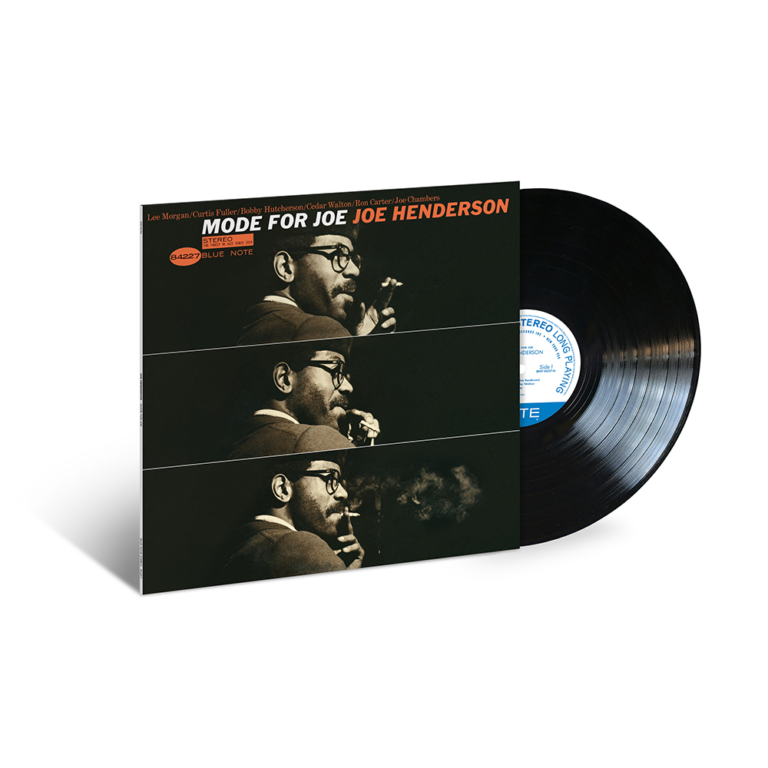
Joe Henderson Mode For Joe LP (Blue Note Classic Vinyl Series)
So I really related. I didn’t know what Joe Henderson was going through, but he was reflecting the angst I was feeling, being stuck running errands with my mom, so I’m listening to it, and after you know eight bars or so, the the drummer Joe Chambers kicks in and he starts grooving, and Joe Henderson calms down and eventually jumps on board the groove and and takes the solo, and I thought he was speaking to me. I thought he was saying, “Don, you got to groove in the face of adversity.” And I thought, “Whoa!” That’s really powerful, and it actually changed my mood 180 degrees in the course of a couple of minutes. It was testimony to the power of music, that’s a very important function for music in the culture – to make sure people keep grooving no matter how hard times get, and to make them understand that they’re not alone in this life. But I think about it all the time. You know, if I turn on the news and start going crazy about what’s going on in the world, groove in the face of adversity. So we titled the album that.
FH
You’re the president of Blue Note Records, but your album is on Verve, does that make things a bit weird at work?
Don Was
It’s a little wild – I think it’s fairly unprecedented that I’m the president of Blue Note Records, but we’re releasing our album through Verve Records. I don’t know if that’s happened before. Well, look, I feel weird as the President of Blue Note, part of my job is saying “no” all the time. Every day, I’ve got to say no to somebody who would like to be on Blue Note Records; some really great artists, great musicians who’ve studied for years and have been playing for years. For whatever reason, it may not be the right time to have them on the label or to sign a new artist. So, if I’m saying no to people and then putting out my own record, that just seems really unsavoury. Jamie Krentz, who’s the CEO of Verve, is also a really good buddy of mine and has come to our shows, and so I sent him the “Blues For Allah” record, and he offered. I’m thrilled, you know. It actually means a lot to me. I bought a lot of Verve records as a kid, and to see my name on a Verve label, it’s exciting even at my age.
READ ON…
Cass Tech – The Detroit High School that made Jazz HIstory
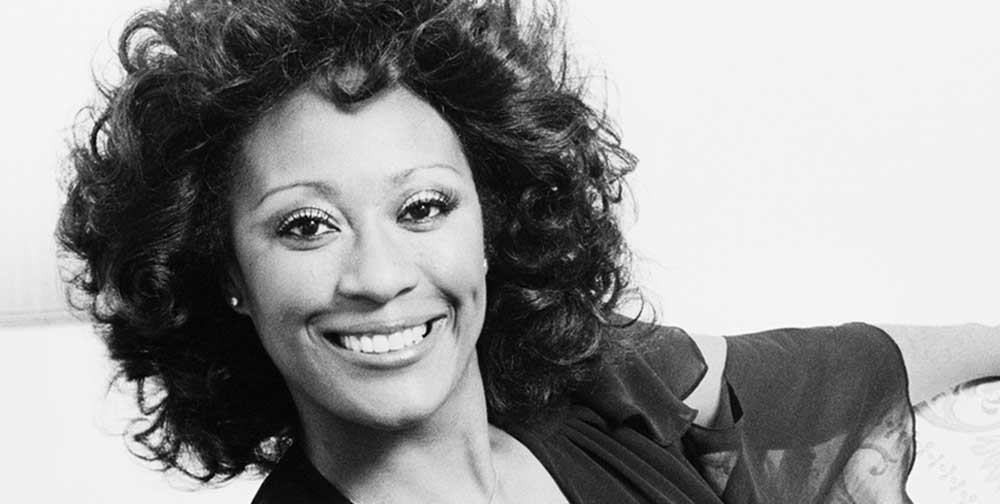
Marlena Shaw “Spice of Life”
Freya Hellier is the commissioning editor for Everything Jazz. She has spent many years making radio programmes about all genres of music for BBC Radio 3, Radio 4 and beyond.