
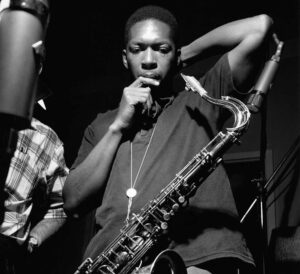
If you were asked to recount the musicians that, one hundred years after their birth, still have a resounding influence on artists today, pioneering saxophonist and composer John Coltrane would likely be one of the first to name. Despite his passing at aged only 40, his contribution to jazz during his short career ranks him as a legend.
Coltrane’s harmonic innovation affected popular music at large. Take “Giant Steps” (1960) for example, featuring his later coined ‘Trane changes’ which caused jazz musicians to completely rethink chord progressions. Meanwhile, his ‘sheets of sound’ technique—where he’d improvise with note changes at lightning speed—inspired generations of sax players after him. In his development of modal jazz and free jazz, Coltrane left a legacy that was multifaceted and near-impossible to compete with in terms of impact.
To celebrate John Coltrane’s masterful discography, we pull out five Coltrane albums and ask some of our favourite saxophonists—a mix of rising and established artists—to reveal how the music connects with them.
John Coltrane – Blue Train (Blue Note, 1958)
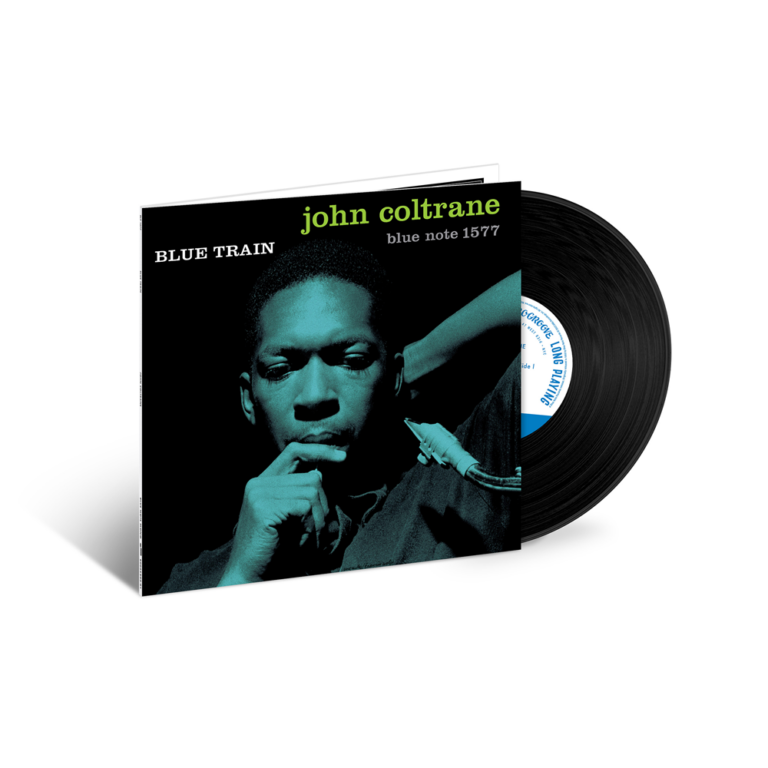
John Coltrane Blue Train (Blue Note Tone Poet Series)
Opening with one of Coltrane’s most recognisable motifs, “Blue Train” is considered by critics and fans alike and a masterpiece and a linchpin of hard bop jazz. His only recording as bandleader for Blue Note, his harmonic explorations gave a preview of the “sheets of sound” technique to come later in his career.

Jemima Whyte is a rising saxophonist and vocalist from the North of England. “What stands out for me [on ‘Blue Train’] is this feeling of progression. With his double time lines and streams of notes you can feel he is trying to push the music further, with denser harmonic exploration and curiosity. This feels like such a defining work for him before he would later go on to record ‘Giant Steps’ and ‘A Love Supreme’”, says Jemima.
“I also really enjoy the gospel-like horn arrangements in this album. As a band leader myself with a three-piece horn section, I love to hear the intertwining tenor, trumpet and trombone arrangements in tracks like ‘Moment’s Notice’ and ‘Blue Train’. I definitely take inspiration from this type of sound in my own compositions”.
John Coltrane – Lush Life (Prestige, 1961)
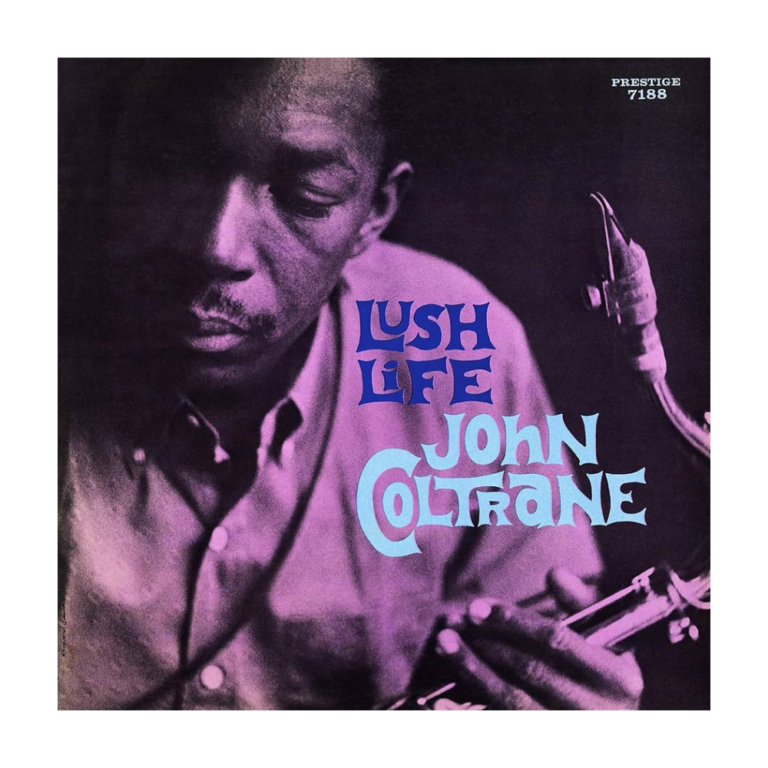
Comprised of recording sessions at the Van Gelder Studio in 1957 and 1958, “Lush Life” documents a time of creative acceleration in Coltrane’s career. Although the album was completed without consent from Coltrane, “Lush Life” became a fan favourite in the musician’s discography and it resonates with artists today as strongly as it did at the time of release.

Rising saxophonist Allexa Nava is a Peruvian, London based musician who’s emerged from Tomorrow’s Warriors—the same organisation that mentored the careers of Nubya Garcia and Shabaka. “I’m always mesmerised by the beautiful rounded tone of his sax and also the way he approaches the melody”, says Nava. Of the album, she adds, “His playing has a real sense of restraint, which makes every note feel super intentional and very lyrical. During his solo on the title track, a beautiful subtle motif starts developing from the beginning, and it develops naturally until the end—it feels very personal and unmistakably him”.
Duke Ellington & John Coltrane (Impulse!1963)
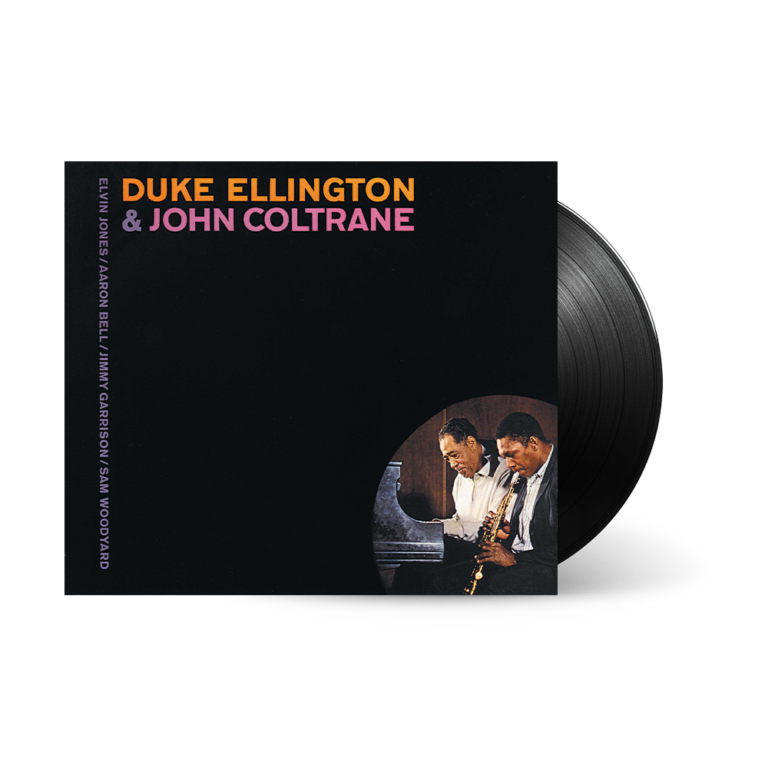
Duke Ellington, John Coltrane Duke Ellington & John Coltrane

“That Duke Ellington teamed up with John Coltrane is undeniably one of the most unique moments in jazz history” says Dutch saxophonist Benjamin Herman. This album demonstrated the magic that can happen in Intergenerational collaborations. Ellington composed all tracks on the album except for Coltrane’s contribution ‘Big Nick’, but Coltrane particularly shines as a soloist. Herman muses on the album’s charm: “Ellington’s elegance and Coltrane’s driving energy… two parallel lines, neither of them trying to fit in with the other’s musical world—it works wonders”. The album inspires Herman’s own journey as a saxophonist and composer; “There’s enough on this album to keep any self respecting jazz musician locked up in their practice room for at least ten years”.
John Coltrane – Ballads (Impulse!1963)
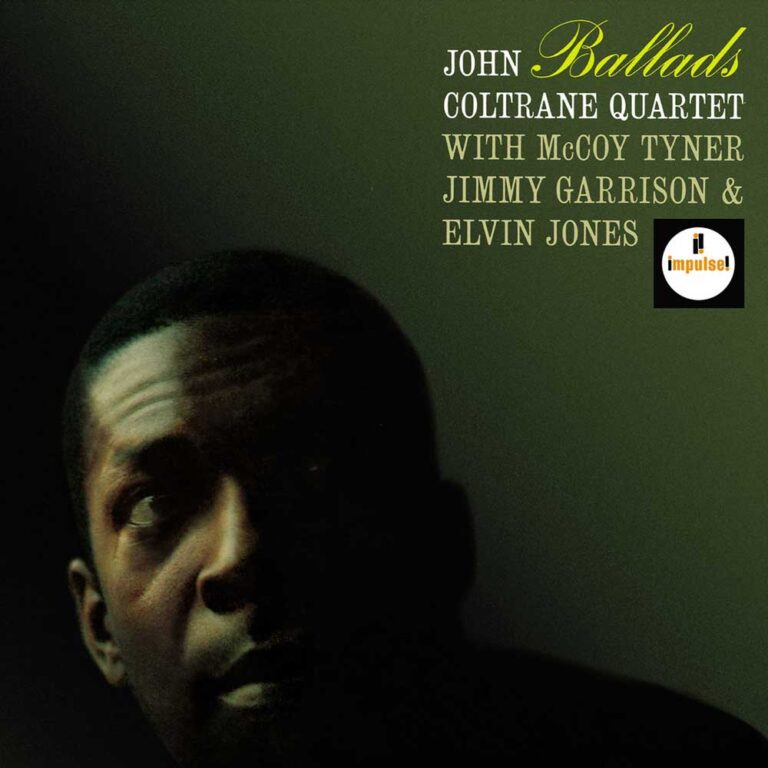
JOHN COLTRANE Ballads
Available to purchase from our US store.Coltrane was rather infatuated with the soprano sax in the early sixties, and his penchant for the upper register strikes a sentimental, romantic tone on “Ballads”.
Nigerian-born saxophonist, composer, and bandleader Camilla George explains that the album is a stand out for her in Coltrane’s repertoire: “I love the “Ballads” album because—whilst I also love “Africa/Brass” and “A Love Supreme”—it’s a masterclass in emotional connection delivered so precisely and poignantly that it makes me cry every time I listen to it. It’s story telling and beauty is unique”.
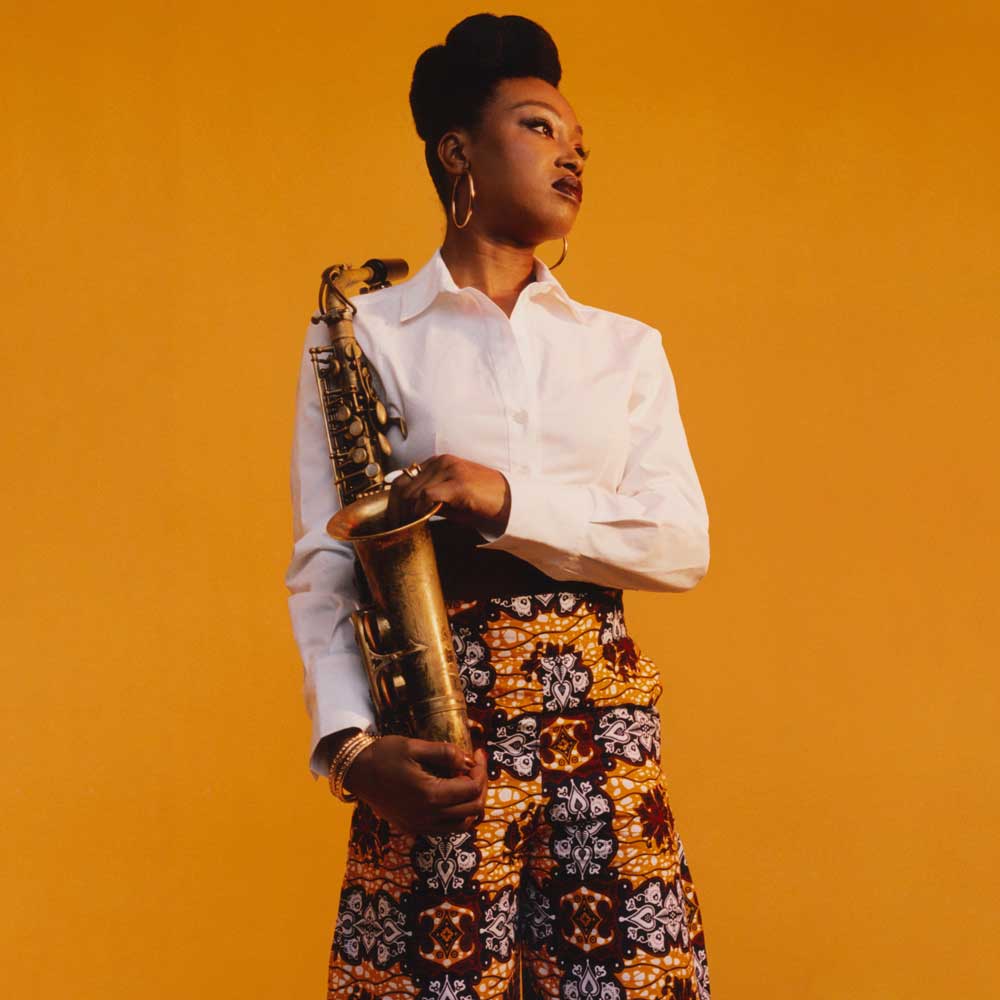
It also strikes a chord with young rising London-based saxophonist Parthenope: “By the time “Ballads” was released, Coltrane had become known for pushing the boundaries of jazz with increasingly complex and spiritual albums. “Ballads” stands in contrast, but to me it is just as searching as his more avant-garde work, and the intimacy and yearning of his playing continually makes me revisit the album. His interpretations of the standards are beautifully distinct and completely timeless”.

John Coltrane – A Love Supreme (Impulse!1965)
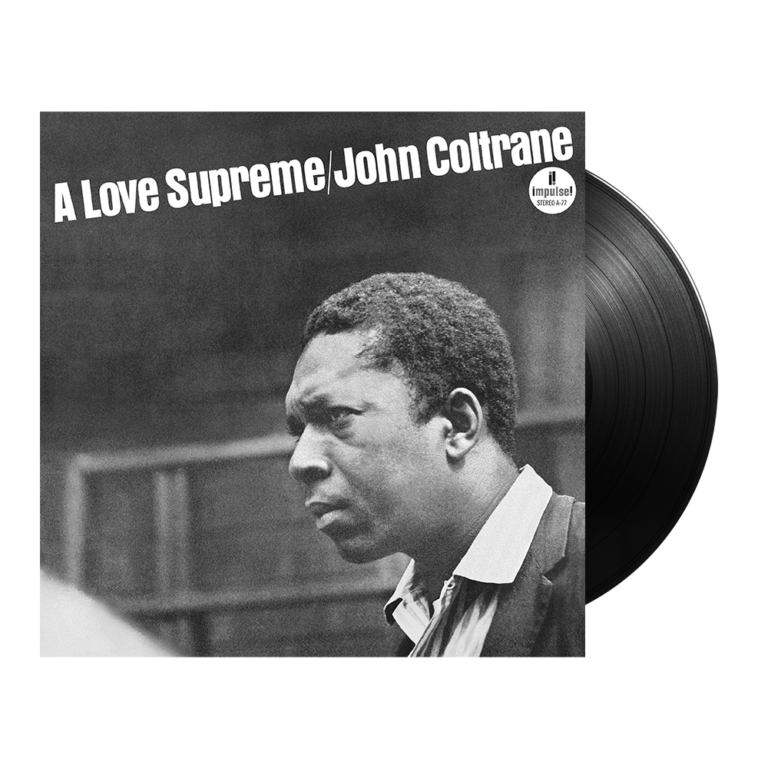
It wouldn’t be hyperbolic to name “A Love Supreme” as one of the most loved jazz albums of all time. Recorded in a single take in near darkness and in devotion to God, Coltrane led McCoy Tyner (piano), Jimmy Garrison (double bass) and Elvin Jones (drums, gong, timpani) through a suite of four parts; Acknowledgement, Resolution, Pursuance, and Psalm.
The album’s title comes from Coltrane’s chant on the opener, where he overdubbed his voice 19 times to mesmerising effect. “A Love Supreme” is a masterpiece of modal jazz, post-bop and spiritual jazz; the latter was already growing in popularity, but Coltrane accelerated its resonance in wider music. Soon after its release, Duke Ellington composed his “Sacred Concerts”—which he later described as “the most important thing I have ever done”—Mary Lou Williams pivoted to sacred music, and The Beatles introduced spirituality into their music. Coltrane’s influence surpassed the confines of jazz, and reverberated into popular culture.
L.A based saxophonist and composer Aaron Shaw explains that “A Love Supreme” was a gateway to a better life. “‘A Love Supreme’ was my sanctuary and my blueprint. While the world around me echoed with noise of gang violence and peer pressure to perpetuate that noise, Coltrane’s playing spoke directly to my soul, challenging me to seek a life of purpose and excellence”, says Shaw. “His mastery didn’t just influence my musicianship—it saved my life by showing me that art could be a profound vehicle for positive, global impact”.
READ ON…
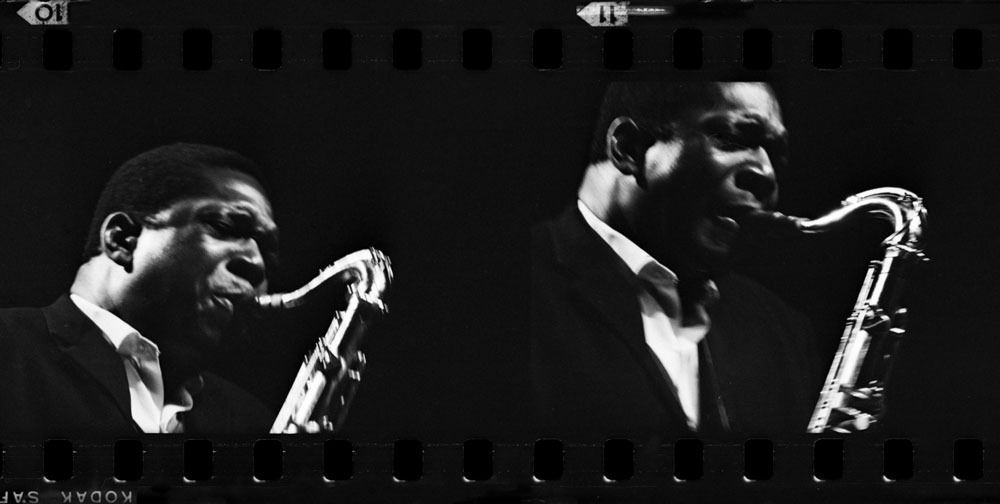
John Coltrane – Architect of Modal Jazz
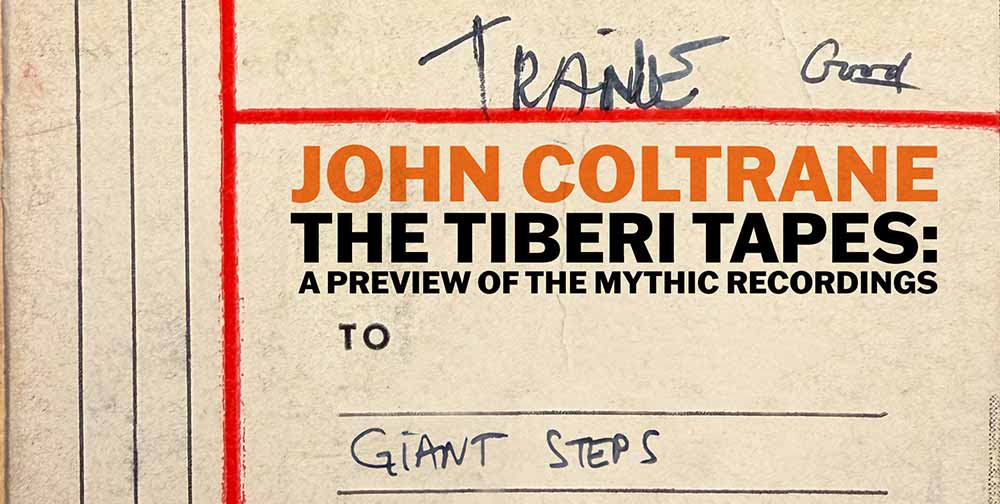
The Tiberi Tapes – A New Addition to John Coltrane’s Discography for 2026
Tina Edwards is a music journalist, DJ and broadcaster. She’s the co-founder of curatorial platforms re:sonate and Queer Jazz, and hosts her own Bandcamp Club called Jazz-ish Jazz Club. She has bylines in Bandcamp Daily, Downbeat, Monocle and more.
Header image: John Coltrane by Francis Wolff / Blue Note Records.