
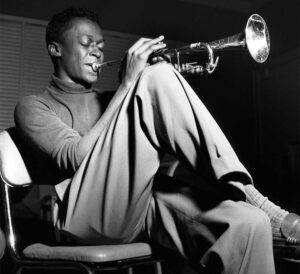
Jazz is full of great double acts: Duke Ellington and Billy Strayhorn, George Adams and Don Pullen, Dizzy Gillespie and James Moody, Wayne Shorter and Herbie Hancock, Bill Evans and Jim Hall, John Scofield and Bill Frisell.

Miles Davis / Birth Of The Cool (Blue Note Tone Poet Series) 1LP
Available to purchase from our US store.But the collaboration between Miles Davis and Gil Evans is surely jazz’s most heralded. Theirs was also one of the music’s great and enduring friendships, Gil serving as a father figure for Miles and Miles providing one fresh idea after another for Gil. “We couldn’t be much closer if he was my brother,” Miles told Playboy magazine in 1962.
It seems that their meeting was written in the stars. In 1947, Miles was living in New York City with his first wife Irene, son Gregory and daughter Cheryl, and appearing regularly at The Three Deuces on 52nd Street with Charlie Parker’s quintet. Gil was a regular visitor, sitting there in the dark eating his bag of radishes. He was running the Claude Thornhill Orchestra at the time, earning plaudits for his experiments with instrumentation and timbre. Miles also loved the Thornhill Orchestra, telling Down Beat that it was “the greatest band”.
Gil finally plucked up the courage to ask Miles if he could have permission to rearrange “Donna Lee”. Miles agreed, in exchange for seeing the arrangement that Evans had done for “Robbin’s Nest”, a Thornhill Orchestra staple.
Miles started to attend the salons held at Gil’s one-room cellar apartment behind a Chinese laundry on West 55th Street, also a key hang for players like Gerry Mulligan, John Lewis, Lee Konitz and George Russell. An idea was hatched to take the Thornhill template, but reduce the 14-piece orchestra to a nonet. The unanimous choice for lead instrument was Miles’s trumpet.
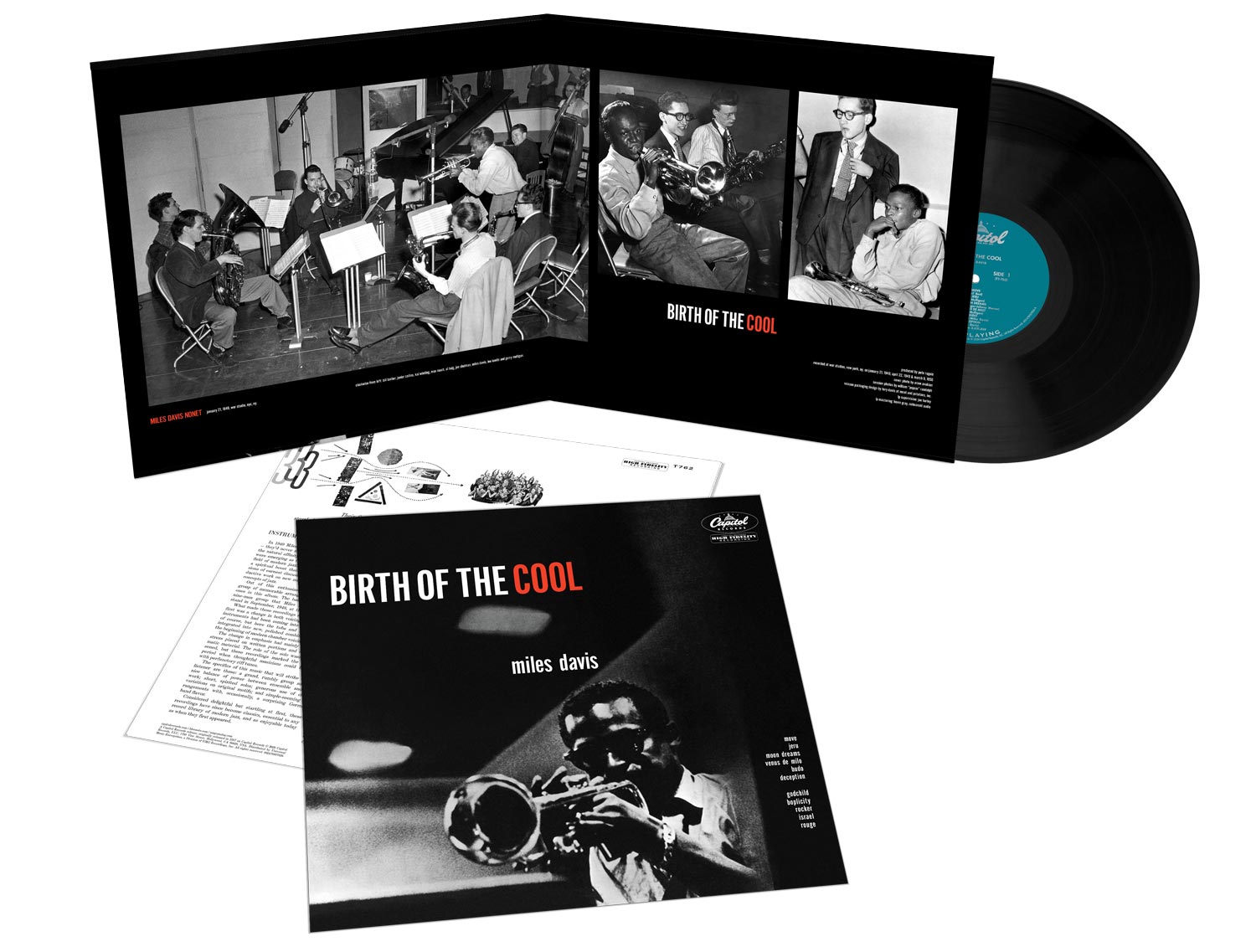
They rehearsed at Nola Studios on Broadway and 52nd Street with close attention from former Stan Kenton arranger Pete Rugolo, who was now an A&R officer at Capitol Records. Miles’s nonet also did two famous engagements at the Royal Roost club on Broadway. The second was two weeks alongside Count Basie and Dinah Washington. Miles insisted that a sign was put outside saying: “Miles Davis Nonet – Arrangements by Gerry Mulligan, Gil Evans and John Lewis.”
Miles signed a contract with Capitol on 5 January 1949 (around the same time that he also turned down an invitation to join Duke Ellington’s orchestra) and then the three sessions which make up the “Birth Of The Cool” album were recorded at WOR Studios in New York on 21 January 1949, 22 April 1949 and 9 March 1950.
Rugolo, acting as production coordinator, insisted on multiple takes of each tune, only moving on when everyone was happy with their performances. He is also credited with the album’s title, though modestly insists that anyone who was present at the sessions could have come up with it.
There are revolutionary, striking moods and modes throughout “Birth”. The ever-fresh “Boplicity”, with its famous “flatted fifth” note, was written by Miles and Gil under the pseudonym “Cleo Henry”, the maiden name of Miles’s mother. Mulligan came up with several classic tunes: “Jeru” – Miles’s nickname for Mulligan – was innovative with its odd-time feel and irregular patterns, while “Rocker” delights with its melodic leaps (Django Bates’ band Human Chain did a fascinating cover version in 1987). Meanwhile “Budo” was Miles’s ingenious take on Bud Powell’s “Hallucinations”, while “Deception” was a witty rehash of George Shearing’s “Conception”.
However, the nonet raised some eyebrows amongst the more conservative jazz fans and writers. Miles was forced to defend choosing white players such as Konitz, a theme he’d have to return to throughout his career. Some also claimed that Miles was now only influenced by European composers. He disagreed, saying in his autobiography: “It came from black musical roots. We were trying to sound like Claude Thornhill, but he had gotten his shit from Duke Ellington and Fletcher Henderson.”
But it was not plain sailing for Miles and Gil in the slipstream of “Birth”. Miles left the Charlie Parker Quintet just before Christmas 1948, then performed to the Paris Jazz Festival and fell in love with Juliette Greco and the French intellectual scene. He returned to New York in a slump and sadly succumbed to heroin addiction. After the third nonet recording date in March 1950, he didn’t enter a recording studio until 17 January of the following year.
Miles Davis / Birth Of The Cool (Blue Note Tone Poet Series) 1LP
Available to purchase from our US store.Gil found himself mainly writing one-off arrangements for singers’ club dates. “I was really waiting around for Miles, to tell you the truth, during those years,” he told Ben Sidran (Gil and Miles would have to wait until 1957 for their next collaboration on the epochal “Miles Ahead” album).
Still, “Birth” has endured and remains one of the key jazz albums, with many spin-offs: The Modern Jazz Quartet, Gerry Mulligan’s ten-tette and famous quartet with Chet Baker, plus many other Cool Jazz bands on the West Coast. The music also echoes through the neo-noir film scores of Jerry Goldsmith and Mark Isham, Herbie Hancock’s elaborate horn-led ensemble work of the 1960s, and, by extension, Miles’s own classic “Tutu” in the 1980s.
READ ON…
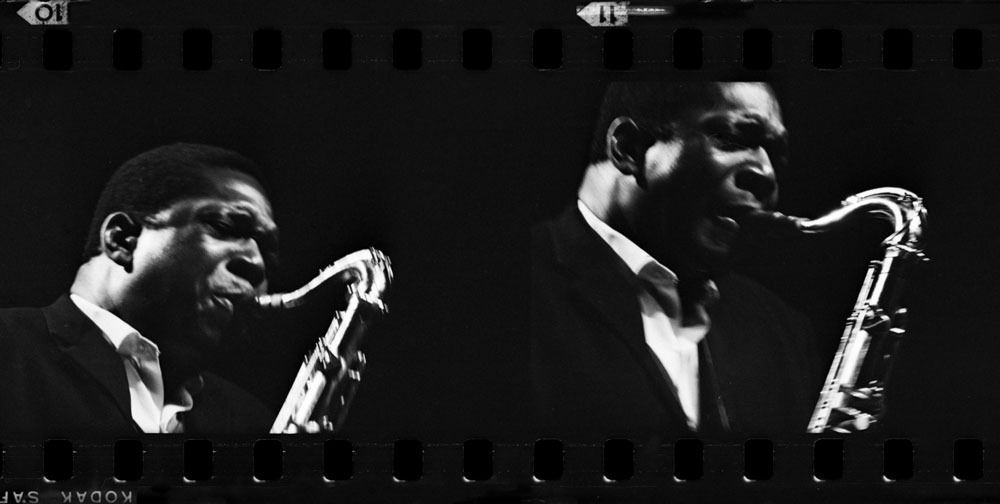
John Coltrane – Architect of Modal Jazz
Gabriella Cavassa – Diavola
Matt Phillips is a London-based writer and musician whose work has appeared in Jazzwise, Classic Pop, Record Collector and The Oldie. He’s the author of “John McLaughlin: From Miles & Mahavishnu to the 4th Dimension” and “Level 42: Every Album, Every Song”.
Header image: Miles Davis. Photo: Francis Wolff / Blue Note Records.